What's Actually Done in a Roof Tune-Up in Jacksonville, FL
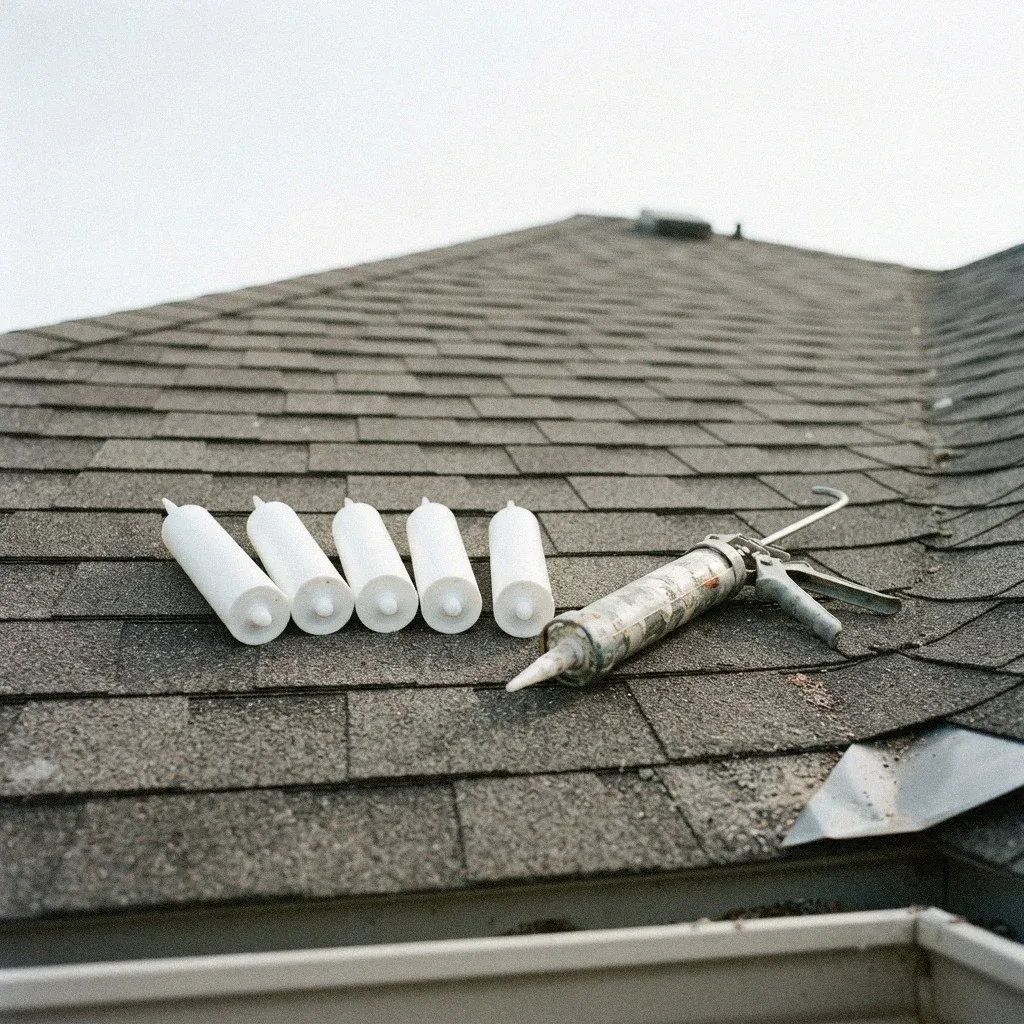
Sealant renewal, pipe boots, fastener heads, flashing seams — a maintenance visit works through a specific list. Here's what's on it, and where the list stops and repair begins.
Read article
Soft or rotted decking gets found at tear-off and replaced before the new roof goes down. Call now.
Roof decking repair Jacksonville, FL homeowners rely on means cutting out soft or rotted panels and replacing them before the new roof goes on.
Call (904) 675-6349 and we'll connect you with a local licensed roofer.
Deck repair means cutting rotted or spongy panels back to solid wood at a rafter and nailing in new panels that match the old deck's thickness.
Sound panels stay in place and get re-nailed tight, so you only replace wood that has actually failed.
Deck repair usually happens during roof replacement, once the old shingles are off and the bare deck is visible. The licensed pros we connect you with confirm the final panel count then, and reinforce any rafter that shows rot or sag first.
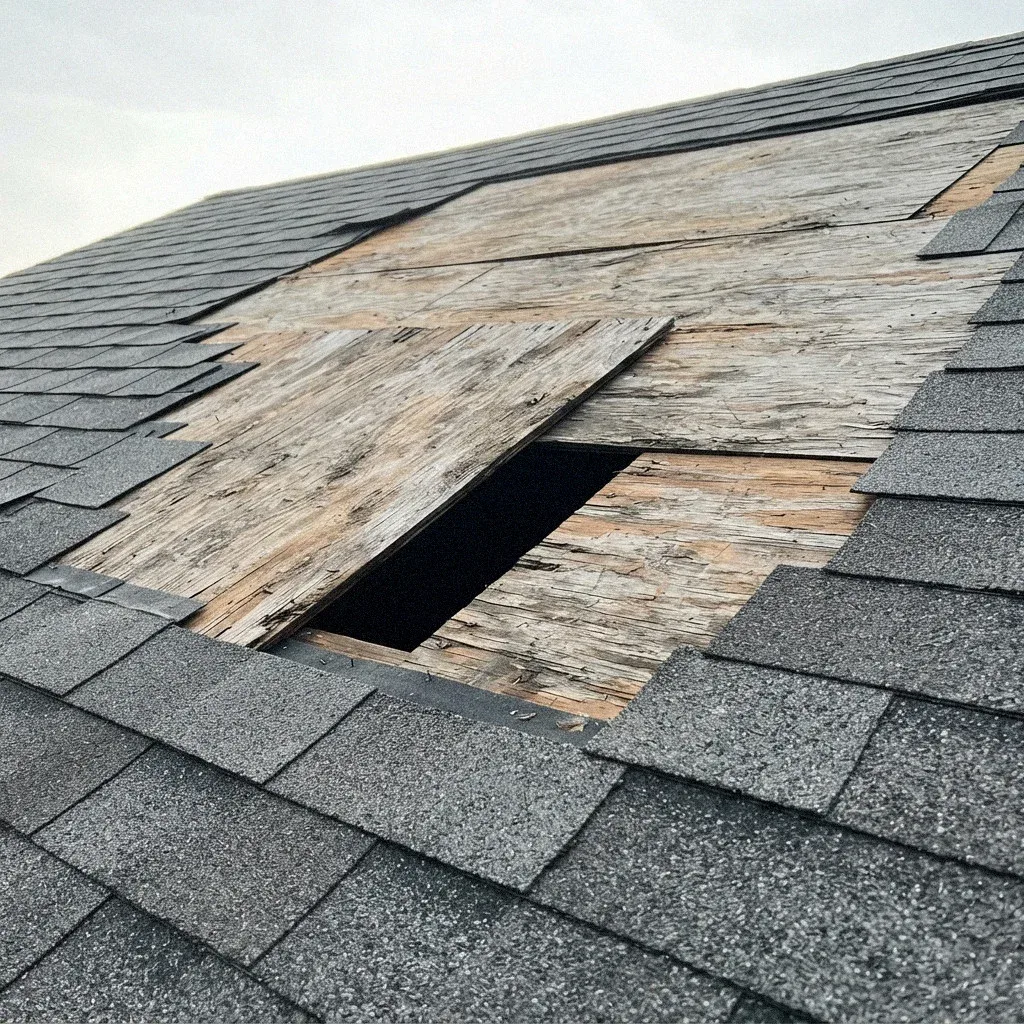
A mushy feel when you walk the roof, especially near old pipe boots or valleys, means a panel has lost its strength. Repeated summer wetting is usually what pushes it past holding a nail.
From the attic, look along the roofline for a dip between rafters or trusses. A dark streak running down from a nail or vent often marks the spot.
Wood that crumbles, looks grayish, or separates in layers is dry rot or delamination. It often shows on the underside long before the shingles look worn.
Old shingles and underlayment come off one section at a time. Soft panels and sagging only become visible once the deck is bare.
The licensed pros we connect you with press on each panel, checking for give, split seams, and spots that won't hold a nail. Sound wood stays; questionable wood gets marked.
Rotted panels are cut back to solid wood at a rafter, and the new piece is fastened on both edges. Any rotted or sagging rafter is reinforced first.
Replacement panels match the old deck's thickness and are nailed at proper spacing. The surrounding wood is re-nailed tight before underlayment and the new roof go on.
Jacksonville's humidity and afternoon thunderstorms give trapped moisture months to rot a panel before anyone notices. Older roofs in Springfield and San Marco have often been re-covered more than once, and each layer can hide a soft spot.
Duval County follows the Florida Building Code, and Jacksonville requires a permit before a roof comes off, decking repair included. Rotten sheathing found mid-tear-off rides on the same reroof permit, though the final sheet count often shifts once rafters are visible.
What's under an older Jacksonville roof varies by era and builder, from solid plywood to wider board spacing or thinner panels. Matching thickness matters most, since a mismatched panel shows through the new shingles as a visible ridge.
Ballpark pricing for roof decking & sheathing repair around Jacksonville. Nothing is charged until you have a written estimate in hand.
| Decking Condition | Attic Airflow | Work Schedule |
|---|---|---|
| Nobody knows what the decking looks like until the old covering is off, so get a per-sheet price for replacement written into the bid beforehand. On older Jacksonville houses a few soft sheets is normal, and settling that number on a half-stripped roof never goes the homeowner's way. | Roof, attic, and gutters checked together with photos for an insurance claim | an estimated $420–$4275 |
| Attic airflow gets left off cheap bids because it is invisible from the street. Ask whether the soffit intake is being checked and cleared, whether baffles are going in at the eaves, and what the ridge or off-ridge exhaust will be. A Jacksonville roof with no intake cooks itself from underneath. | Single-layer tear-off, new underlayment, one standard shingle color choice | an estimated $600–$5850 |
| Ask how the schedule handles rain. Through a Jacksonville summer a crew will lose part of most afternoons, and the honest answer is that the deck gets opened in sections and dried in before dark rather than stripped all at once and covered with a tarp overnight. | Reroof with new flashing at every wall tie-in, gutters left in place | an estimated $780–$8100 |
| A start date that is tomorrow is not always good news. A roofer with nothing booked in the middle of a Duval County hurricane season is either new, between crews, or has just finished a job that ended badly. Ask what they finished last week and where. | Large reroof with skylight flashing rebuilt, no drywall or paint touch-up | an estimated $1080–$11700 |
A deposit that covers nearly the whole job before a single shingle comes off leaves you nothing to withhold if the work stalls or quality slips halfway through. Keep enough of the balance unpaid until the roof is finished and you have walked it yourself.
Only partly. A soft spot or a sag can be felt on the roof or seen from the attic, but the true count of bad panels only shows once the shingles are stripped and the deck is bare.
Nobody can give a firm number before the old shingles come off. The licensed pros we connect you with typically quote a cost per sheet replaced, then confirm the total once the deck and rafters are exposed.
In most cases, yes. Sound panels stay in place and get re-nailed, and only panels that are soft, delaminated, or won't hold a nail are cut out.
A standard inspection checks shingles, flashing, and the framing visible from the attic floor, not the panel under sound-looking shingles. Rot from slow leaks around a vent or valley often only surfaces at tear-off.
No. It falls under the same roofing permit already required for the tear-off. The pros we connect you with handle that paperwork as part of the job.
Most homeowners pay an estimated $600–$4500 per job for roof decking & sheathing repair in Jacksonville. Two things move that figure more than anything else: the pitch, and how much of the decking underneath turns out to be sound. Quotes are given after a look at the roof, not over the phone.
Most roof failures here trace back to routine wear nobody tracked. Fasteners loosen, sealant dries out, and granules wash off a little more with every heavy rain. None of it looks urgent on its own, but the combination is exactly what turns a minor repair into a full reroof.

Sealant renewal, pipe boots, fastener heads, flashing seams — a maintenance visit works through a specific list. Here's what's on it, and where the list stops and repair begins.
Read article
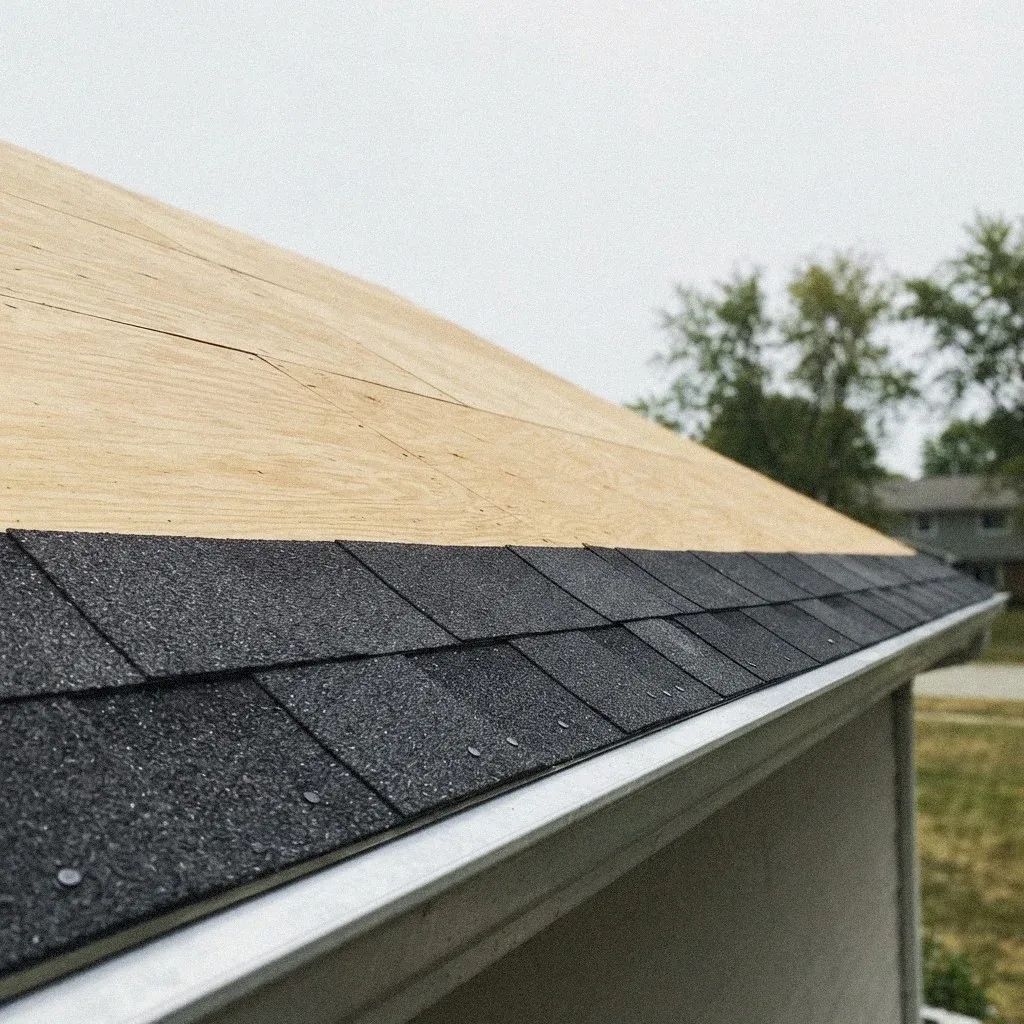
Layers, bundle weight, wind rating, nailing zone: what actually separates a laminated shingle from three-tab before you decide what goes on your Jacksonville roof.
Read article
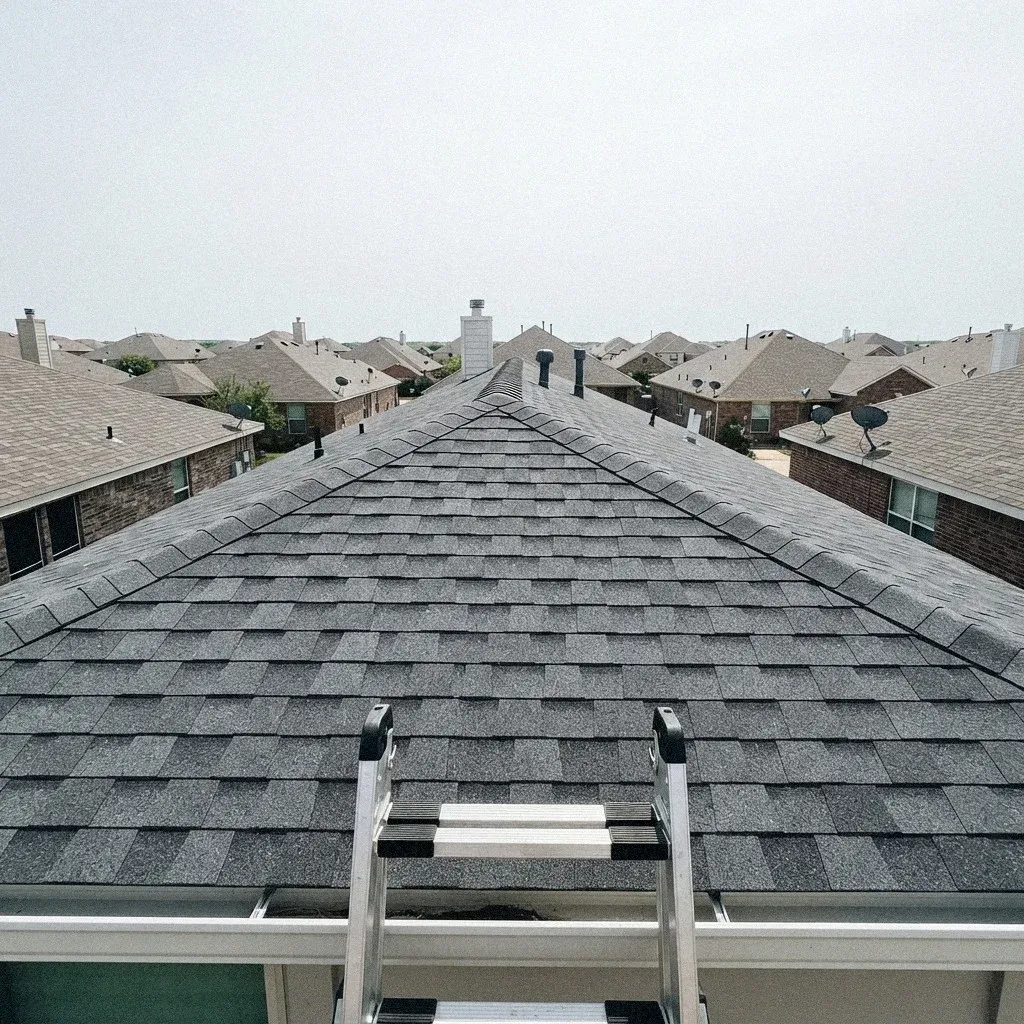
Late fall through early spring is Jacksonville's driest, calmest stretch, and the one window where a tear-off and reroof goes smoothly. Here's why that timing matters and why the calendar fills up fast.
Read articleOne call is enough to start. Say what the roof is doing and roughly when it started, and the licensed pros we connect you with will tell you whether it needs looking at this week or can wait for the next dry stretch. If something is actively coming through a ceiling in Jacksonville, say so on the call, because that moves to the front of the list and gets covered the same day rather than scheduled.
Call (904) 675-6349