Getting Attic Airflow Right in Jacksonville Homes
Matched airflow and a dry roof deck keep Jacksonville attics from sweating through hurricane season and beyond.
In Jacksonville attics, moist household air meets a roof deck that cooled overnight and turns to water faster than the vents clear it. A conditioned attic sidesteps the whole problem by insulating at the roofline instead.
Matching What Comes In to What Goes Out
A Jacksonville attic depends on a loop, not a single opening. Outside air has to get in low, near the eaves, and climb out high, near the ridge, carrying summer heat and moisture with it. Skip either end and the loop stalls. Homes off Blanding Boulevard or out toward Mandarin with a patched-over soffit but a working ridge vent still trap heat, because exhaust with no matching intake just pulls from wherever it can reach, including the living space below.
Net free area is the open square inches a vent actually clears once you subtract its screen, louvers, and frame, and it's always smaller than the number printed on the box. A continuous soffit strip rated for a wide opening might net less than half that once the mesh is counted. Sizing an attic off the nominal figure instead of net free area is the single most common reason a Jacksonville reroof still leaves the space running hot.
The ventilation ratio only means something when intake and exhaust are matched, not just both present somewhere on the roofline. A Riverside or Avondale bungalow with a long ridge vent but soffits painted shut years ago has exhaust with nothing feeding it, so it draws whatever air is closest, often from can lights and the attic hatch rather than the eaves. Balance, not total opening, decides whether the system works.
Net Free Area and Why Ratios Matter
Intake ventilation lives at the soffit, tucked under the eave on the underside of the roof structure, and it stops working the moment insulation piles against the roof deck and blocks the path behind it. In Springfield and San Marco homes with deep attic insulation added over the years, the soffit vents look fine from the yard but the channel behind them is packed solid, so outside air never actually reaches the attic space above.
A baffle is the fix: a rigid strip anchored at the eave that keeps loose insulation pushed back so a gap survives above it. Without one, Jacksonville attic insulation drifts toward the eave over time and buries the intake path completely. Homes across Arlington and Mandarin with deep blown-in insulation are the most common candidates, since depth is exactly what smothers the low intake points first.
- Screening, louvers, and old paint eat into a vent's stated size, so net free area is what actually passes air.
- Florida Building Code ventilation ratio math sets total vent opening size against attic floor square footage for the whole house.
- Keep intake ventilation and exhaust ventilation close to even, since a lopsided system starves airflow no matter how many vents exist.
- Soffit vents draw outside air in under the eaves, and baffles keep loose attic insulation from choking that opening off.
- A continuous ridge vent along the peak or louvered gable vents in the end walls handle the exhaust side of the system.
- Powered attic fans paired with a ridge vent often pull conditioned indoor air upward instead of outdoor air, wasting energy and moisture control.
Dew Point and Frost on a Jacksonville Roof Deck
Florida Building Code, as administered by the City of Jacksonville's Building Inspection Division, looks for a 1:150 ratio of net free area to attic floor space on most reroof and repair permits pulled through JaxEPICS, tightening to 1:300 when a vapor retarder sits under the insulation and the split runs roughly even between low and high vents. That ratio is a floor, not a guarantee. Two vents meeting the number can still starve each other if their placement fights instead of cooperates.
Gable vents complicate that balance more than people expect. A house near Ortega or St. Nicholas with both a ridge vent and gable-end vents ends up with exhaust competing against exhaust: the gable vent can pull air sideways out of the attic before it ever reaches the ridge, and on a windy day it may even reverse and push outside air back in near the peak. Two exhaust paths working against each other perform worse than one path working with the soffit intake below it.
- Warm household air carries vapor drive toward the cooler roof deck above it, especially once air conditioning runs most of the day.
- Dew point is the temperature where that vapor turns liquid on contact, and a shaded Jacksonville roof deck can dip there some mornings.
- A light frosting can form near the ridge on the rare mid-February cold snap, then vanish once the sun clears the deck.
- Gaps around the attic hatch, plumbing stacks, and recessed lighting let cooled indoor air slip upward and load the attic with moisture.
Sorting Out the Vent Options
A powered attic fan set into the roof deck near Baymeadows or Southside can move a lot of air, but it moves it whether or not the soffit vents can supply that much. When intake falls short, the fan starts pulling makeup air from the nearest gaps instead, often the attic hatch, recessed lighting, or top plates, drawing conditioned house air upward and running the household air conditioner harder to replace what just left through the roof.
Vapor drive is the pressure that carries everyday household moisture, from showers, cooking, and simply breathing indoors, upward through any gap it finds. In a Jacksonville summer that moisture meets attic air that's already carrying plenty of its own, so the two loads stack rather than cancel. Whether that moisture condenses on the underside of the roof deck depends on dew point: once attic air cools to the temperature where it can no longer hold its moisture, that moisture lands on the nearest cold surface instead of drifting back out.
| Attic Size | Air In | Air Out |
|---|---|---|
| Soffit vents | Intake, only works with clear baffles | Cheap to add, easy to block by accident |
| Ridge vent | Exhaust, paired with soffit intake below | Steady draw across a long roofline |
| Gable vents | Exhaust, fights a ridge vent for air | Often the source of dead pockets nearby |
| Powered attic fan | Exhaust, demands enough intake below it | Can backdraft AC ductwork if oversized |
| Conditioned attic | No soffit or ridge venting at all | New assembly, planned before reroofing starts |
Is a Conditioned Attic Worth Considering
A conditioned attic takes the opposite approach to venting one. Instead of moving outside air through the space to keep it near outdoor temperature, the insulation moves to the underside of the roof deck and the attic becomes part of the house. In a climate like Jacksonville's that can work well, because the attic stops being a hot, humid box sitting above cooled rooms. It is also a bigger job than adding vents, it changes how the deck dries, and it has to be designed as a whole rather than half done. It is worth a conversation on a full reroof, not a retrofit to bolt on later.
Proper bath fan termination routes that duct all the way through the roof or an exterior wall to a capped outlet, not just into open attic space, so the moisture leaves the building instead of loading the space above the ceiling. Checking termination during a Jacksonville reroof costs little and heads off a source of moisture that ventilation alone can't fully offset, since intake and exhaust are sized for background air exchange, not a bathroom's worth of steam dumped directly overhead.
What Sealing the Roofline Actually Involves
A conditioned attic assembly skips venting to the outside altogether. Spray foam or rigid insulation goes against the underside of the roof deck itself, moving the boundary between inside and outside up to the rafters instead of leaving it at the attic floor, so the attic becomes part of the house's conditioned space rather than a vented buffer above it. Ductwork and equipment sitting up there run in tempered air instead of Jacksonville's full summer heat load.
Most houses across Jacksonville, from older stock in Springfield and Riverside to newer construction out toward Nocatee-adjacent Mandarin and Baymeadows, use the standard vented attic, and that's the assembly most reroof and repair permits are written against. A conditioned attic is a deliberate, whole-assembly choice usually made during a full reroof or major renovation, not something layered onto an existing vented system, so getting the vented approach right first is what actually protects most Duval County roofs.
Net Free Area Guidelines by Attic Size
- A bath fan should exhaust through the roof or a gable wall outdoors, never loose above the insulation in the attic.
- A powered attic fan without matching soffit intake can draw air conditioned indoor air upward through every ceiling gap it finds.
- A conditioned attic moves insulation to the underside of the roof deck itself, which removes the intake and exhaust question entirely.
- Older homes around Murray Hill and Riverside sometimes have soffit vents painted shut from a past exterior repaint, starving the attic of intake.
- Homes near San Marco or Avondale that added a ridge vent later often still carry the original gable louvers, which can compete for exhaust.
- Sealing ceiling gaps first stops moisture from reaching the attic; adjusting vents afterward only manages air that already got in.
Frequently Asked Questions
How much attic ventilation does my Jacksonville house need?
Jacksonville's Building Inspection Division reviews reroof and repair permits, submitted through the JaxEPICS portal, against the Florida Building Code's attic ventilation provisions, which call for a 1:150 net-free-area-to-floor-area ratio, or 1:300 with a qualifying vapor retarder, roughly split between low intake and high exhaust. Inspectors check that the ratio is met and that the vents are actually open and unobstructed, not just present on the plans.
Why does my attic still feel damp with vents in place?
Usually the intake side is undersized compared to the exhaust side. A Jacksonville home with a generous ridge vent but soffit vents blocked by insulation or old paint pulls conditioned house air upward instead of drawing outside air in, which keeps humidity trapped against the roof deck rather than flushing it out.
Will a powered attic fan cause more moisture problems?
It can, if soffit vents cannot supply enough matching intake. The fan then depressurizes the attic and pulls cooled indoor air upward through ceiling fixtures and gaps around the hatch, which adds more household moisture to the attic than the fan removes through the roof.
Can insulation end up covering my soffit vents?
Yes. Loose-fill insulation drifts toward the eaves over the years and settles right against the soffit opening, cutting off intake even though the vent looks clear from the ground. A baffle installed at the eave holds a channel open so insulation cannot creep into the vent path.
Is it a problem if my bathroom fan vents into the attic?
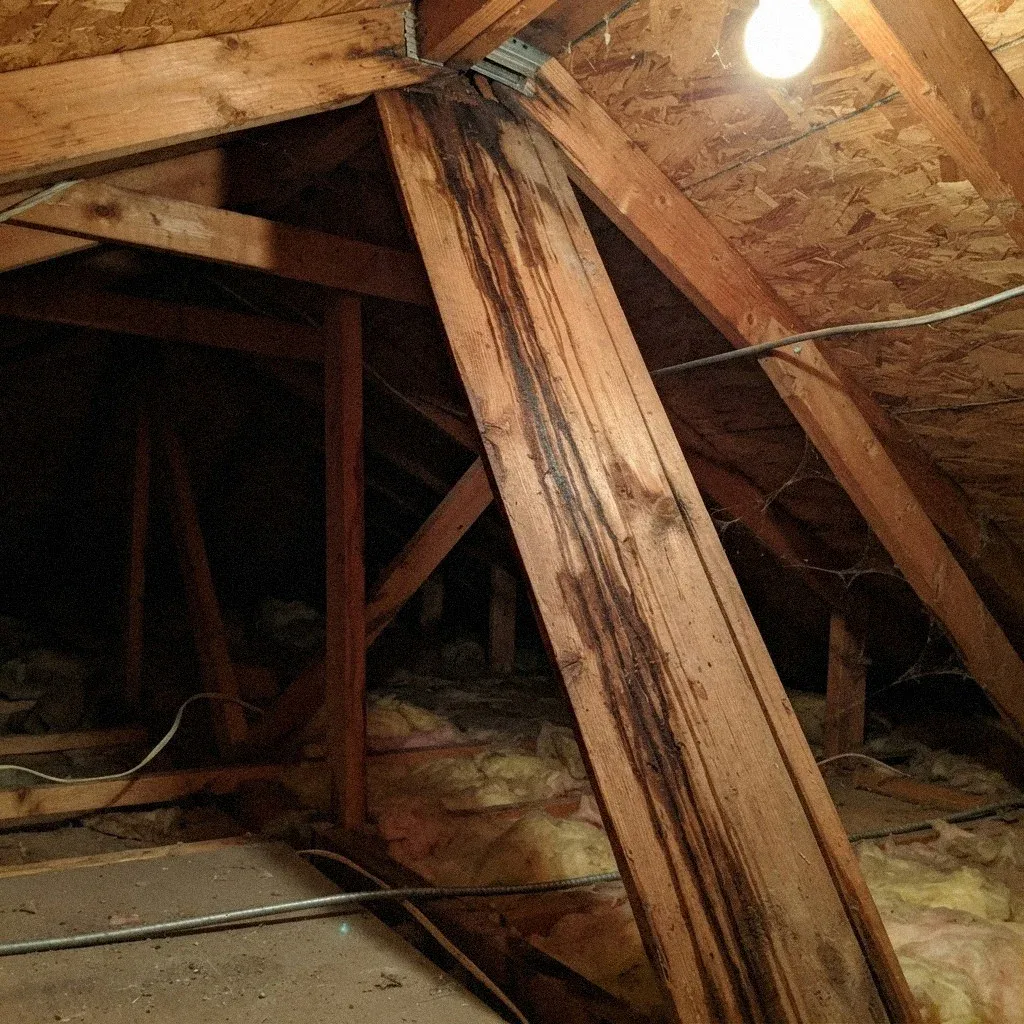
Yes, and in a Jacksonville summer it is a worse problem than it would be in a dry climate. Every shower puts warm, wet air into a space that is already humid, and it condenses on the coolest surface it can find, usually the nail points and the underside of the deck. Over a few years that shows as dark staining on the sheathing and flattened, damp insulation. The fix is running the duct to a capped outlet through the roof or a wall, and it is not an expensive one.
Ready to Have Your Attic Airflow Checked?
Have a licensed pro sized right, not just installed, before the next round of afternoon thunderstorms hits Duval County.
Call (904) 675-6349