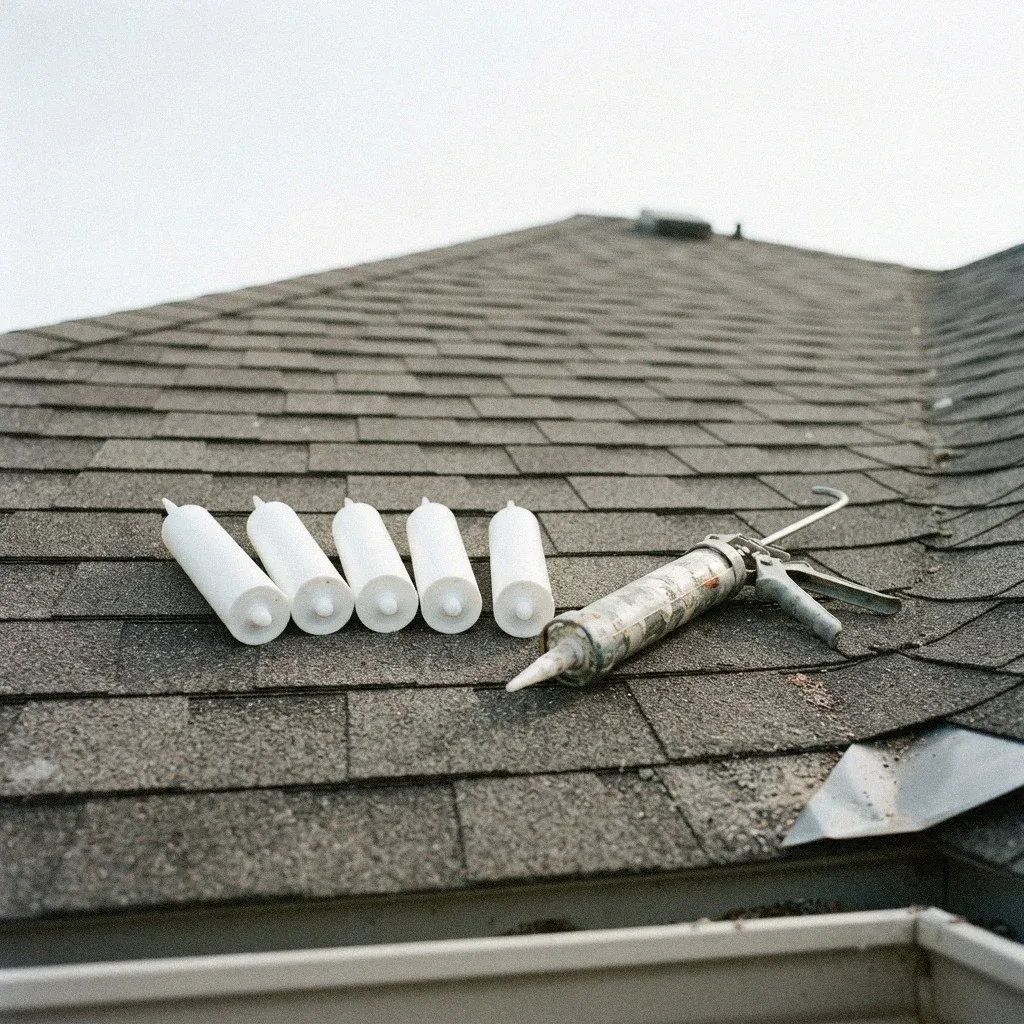
A tune-up in Jacksonville usually starts at the roof's weak points rather than the field of shingles itself. Sealant renewal around vent stacks, a fresh bead of roof cement at a chimney edge, and a check of counterflashing where a wall meets the roof plane catch most of the moisture paths before hurricane season arrives. Riverside and San Marco homes with older flashing details tend to need this line item more than newer Mandarin construction.
Sealant Renewal At Penetrations
Pipe boot replacement belongs on almost every punch list once the rubber collar around a plumbing stack has cracked or pulled away from years of Jacksonville sun. Lifted shingle re-set and ridge cap re-nail follow close behind, since wind gusts off the St. Johns River work fasteners loose long before the shingles underneath show any wear. None of this means the deck or the shingle field has a problem worth worrying over yet.
Pipe Boot Replacement Itself
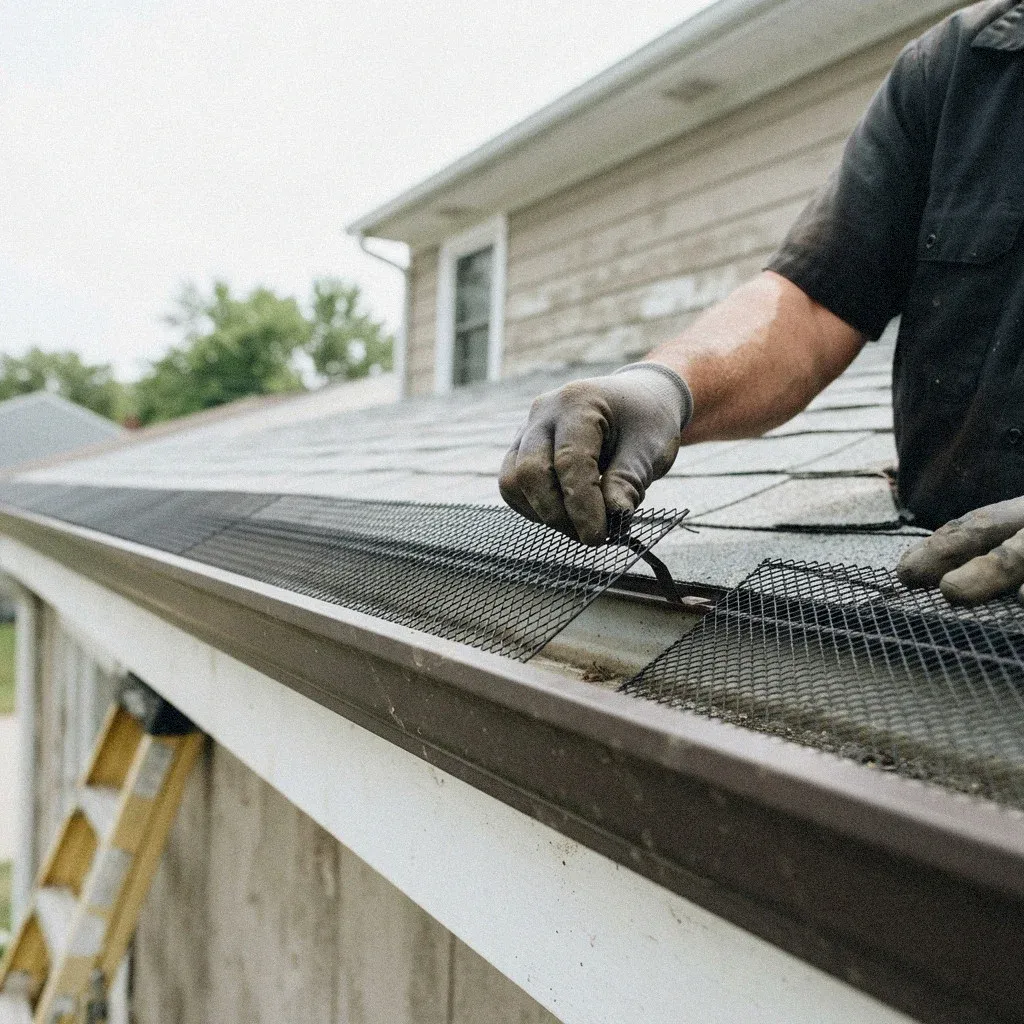
Debris clearing through valleys and around vent screens rounds out most visits, since oak leaves from Avondale and Ortega yards settle into low spots and hold water against the shingles. Where a tune-up ends and a scope exclusion begins is usually spelled out on the invoice: soft decking, a valley leak that keeps returning, or shingle granule loss beyond a patch are handed off as a separate repair, not folded into the same visit.
Exposed Fastener Re-Seal Work
Metal roofing and some accessory pieces use exposed fasteners with a washer that seals the hole against wind-driven rain. Those washers dry and shrink over time, and a fastener that's backed out slightly stops sealing at all. The tune-up goes down the fastener rows, re-seats any that have lifted, and re-seals the washer where it's cracked, which is quick work compared to replacing the fastener itself.
Flashing Touch-Up At Seams
Flashing at a chimney, sidewall, or roof-to-wall transition is metal, and metal seams move slightly with heat and cold even in a mild Jacksonville winter. A touch-up on this list means resealing a seam edge that's opened up or a corner that's pulled loose, not removing and refitting the flashing itself. Counterflashing gets a look too, since it's the piece that keeps water from working behind the base flashing.
Counterflashing Check At Walls
Counterflashing is the upper piece embedded in a wall or chimney that overlaps the base flashing below it, and it's checked separately because it fails differently. Mortar joints holding it in place can loosen, letting the metal pull away from the wall. On a tune-up, this is a visual and hand check for movement, with re-securing or resealing as the fix, not a full reflash of the wall-to-roof joint.
Ridge Cap Re-Nail Items
Ridge caps take the most direct wind load on the roof, and the nails holding them can work loose over a hurricane season without the cap itself failing. A tune-up re-nails any ridge cap section that's rocking or has a visible gap at the seam. It's a fastening fix, done cap by cap along the ridge, and it's one of the more common finds on homes across Mandarin and San Jose after a windy summer.
Re-Setting Lifted Shingles
A shingle that's curled up at the corner or popped free of its seal isn't necessarily damaged, just unstuck. The fix is to warm it, press it back down, and add a dab of roof cement under the tab to hold the seal. This item is limited to shingles that are still whole and flexible; one that's cracked or brittle from age gets flagged for something beyond a re-set.
Clearing Valleys And Vents
Valleys funnel two roof slopes into one channel, and leaves, pine needles, and granule grit collect there faster than anywhere else on the roof. Vent screens and ridge vents pick up the same debris. Clearing this out is straightforward physical work on the visit, but it matters because a packed valley during a heavy Jacksonville downpour backs water up under the shingle edges instead of letting it run off.
Where The List Usually Stops
Every item above shares a trait: it's a localized fix to a part that failed on its own, not a symptom of the roof covering wearing out underneath it. A tune-up punch list is built around that idea, working through boots, fasteners, sealant, and debris one at a time and moving on once each is addressed, without opening up the deck or pulling a broader section of shingles to look underneath.
When It Turns Into Repair
The tune-up stops being a tune-up when what's found under a lifted shingle is soft or delaminating decking, when a pipe boot area has already let water reach the wood, or when flashing has separated enough that the fix requires removing shingles to get underneath it. At that point it moves from the maintenance punch list to a scope of repair, and it gets flagged and priced separately rather than folded into the visit.
Reading A Tune-Up Scope Exclusion
A tune-up scope usually lists exclusions up front — structural decking work, full flashing replacement, anything requiring shingle removal beyond a single re-set. That's not the pros avoiding work; it's the difference between a maintenance visit and a repair job needing its own scope. A homeowner in Springfield or Arlington reading a punch list should expect to see what's excluded stated as plainly as what's included.
Dealing with this in your home?
Jacksonville roofs wear out street by street, not city-wide. Riverside and Avondale still carry crawl-space homes from the 1920s, where old decking meets modern afternoon thunderstorms. Cross the St. Johns River into Arlington and it's mostly slab homes with 1950s-60s roof lines needing different attention. San Marco's stucco bungalows near San Marco Square age differently again.