Membrane Roofing That Actually Drains in Jacksonville, FL
Low-slope membrane roofing built to drain through hurricane season.
Flat & Low-Slope Roofing in Jacksonville, FL is not one job with one price, whether you're in San Marco, Arlington, San Jose, or elsewhere around Jacksonville, and the work is matched to the building and to the way water actually moves through it here. That is what separates a lasting repair from a temporary one.
For a private home, residential roofing sets out what a visit involves. For a shop, office, or tenanted building, commercial roofing is the right starting point.
Signs You May Need Flat & Low-Slope Roofing
Standing Water After the Rain Stops
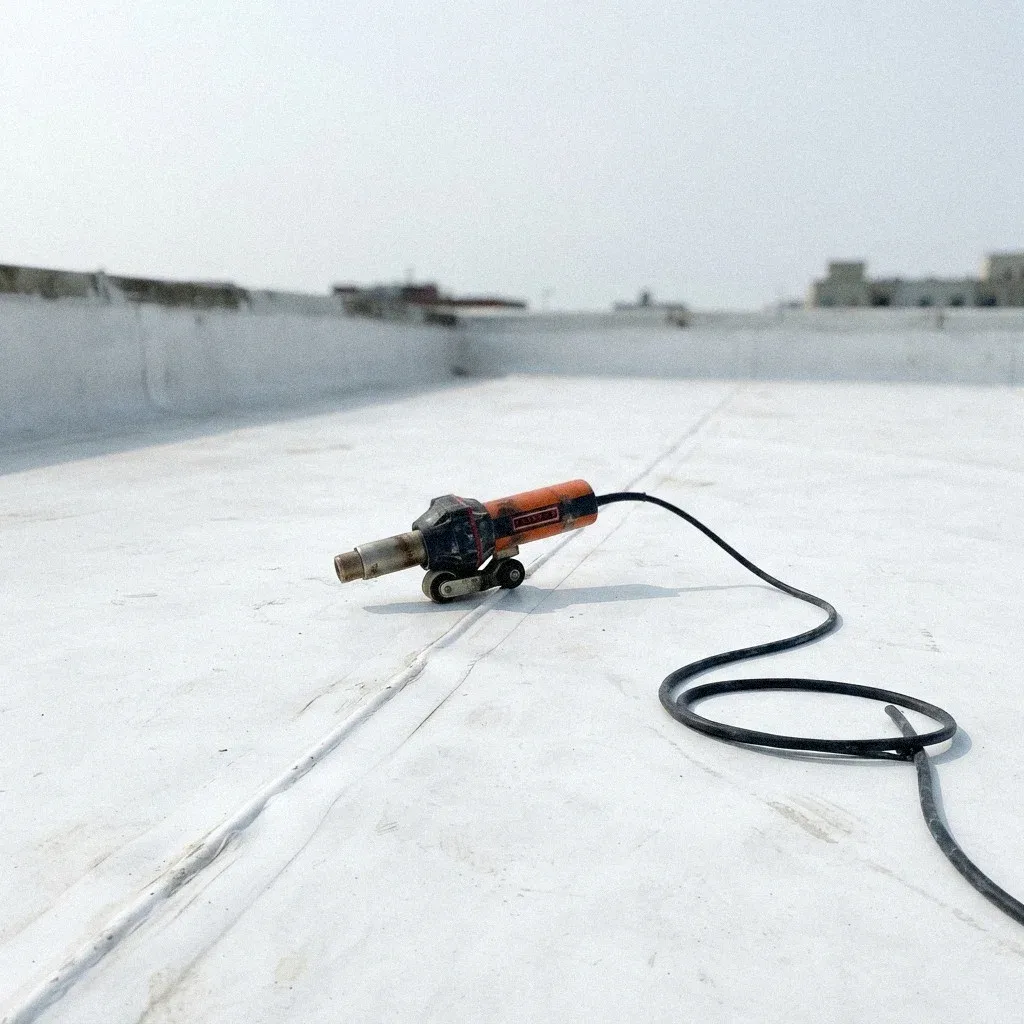
A flat roof over Riverside or San Marco fails at the seams first, not in the open field of the membrane. Heat-welded or torch-down joints separate slowly, letting wind-driven rain from a summer thunderstorm work into the deck long before a stain shows inside. Check seam edges near parapet walls and around any pipe or vent penetration. Loose or lifted seam tape is worth a call before the next storm rolls off the St. Johns River.
Blisters and Failing Seams
Blisters on a single-ply or modified bitumen roof mean moisture or air got trapped under the surface during installation or a hot Jacksonville afternoon. They start small, maybe a soft raised patch near a drain on a Murray Hill garage roof, and grow with every heat cycle through another humid summer. Left alone, a blister eventually splits, and that split becomes the leak nobody can trace back to one spot.
Stains Tracing Back From a Seam
A ceiling stain under a flat porch roof or garage addition, common on older homes near Springfield and Avondale, rarely sits right under the actual leak. Water finds a seam or a parapet flashing gap, then travels sideways along the deck before dropping through drywall. That is why a stain near one wall often means the real opening is a few feet over, closer to a drain or the roof edge.
Our Flat & Low-Slope Roofing Process
Flat Roof Inspection in Jacksonville
The licensed pros we connect you with walk the flat or low-slope section looking for ponding water, seam failure, blisters, and soft spots near parapet walls, then check drains and scuppers to see whether water is actually leaving the roof.
Membrane Options for Jacksonville Roofs
Once the roof is assessed, they lay out membrane options, single-ply or modified bitumen, flag any spot where tapered insulation would correct ponding, and price a re-cover against a full tear-off based on what the existing layers allow.
Tear-Off Versus Re-Cover in Jacksonville
For a tear-off, the old membrane comes off down to the deck, any water-damaged sheathing gets replaced, and tapered insulation is set or corrected so the finished roof actually directs water toward the drains instead of holding it.
Seam Welding and Drains in Jacksonville
New membrane goes down with heat-welded or adhered seams, flashing gets rebuilt at every parapet wall and penetration, and drains or scuppers are checked to confirm water leaves the roof during the next Jacksonville downpour.
Why this matters
Jacksonville has plenty of homes with flat porch roofs, garage additions, and enclosed lanais where a pitched-roof approach does not apply, plus low-slope sections on commercial buildings across Downtown and Southside. These roofs depend on the membrane and drainage holding up through heavy summer rain and hurricane season, not on pitch shedding water on its own. A membrane that fails quietly can soak a deck for months before anyone notices.
Code-Compliant Flat & Low-Slope Roofing in Florida
Slope Has to Be Built, Not Assumed
A low-slope roof over a Duval County home needs positive slope built into it, not left to gravity that barely exists on a flat section. Tapered insulation gets set during a re-cover or tear-off so water actually reaches the drains or scuppers instead of sitting in a low spot. Skip this step and every heavy afternoon storm from June through September leaves standing water somewhere on the roof.
Choosing Re-Cover Over Tear-Off
The Florida Building Code, as enforced by the City of Jacksonville Building Inspection Division, requires a roofing permit through the JaxEPICS portal before a re-cover or tear-off starts, whether the job sits on a Northside garage roof or a Southside commercial addition. Code also limits how many layers of roofing material a structure can carry before a full tear-off is required, which decides whether re-cover is even an option.
How Much Does Flat & Low-Slope Roofing Cost in Jacksonville?
Here is roughly what flat & low-slope roofing runs locally. Treat it as a guide — the property itself decides where inside the range you land.
| Scope In Writing | Warranty Coverage | Permit Record |
|---|---|---|
| A roofing contractor working in Jacksonville needs a current state license, and that status can be checked before anyone gets on the roof. It matters more than a friendly estimate or a truck with a logo on the door. | One roof, ground-level look, photos and a written condition note | an estimated $6300–$24700 |
| Insurance proof is the piece homeowners skip. Ask for the certificate to come from the agent directly, not as a photocopy from the contractor, and check that both liability and workers coverage are still in date. A lapsed certificate is worth nothing on the day somebody falls. | Tear-off plus soft decking swapped where found, flashing renewed at penetrations | an estimated $9000–$33800 |
| A license number only matters if someone checks it against the state's active records before signing anything. A bond is a separate, smaller backstop meant to cover work left unfinished or done poorly, and it's worth confirming both. | Two-story tear-off, ridge vent added, permit filing handled as part of the job | an estimated $11700–$46800 |
| Payment structure says as much about a Jacksonville roofer as the license does. A modest deposit, a draw when material lands, and the balance held until the permit closes out is normal. Most of the money up front, before a shingle moves, puts all the risk on the homeowner. | Full tear-off, disposal, decking, and gutters together, permit pulled through the city | an estimated $16200–$67600 |
A permit isn't paperwork for its own sake; it puts an inspector's eyes on the work before it's covered up. Skip it and any defect stays hidden until a sale or a claim forces the question, usually at your expense.
Frequently Asked Questions
How do you find a leak on a flat roof?
Low-slope leaks in Jacksonville almost always trace to seams, flashing at parapet walls, or a drain and scupper opening, not the flat field itself. Heat-welded seams on a single-ply membrane can separate over time, and modified bitumen laps can lift at the edges. The licensed pros we connect you with check those spots first before touching the membrane.
Why does water pool on my flat roof?
Because a flat roof is never truly flat. It is built with a slight fall toward drains or scuppers, and water sitting there means that fall has been lost or the outlet is blocked. On a Jacksonville porch or garage addition the usual causes are a sagging deck, insulation that settled unevenly, a drain packed with oak litter, or a roof that was framed dead level to begin with. Standing water is worth chasing down, because it shortens the membrane's life wherever it sits.
Should I re-cover my flat roof or tear it off?
A re-cover works when the existing membrane is dry, still adhered, and not already carrying the maximum layers allowed under the Florida Building Code. It saves the cost of stripping the old surface. A tear-off is the right call when the deck is wet, the membrane has failed in multiple spots, or ponding water has gone on long enough to need tapered insulation corrected from the deck up.
Why does a flat roof leak differently than a shingle roof?
A low-slope roof has almost no pitch helping water run off, unlike the shingle roofs common across most Jacksonville neighborhoods. That means the membrane, its seams, and the drains have to do the work gravity handles on a steeper roof. Any weak seam, clogged scupper, or flat spot without enough tapered insulation becomes a place water sits instead of leaves.
What material is used on a Jacksonville flat roof?
Most low-slope sections on Jacksonville homes and buildings use a single-ply membrane or modified bitumen with heat-welded or torch-down seams. Older built-up roofing still shows up on some older properties around Springfield and Riverside, usually well past the point of a simple repair. Which system is already installed decides whether re-cover is even possible under current code layer limits.
Will a coating buy me more time before replacement?
A coating system can extend the life of a membrane that is still structurally sound but showing surface wear, minor blistering, or weathering from repeated Jacksonville summers. It works best when the seams and flashing details are intact and the deck underneath is dry. A coating is not a fix for a roof with active ponding water or seam failure that needs a re-cover or tear-off instead.
How much does flat & low-slope roofing cost in Jacksonville?
Whether a permit is required often comes down to the size and scope of the job, not just whether shingles are being swapped. Duval County still checks the work against current wind and code standards, so skipping that step can cost more later than it saves now.
Related Services & Areas
Ready To Get This Handled
One call is enough to start. Say what the roof is doing and roughly when it started, and the licensed pros we connect you with will tell you whether it needs looking at this week or can wait for the next dry stretch. If something is actively coming through a ceiling in Jacksonville, say so on the call, because that moves to the front of the list and gets covered the same day rather than scheduled.
Call (904) 675-6349