Now taking calls — fast callback for urgent roof damage · (904) 675-6349
Overheated Attic and Poor Airflow control in Jacksonville, FL
Attic Airflow

Poor Attic Airflow in Jacksonville Homes

Late summer is when a poorly ventilated Jacksonville attic shows its worst side, after months of heat and humidity from the St. Johns River area have had time to build up with nowhere to escape.

Answered plainly

An overheated attic shows up as excess heat and trapped humidity under the roof deck, caused by blocked or undersized soffit and ridge vents that leave air with nowhere to move.

AGE AND WEAR SIGNS

Questions Worth Asking Before Hurricane Season

Wind doesn't need to peel a whole roof to cause damage. A single lifted shingle tab lets water underneath on the next storm, and that small opening does more harm over a few months than the wind gust that started it.

Shingles curling or cracking earlier than expected

Curling or cracking shingles well before their expected lifespan usually means heat has been building under the deck for years, cooking the shingle from underneath rather than just weathering from the sun above.

Attic noticeably hotter than the outside air

A hot, stuffy attic that feels far warmer than the outside air on a Jacksonville afternoon points to intake and exhaust vents that aren't moving air, trapping heat against the decking all day.

Damp film on the underside of the deck

Water droplets or a damp film on the underside of the roof deck, felt or seen from inside the attic, means warm indoor humidity is condensing against a deck that never gets a steady airflow to dry it out.

Cooling bills climbing with no other change

Higher-than-expected summer cooling bills without any other change point to attic heat radiating down into the living space below, a sign the insulation and ventilation aren't keeping that heat where it belongs.

Musty smell lingering in the attic year-round

A smell that never goes away, rather than one that comes after rain, points at airflow rather than at a leak. Moisture arriving from the house has nowhere to leave, so it sits in the insulation and the sheathing all year. That is why this one is easy to live with and expensive to ignore: nothing drips, and the wood keeps taking on moisture anyway.

The Age Of The Roof Matters

Jacksonville's long stretch of summer heat, paired with humidity that barely lets up between afternoon thunderstorms, means an attic without steady airflow holds both heat and moisture far longer than it would in a drier climate.

Many older homes in Springfield and other established Jacksonville neighborhoods were built with vent systems sized for a different era, and added insulation or a repaired roof deck can end up blocking the soffit intake without anyone meaning to.

Where a Jacksonville house sits changes what wears out first. Within a few miles of the ocean, salt air works on every fastener and piece of flashing. Under mature oak canopy in Ortega or Avondale, shade and leaf litter keep a slope damp. Out on open Westside lots, it is straight UV.

Signs Your Roof Needs a Closer Look

Location
Throughout the attic space, most noticeable at the roof deck and around the soffit and ridge vent openings.
Cause
A hot, stuffy attic, condensation on the underside of the decking, or shingles curling from underneath.
First Sign
Attic air noticeably hotter than the afternoon outside, and a musty smell at the hatch that is there in dry weather as well as wet.
Season
Builds through each Jacksonville summer, worsening as heat and humidity have more weeks to accumulate with no outlet.
Untreated Risk
Ignored heat and trapped moisture cook shingles from underneath, warp roof decking over time, and can invite mold into insulation across the attic floor.
Season
Late summer is when a poorly ventilated Jacksonville attic shows its worst side, after months of heat and humidity from the St. Johns River area have had time to build up with nowhere to escape.
Usual range
an estimated $450–$2600

What Changes Once Water Gets Under Shingles

Overheated attic gets confused with a straightforward roof leak, since both leave moisture stains on the decking that a homeowner spots from a ladder or inside the attic near Arlington and Mandarin homes with older vent setups. Both leave water marks on the decking, so a homeowner assumes a leak. A pro checks whether the staining follows a rafter line from a penetration, or spreads evenly across the deck the way condensation from trapped humid air does.

The Order Repair Work Actually Follows

A real fix means confirming the soffit intake is actually open, adding or clearing ridge or box vents so warm air has somewhere to exit, and making sure any bathroom or kitchen fan vents outside the attic, not into it.

If the decking has already gone soft or mold has spread across the rafters near St. Johns Town Center-area homes with older construction, that wood and insulation has to be replaced before new ventilation does any good.

Most of Duval County sits low and flat, and the roof is the only thing between a slab-built house and a summer that delivers most of its rain in short, hard bursts. There is no attic space to spare and no dry season long enough for a small leak to wait out.

One repair against a full replacement
The situation Usually the right call
A single leak with a clear sourceA one-off repair
The same leak coming back in the same place every winterA planned re-roof
Anything where the sheathing is soft underfootFull tear-off and replacement

What Homeowners Can Reasonably Handle Alone

A homeowner can walk the yard and check that soffit vents along the eave aren't painted shut or blocked by insulation, and feel the attic air on a hot Jacksonville afternoon for a difference between attic and outdoor temperature.

What Happens Inside When It Fails

This is the one on the list with a genuine health side. An attic that cannot vent holds humid air against the sheathing, and mold on that sheathing sheds into air which travels down through the same ceiling gaps the moisture came up through. The people who notice first are usually sleeping under it. Damp insulation also stops insulating, which is why the cooling bill climbs alongside the smell.

Find Out What's Under Those Shingles

Putting right overheated attic and poor airflow usually runs an estimated $450 to $2600. That is a budgeting figure, not a price. Termites, not roof-borrowing rot alone, drive real cost swings around Jacksonville, since Duval County's sandy soil and humidity keep subterranean colonies active most of the year. A licensed inspector checking a roof near Springfield or Arlington will flag any decking softness, but termite treatment itself is a separate call, priced and scheduled apart from reroofing work. pricing guide.
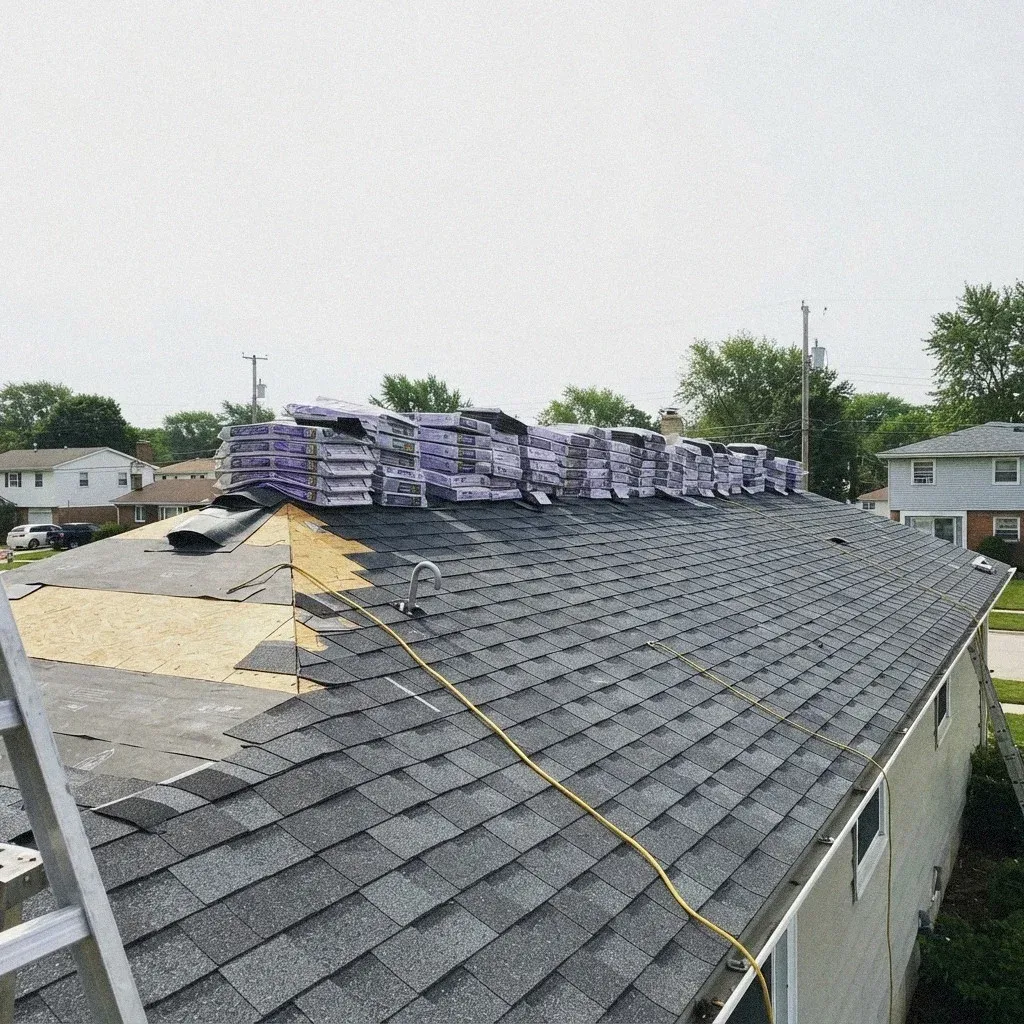
Where To Go Next

What One Roof Symptom Can Signal

Wind-Lifted and Missing Shingles

Storm Damage. Wind-lifted and missing shingles appear as raised tabs, bare gray patches, or torn-off pieces after Jacksonville thunderstorms or hurricane-season gusts.

Algae Streaking on Shingles

Roof Surface. Algae streaking is dark, blotchy discoloration on shingles, usually running down north-facing slopes or shaded valleys near the ridge.

Nail Pops From Heat Cycling

Roof Defects. Nail pops are roofing fasteners backing out of the deck as Jacksonville heat and humidity make the sheathing expand and shrink, pushing small round bumps up under the shingles.

Questions & Answers

Frequently Asked Questions

How much does attic ventilation repair cost in Jacksonville?

It runs from a couple hundred dollars for added soffit and ridge vents on a Jacksonville home to over a thousand when a bathroom exhaust fan has to be rerouted outside instead of dumping into the attic, plus any insulation replaced where it got wet.

Can adding roof vents actually make ventilation worse?

Yes, if the intake at the soffit is blocked by paint or insulation, adding exhaust vents alone can pull air from the living space below instead of outside. Jacksonville attics need both intake and exhaust working together, not just more roof vents.

Will a hot attic alone rot my roof deck?

Summer attic heat alone won't rot the decking, but trapped humidity from an unvented bath fan or AC condensation will, especially through Jacksonville's long, wet summer months. Left unaddressed, that moisture eventually softens the plywood and lets mold spread across the rafters.

When should I check my attic's airflow in Jacksonville?

Check after the hottest stretch of summer, when Jacksonville attics run well above outdoor temperature for weeks straight. Also check right after a run of afternoon thunderstorms, since humid air trapped without a way out is when condensation on the underside of the decking shows up fastest.

Get Started Today

Overheated Attic and Poor Airflow in your home?

Roof damage rarely announces itself. It starts small: a lifted shingle corner, a stain on the ceiling that appears after heavy rain, a dark streak where two roof planes meet. None of that means the whole roof is failing, but it does mean water found a way in and won't stop looking for one.

Call (904) 675-6349
Free inspections & same-day service available
Call (904) 675-6349 Schedule Online