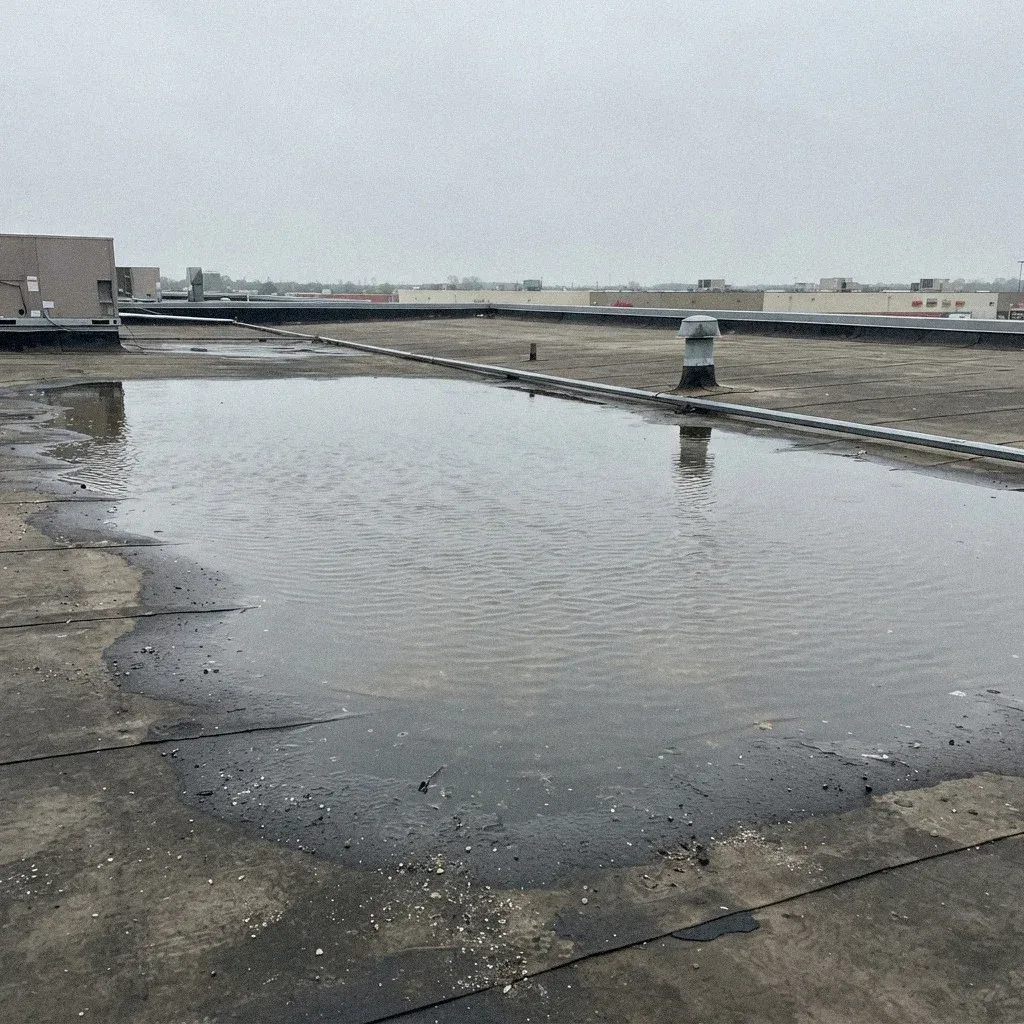
What Is Wrong With My Jacksonville Roof?
A brown ring on a Murray Hill ceiling after an afternoon thunderstorm is not the same trouble as granules piling up in an Avondale gutter. One usually starts at a flashing or vent boot; the other means shingles are wearing thin. Jacksonville roofs show their age in different rooms first.
The honest way in is from what you saw rather than from a diagnosis. A brown ring, a cold draft, granules in the gutter, a sag along the ridge: each of those points somewhere different. Read the one that matches, and if two of them match, that is exactly what a free inspection is for.
A rafter line sagging in an older Springfield home, daylight visible through Arlington attic boards, or a soft spot near a San Marco chimney each point somewhere different. What matters is matching what you saw to what it usually means before calling anyone about the roof.
Signs that need dealing with now
Either the water spreads fast, there is a contamination or structural risk, or acting late costs a great deal more.
| What you noticed | What it usually means | How soon it matters | Read more |
|---|---|---|---|
| Shingles Missing After a Storm | A shingle in the yard after a storm means wind tore it loose, leaving bare decking underneath with no waterproof layer. Rain gets straight into the roof deck at that spot, especially through afternoon thunderstorms common across Jacksonville, so the gap needs covering before the next one hits. | That bare patch has nothing stopping water once the next Duval County downpour rolls in, and one storm can turn a small gap into soaked decking and a stained ceiling below. | Ask on the call |
| A Dip or Sag in the Roofline | A dip or sag in the roofline usually means a rafter or truss has weakened, often from water damage that soaked into the decking over Riverside, Springfield, or Arlington homes alike. It threatens a partial collapse. This is a structural sign, not cosmetic, and belongs with the roof deck problems page. | Wood holding weight in a sagging spot loses strength with every afternoon thunderstorm that adds water weight to it. Duval County's heavy summer rain load makes a slow give-way turn sudden without much warning. | Ask on the call |
| Daylight Visible Through the Roof Deck | Sky visible from inside the attic means the sheathing has worn through, not just the shingles above it. Water is getting straight into the framing every time it rains over Jacksonville. This is a now: call for emergency tarping before the next afternoon thunderstorm, then see the roof deck damage problems page. | Once decking is punched through, every afternoon thunderstorm off the St. Johns River dumps water straight into the attic insulation, and the soft spot only widens with each rain. | Ask on the call |
Signs worth booking an inspection for
Not an emergency, and not something to leave until next season either.
| What you noticed | What it usually means | How soon it matters | Read more |
|---|---|---|---|
| Water Stain on an Upstairs Ceiling | A brown ring on an upstairs ceiling means rain has been getting past the shingles above Riverside or Springfield-era decking and soaking into the drywall from behind. It usually traces back to a cracked flashing or worn shingle uphill from the spot, not the ceiling itself. If the paint has started to bubble or peel, water is still pooling there. | Every Jacksonville thunderstorm this summer pushes more water through that same gap, and the wet drywall and framing underneath weaken a little further each time. Left through hurricane season, a small ring can turn into a soft, sagging patch. | Ask on the call |
| Ceiling Drips Only in Wind-Driven Rain | Rain angling sideways can slip under a lifted shingle edge or push past flashing that lies flat in calm weather, so the drip only shows when wind drives water uphill against the roofline. It usually points to a flashing gap or wind-lifted shingle, not the whole roof failing. | Each Jacksonville squall off the St. Johns River pushes a little more water past that same gap, and the ceiling drywall around Arlington and Mandarin homes will darken and soften weeks before a full leak shows. | Ask on the call |
| Soffit Panels Hanging Loose | Loose soffit panels mean the fasteners or the strip they clip into have loosened, often from wind working under the eaves during a Duval County thunderstorm. Left hanging, that gap lets wasps, squirrels, and rain into the attic over Arlington and Southside roofs alike. | Every gust off the St. Johns River gets under the gap a little further, and the panel eventually drops. Wildlife and wind-driven rain reach the attic before the next reroof season. | Ask on the call |
| Attic Feels Far Hotter Than Outside | Attic air pulling far hotter than the outside temperature usually means ventilation isn't moving, from blocked soffit vents, a failed attic fan, or insulation packed against the roofline. Trapped heat bakes shingles from underneath and can warp decking. See our attic ventilation problems page. | Heat trapped against the underside of the deck all summer shortens shingle life and can warp plywood over a season of Jacksonville afternoons, not one storm. No leak yet, but it's worth checking before hurricane season peaks. | Ask on the call |
| Musty Smell When the Attic Opens | A smell at the hatch means something up there has been damp long enough for mold to establish, and in Jacksonville humidity that does not take long. It does not tell you the source. Warm wet air pushing up through gaps in the ceiling, a bath fan venting into the attic instead of outside, and a slow leak at a vent all smell identical from the opening, and each needs different work. | Trapped moisture in an attic spreads through insulation and framing with every humid Jacksonville week, and by the time a ceiling bulge or dark streak shows downstairs, the wood underneath has usually been damp for a while. | Ask on the call |
| Nail Heads Showing Through the Shingles | Little round bumps poking through the shingle surface are nail heads that missed the strip beneath or backed out over time. Left alone, each one becomes a pinhole leak point once the sealant around it ages, letting water track down into the decking under that shingle. | Every one of these is a future leak spot, and Jacksonville's afternoon thunderstorms will find it eventually, but the damage stays contained and slow for now. Get it checked before hurricane season, not during it. | Ask on the call |
Signs to keep an eye on
Not damaging yet. Worth understanding before you spend money on it.
| What you noticed | What it usually means | How soon it matters | Read more |
|---|---|---|---|
| Dark Streaks Running Down the Shingles | Dark streaks are algae, usually Gloeocapsa magma, feeding on the shingle's limestone filler. It spreads fastest on north-facing slopes in Riverside and Avondale homes shaded by mature trees. It won't let water in, but it signals aging shingles worth watching as Jacksonville's humid summers keep them damp. | This is cosmetic, not a leak risk, so there's no rush tied to the next thunderstorm rolling off the St. Johns River. Left alone for years, streaked shingles age faster and shorten how long the roof lasts before a reroof. | Ask on the call |
| Granules Collecting in the Downspout | Those granules are the shingle's sun protection, and finding them in the downspout means the surface is thinning. A little is normal on a roof in its first year or two as loose material washes off. A steady handful every time it rains, on a roof with years on it, means the asphalt underneath is starting to take Florida sun directly, and that is what dries it out and cracks it. | Bare spots from granule loss don't leak on their own, but shingles thinned this way age faster under Jacksonville's summer sun and heavy rain, so check again each hurricane season rather than the week after. | Ask on the call |
| Gutter Overflowing in a Downpour | Water going over the front edge of a gutter in a heavy afternoon storm usually means it cannot get away fast enough, not that the roof is leaking. The causes are ordinary: a downspout blocked with pine needles, a gutter pitched the wrong way, or a run too small for the roof area feeding it. Worth sorting because the water lands on the fascia and against the wall rather than away from the house. | Overflow during heavy afternoon thunderstorms is a drainage nuisance, not a roof failure, but water sheeting down the fascia season after season will eventually soften the wood it's nailed to. | Ask on the call |
Frequently Asked Questions
What does it mean if I see water stain on an upstairs ceiling?
A brown ring on an upstairs ceiling means rain has been getting past the shingles above Riverside or Springfield-era decking and soaking into the drywall from behind. It usually traces back to a cracked flashing or worn shingle uphill from the spot, not the ceiling itself. If the paint has started to bubble or peel, water is still pooling there.
What does it mean if I see dark streaks running down the shingles?
Dark streaks are algae, usually Gloeocapsa magma, feeding on the shingle's limestone filler. It spreads fastest on north-facing slopes in Riverside and Avondale homes shaded by mature trees. It won't let water in, but it signals aging shingles worth watching as Jacksonville's humid summers keep them damp.
What does it mean if I see shingles missing after a storm?
A shingle in the yard after a storm means wind tore it loose, leaving bare decking underneath with no waterproof layer. Rain gets straight into the roof deck at that spot, especially through afternoon thunderstorms common across Jacksonville, so the gap needs covering before the next one hits.
What does it mean if I see ceiling drips only in wind-Driven rain?
Rain angling sideways can slip under a lifted shingle edge or push past flashing that lies flat in calm weather, so the drip only shows when wind drives water uphill against the roofline. It usually points to a flashing gap or wind-lifted shingle, not the whole roof failing.
What does it mean if I see soffit panels hanging loose?
Loose soffit panels mean the fasteners or the strip they clip into have loosened, often from wind working under the eaves during a Duval County thunderstorm. Left hanging, that gap lets wasps, squirrels, and rain into the attic over Arlington and Southside roofs alike.
What does it mean if I see granules collecting in the downspout?
Those granules are the shingle's sun protection, and finding them in the downspout means the surface is thinning. A little is normal on a roof in its first year or two as loose material washes off. A steady handful every time it rains, on a roof with years on it, means the asphalt underneath is starting to take Florida sun directly, and that is what dries it out and cracks it.
What does it mean if I see gutter overflowing in a downpour?
Water going over the front edge of a gutter in a heavy afternoon storm usually means it cannot get away fast enough, not that the roof is leaking. The causes are ordinary: a downspout blocked with pine needles, a gutter pitched the wrong way, or a run too small for the roof area feeding it. Worth sorting because the water lands on the fascia and against the wall rather than away from the house.
What does it mean if I see attic feels far hotter than outside?
Attic air pulling far hotter than the outside temperature usually means ventilation isn't moving, from blocked soffit vents, a failed attic fan, or insulation packed against the roofline. Trapped heat bakes shingles from underneath and can warp decking. See our attic ventilation problems page.
What does it mean if I see musty smell when the attic opens?
A smell at the hatch means something up there has been damp long enough for mold to establish, and in Jacksonville humidity that does not take long. It does not tell you the source. Warm wet air pushing up through gaps in the ceiling, a bath fan venting into the attic instead of outside, and a slow leak at a vent all smell identical from the opening, and each needs different work.
What does it mean if I see nail heads showing through the shingles?
Little round bumps poking through the shingle surface are nail heads that missed the strip beneath or backed out over time. Left alone, each one becomes a pinhole leak point once the sealant around it ages, letting water track down into the decking under that shingle.
Not Sure What You're Seeing
A cracked shingle in the yard, a musty smell in an Arlington attic, a brown ring on a bedroom ceiling after weeks of afternoon storms - none of these tell you the fix by itself. The same stain can mean a nail popped loose or a valley failing three rooms away. This tool sorts symptoms by what usually causes them around Jacksonville, then a licensed pro confirms it by getting eyes on the actual roof.
Call (904) 675-6349