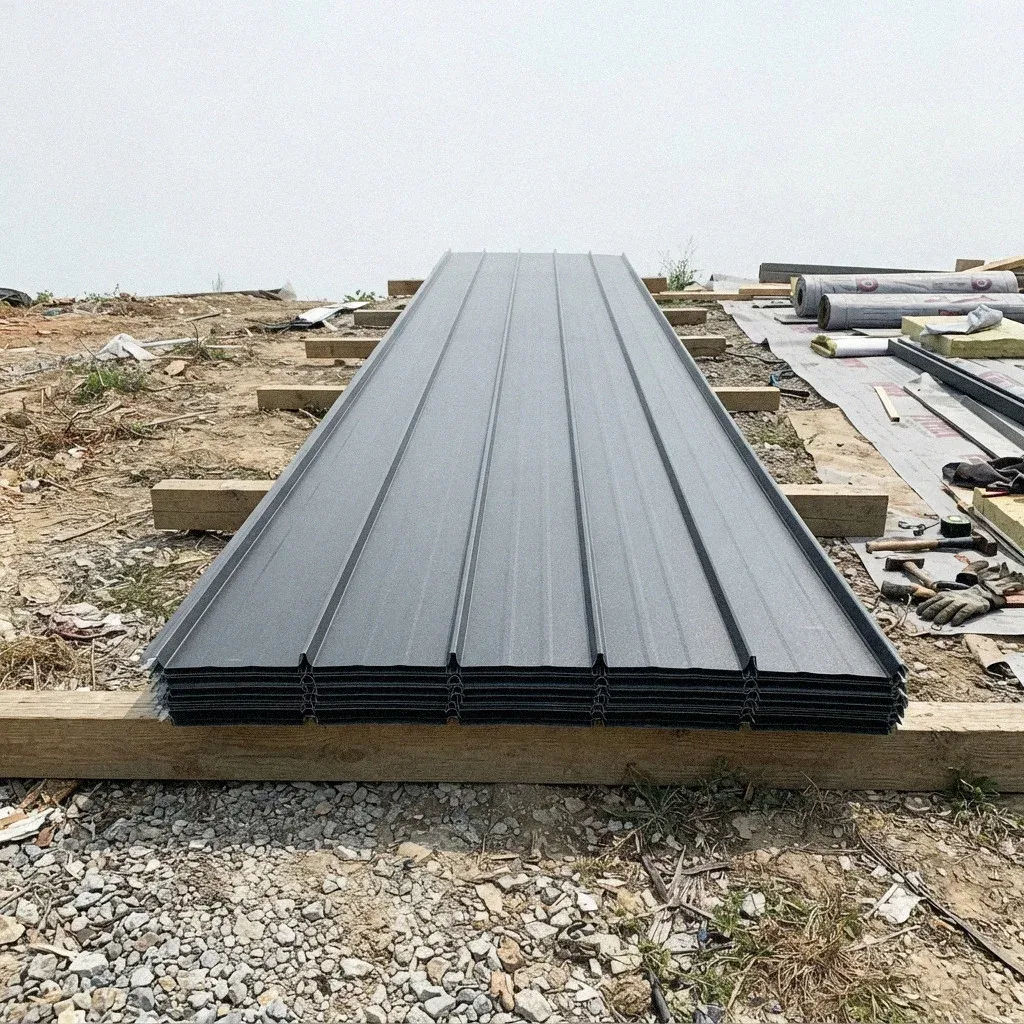
Metal Roofing Compared to Composition Shingles Here in Jacksonville
How standing seam metal and asphalt composition shingles compare for Jacksonville homes, from dead load to resale value.
Composition shingle costs less upfront and suits most Jacksonville roof pitches; standing seam metal weighs less, handles wind-driven rain better, and lasts several times longer. Metal costs more to install but needs replacing far less often over a long hold.
How Long Each Roof Actually Lasts
Jacksonville reroofs generally come down to two paths: asphalt composition shingle or a metal panel system, usually exposed fastener or standing seam. Both are common across Duval County, from Riverside bungalows to newer Mandarin construction, but they carry very different weight, cost, and lifespan trade-offs once hurricane season and afternoon thunderstorms are factored in. Choosing between them means weighing upfront cost against how many reroof cycles a homeowner wants to sign up for over the decades ahead.
Composition shingle covers most Jacksonville roofs today, and the reasons are practical. It is stocked everywhere, priced accessibly, and the licensed pros we connect you with can install it quickly on a Springfield foursquare or a San Marco cottage without ordering specialty panels. Metal has grown more common on Northside and Westside new builds and on homeowners planning to stay put through several hurricane seasons, but shingle remains the default across most of the city's older housing stock.
Service life is the sharpest divide. A composition shingle roof installed in Jacksonville's humidity and summer heat typically wears out well before a metal panel system reaches the end of its run. Metal, particularly standing seam with a Kynar coating, resists sun and moisture cycling in a way shingle granules eventually cannot. That gap matters most for homeowners in Arlington or San Jose planning to stay in the same house through multiple reroof decisions rather than one.
Weight on Older Jacksonville Framing
Dead load rarely worries anyone on a newer Baymeadows or Nocatee-adjacent build, but it matters on older Duval County housing near Avondale or Riverside, where rafters were sized decades ago for shingle and nothing heavier. Composition shingle adds real weight across a roof deck, and a full tear-off followed by another shingle layer keeps that load the same. Metal panel systems generally weigh less per square, which gives older framing more breathing room without a structural upgrade.
The practical question on a 1920s Riverside or Springfield house is what the rafters were sized for and what has been added since. Original framing on those homes carried one layer of shingle. If a recover put a second layer on at some point, the load has already gone up once. Going to metal usually takes weight off rather than adding it, which is one of the reasons standing seam shows up on historic homes where concrete or clay tile would need the roof structure reinforced first. Where a homeowner is unsure, the answer comes from someone in the attic looking at rafter size and spacing, not from a table.
- Composition shingle on a Jacksonville home usually wears out over roughly two decades, sooner with heavy afternoon thunderstorm exposure and little attic ventilation.
- Dead load runs opposite to what most people guess: standing seam panels weigh less per square than composition shingle, easing the load on older Riverside or St. Nicholas framing.
- Exposed fastener panels cost less but rely on gasketed screws that loosen as thermal movement flexes the panel through Jacksonville's hot, humid summers and mild winters.
- Concealed clip standing seam hides every fastener under the panel edge, so thermal movement happens without a single exposed screw working loose over time.
- Fire classification rarely decides the choice here; wind-driven rain during hurricane season and afternoon thunderstorms causes far more Jacksonville roof failures than heat ever does.
- Snow retention isn't a Jacksonville concern, but wind uplift resistance is, and heavier shingle grades and thicker panel gauges both perform better in gusts off the St. Johns River.
Panel Styles Versus Shingle Grades
Neither material is one product. On the metal side the real split is between exposed fastener panels, where the screws go through the face of the panel into the deck, and standing seam, where clips hold the panels and every fastener is hidden under a raised rib. On the shingle side it is three-tab against architectural, and increasingly against impact-rated Class 4. Comparing metal to shingle without saying which metal and which shingle is how two bids end up thousands apart with nobody able to explain why.
For a Jacksonville roof the grade matters more than the material. An exposed fastener panel is cheap metal, and its gasketed screws are the weak point: sun hardens the rubber washers and thermal movement backs the screws out, so a run of them needs retightening every so often. Standing seam removes that maintenance entirely. On the shingle side, a three-tab has less wind rating and less mass than an architectural, and Class 4 adds an impact rating some Florida carriers credit. The honest comparison is standing seam against Class 4 architectural, because those are the two most owners here are actually choosing between.
- A shingle section torn loose near a valley on a Murray Hill or Lake Shore roof gets swapped course by course, leaving the rest of the slope alone.
- Standing seam takes more care to fix. A panel dented by a fallen limb often needs pulling and replacing along its whole run because the seams lock together.
- Impact rating separates the two more than most Jacksonville homeowners expect, and it's worth asking about before a roof sits through another hurricane season.
- Ridge and hip details differ: shingle uses cap shingles over a vented ridge, while standing seam needs a formed ridge cap and closure to keep wind-driven rain out.
Cost Tier, Resale, and What Recycles
Metal costs more on the day and less per year. A standing seam roof on a typical Jacksonville house lands somewhere between two and three times a comparable architectural shingle reroof, and it is expected to outlast two or three of them. Whether that math works depends entirely on how long you plan to own the house. Under about ten years, shingle usually wins on cash. Past twenty, metal usually wins on total spend. Around fifteen it is close enough that the deciding factors become the look of the house, whether an insurer credits the choice, and how much appetite you have for going through another tear-off.
Noise and walkability differ more in expectation than in practice. A metal roof does sound louder than shingle during a hard summer downpour, but solid decking and proper underlayment cut that difference down substantially. Walkability favors shingle slightly, since its surface grips better underfoot for anyone servicing a chimney or clearing debris after a storm. Metal with a low-gloss finish and screw-down fastening can still be walked safely, just with more care near seams and ridges.
| Category | Metal | Composition |
|---|---|---|
| Relative cost tier | Higher install tier | Lower install tier |
| Dead load on slab-built framing | Light, under roughly 1.5 psf | Heavier, more so over a recover layer |
| Recyclability at tear-off | High scrap value at teardown | Mostly landfilled after Jacksonville tear-off |
| Recover over old shingles | Not done over existing shingles | Allowed within Florida Building Code layer limits |
| Wind-driven rain at valleys and penetrations | Fewer seams for water to find | More seams, more flashing points |
Living With the Roof You Pick
Getting a roof fixed fast after wind or hail damage usually depends on what a crew already carries and knows well. Composition shingle dominates older sections of Jacksonville from Murray Hill to Arlington Hills, so matching materials and finding an experienced installer both tend to be straightforward. Metal repair calls for a contractor who understands panel seams, clip spacing, and matching a factory finish, which narrows the pool some but is far from rare in a city where metal roofing keeps gaining ground.
Whether a new roof can go directly over what is already there depends on the material and the deck underneath. A metal system with concealed clips can sometimes recover over shingle, since the panel load is modest and a full tear-off is skipped. Shingle-over-shingle recovers are more restrictive and depend on deck condition and how many layers already exist. Either path still needs a roofing permit through the City of Jacksonville Building Inspection Division before work starts.
Matching the Roof to Your House
Style narrows the choice faster than cost does. Standing seam sits naturally on a modern build, a metal-roofed Florida vernacular cottage, or a low-slope addition, and looks out of place on a 1920s Mediterranean Revival house in Avondale that was designed for barrel tile. Architectural shingle reads as neutral almost everywhere in Jacksonville, which is part of why it stays the default. Metal shingle and tile profiles exist precisely to bridge that gap. If the house sits in one of the city's historic districts, ask what the review process expects before you fall in love with a material.
Recyclability and resale value tend to move in the same direction. Metal roofing is broadly recyclable once removed, while shingle recycling access varies depending on which Jacksonville hauler or facility takes it. On resale, a well-installed metal roof often reads as a selling point to a buyer thinking about future maintenance, while a newer shingle roof still satisfies most Duval County buyers and lenders without hesitation. Snow retention is not a factor homeowners here need to plan around.
Metal Versus Composition, Side by Side
- Metal costs more to install and lasts several times longer, so the choice mostly comes down to how long you plan to own the house.
- Standing seam hides every fastener under a raised seam; exposed fastener panels screw through the face and need those screws checked over time.
- Metal weighs less per square than shingle, which helps on older Riverside and Springfield rafters sized decades ago for one layer.
- Recover over shingles skips a tear-off when the old layer is sound, but Jacksonville's Building Inspection Division still requires a permit through JaxEPICS either way.
- Metal panels have strong recyclability at the end of their service life; whether composition shingle gets recycled depends on the hauler serving your part of Duval County.
- A dented standing seam panel often means replacing the whole run, while a damaged shingle section is swapped course by course.
Frequently Asked Questions
Can a metal roof go over my existing shingles?
Sometimes. A metal system with concealed clips can be installed over existing composition shingle on many Jacksonville homes, since the panel load is lighter than a second shingle layer would add. The deck still needs to be sound, without soft spots or existing leaks hidden underneath. A licensed roofing pro can inspect the current roof and confirm whether a recover is a good fit or whether a tear-off makes more sense first.
Which one holds up better in a hurricane?
Properly installed, both can meet the wind requirements Jacksonville falls under, which is a design speed in the 120 to 130 mph range rather than the tougher standard the far south of the state uses. Standing seam has an edge because it has fewer seams for wind-driven rain to find and no tabs to lift. But installation decides more than material here: a well-fastened Class 4 architectural roof will outperform a badly clipped metal one every time. Ask what fastening schedule is being used, not just what the panel is made of.
Does switching to a metal roof lower my insurance rate?
Metal costs more per square to install than composition shingle in Jacksonville, but the price gap shrinks the longer you own the house. Shingle roofs on Arlington or Mandarin homes typically need replacing well before a standing seam roof shows any wear, which changes the real cost over a twenty- or thirty-year hold.
Will my Jacksonville HOA allow a metal roof?
Both hold up fine underfoot when dry, which matters given how often Jacksonville roofers climb up after summer thunderstorms to check flashing. Composition shingle takes foot traffic across most of the field without complaint. Standing seam needs weight kept on the flat pan, away from the raised seams, or a panel can dent.
How loud is a metal roof during a thunderstorm?
Most Jacksonville HOAs and architectural committees accept both without a fight. Composition shingle fits the older housing stock in San Marco and Avondale without drawing a second look. Standing seam gets more scrutiny in those same historic districts, though newer construction near Baymeadows and Town Center rarely runs into pushback.
Ready to compare metal and composition roofing?
Ask the licensed pros we connect you with to price both on the same Jacksonville roof, same scope, so the numbers actually compare.
Call (904) 675-6349