Now taking calls — fast callback for urgent roof damage · (904) 675-6349
Blistering and Cracking Shingles control in Jacksonville, FL
Shingle Wear

Blistered, Cracked Shingles on a Jacksonville Roof

Jacksonville reroof work is easiest outside the heaviest afternoon thunderstorm months, giving crews a dry deck to set new shingles and correct attic airflow without racing incoming rain.

The short version

Blistering and cracking shingles means the asphalt mat has bubbled and split from trapped heat and moisture, usually on south- and west-facing slopes that bake hardest under Jacksonville's summer sun. It shows up as raised bumps or spiderweb cracks and worsens until the mat leaks.

TIMING THE WORK

Why Age Alone Does Not Tell You Much

A roof problem rarely announces itself right away. Fasteners back out, seams open, granules wash off, and none of it looks urgent from the ground. Weeks later comes the sign inside — a discolored patch, a soft spot underfoot, paint that bubbles near a vent. By then the damage has been spreading quietly since the first small opening formed.

Raised bumps scattered across south-facing shingles

Blisters form where moisture or gas trapped inside the shingle expands as the surface heats. South slopes bake hardest, so that is where they appear first. Scattered bumps on one exposure and none on the others points at heat rather than a bad batch. They matter because each one eventually opens, and an opened blister is a small hole with no granules around it.

Fine cracks running through the asphalt surface

Fine cracking means the mat has dried out and lost the flexibility it had when it went on. A new shingle bends; an old one in this climate splits. Once the cracks run through the surface rather than sitting in it, water reaches the mat directly and the shingle is past repair as a piece. It is also the sign that decides whether a patch nearby is worth doing.

Granules collecting in gutters after light rain

Granules coming off in light rain, rather than in a downpour, means they are barely attached. On a roof in its first year that is loose material washing away and it stops. On an older one it means the asphalt holding them has hardened and let go, which is the same drying out that causes the cracking. Check how much arrives after each rain rather than judging one cleaning.

Bald patches where granules have worn away

A bald patch is past protecting anything. The dark mat is the shingle's body, and once it is taking sun directly it dries and splits faster than the area around it. Patches spread rather than staying put, and they turn up on the sunniest slopes first. Several on one plane means that plane is at the end of its life rather than in need of a repair.

Curling shingle edges near the ridge or hip

Edges curl where the shingle has shrunk and the corners lift away from the course below. Ridges and hips show it first because they get sun from two directions. A curled edge is an entry for wind: once it is standing proud there is something for a gust to get under, and the next storm takes the tab rather than just lifting it. Curling plus cracking on the same slope is a reroof conversation.

What Makes A Roof Fail Early

Jacksonville roofs face long stretches of intense summer sun on top of already-humid attic air, and that combination pushes moisture up through the shingle mat from underneath.

Neighborhoods like Mandarin and Arlington carry plenty of older homes where attic ventilation was never upsized, so heat collects under the decking and blisters the shingles above it faster than the sun alone would.

Plenty of older homes around Springfield and Avondale still carry original decking under a newer layer of shingles. Reroofing one means checking what's underneath before quoting what goes on top, since sandy soil and slab foundations here don't forgive a roof that was patched instead of properly rebuilt.

When a Repair Beats a Full Reroof

Location
South- and west-facing slopes, ridge caps, and any field of shingles with poor attic ventilation beneath the decking.
Cause
Raised bubbles or fine cracks across the shingle face, often with granules missing at the crack lines.
First Sign
Trapped attic heat and moisture pushing up through the mat, plus UV breakdown of aging asphalt over years of sun.
Season
The underlayment and decking below, once cracks open a path for water during heavy rain.
Untreated Risk
Left unchecked, cracked mats let rain reach the decking, soaking attic insulation and framing until mold spreads through Jacksonville homes before any ceiling stain shows.
When
Jacksonville reroof work is easiest outside the heaviest afternoon thunderstorm months, giving crews a dry deck to set new shingles and correct attic airflow without racing incoming rain.
Estimated cost
an estimated $400–$2200

Questions That Belong Before Any Estimate

Blistering and cracking gets mistaken for hail bruising, since both leave broken or dimpled shingle faces scattered across a slope after a storm. The test is pattern. Hail bruises cluster randomly across all slopes and often dent soft metal nearby; blistering concentrates on the sun-baked slopes and follows attic bays, not storm tracks.

What Counts as a Real Roof Fix

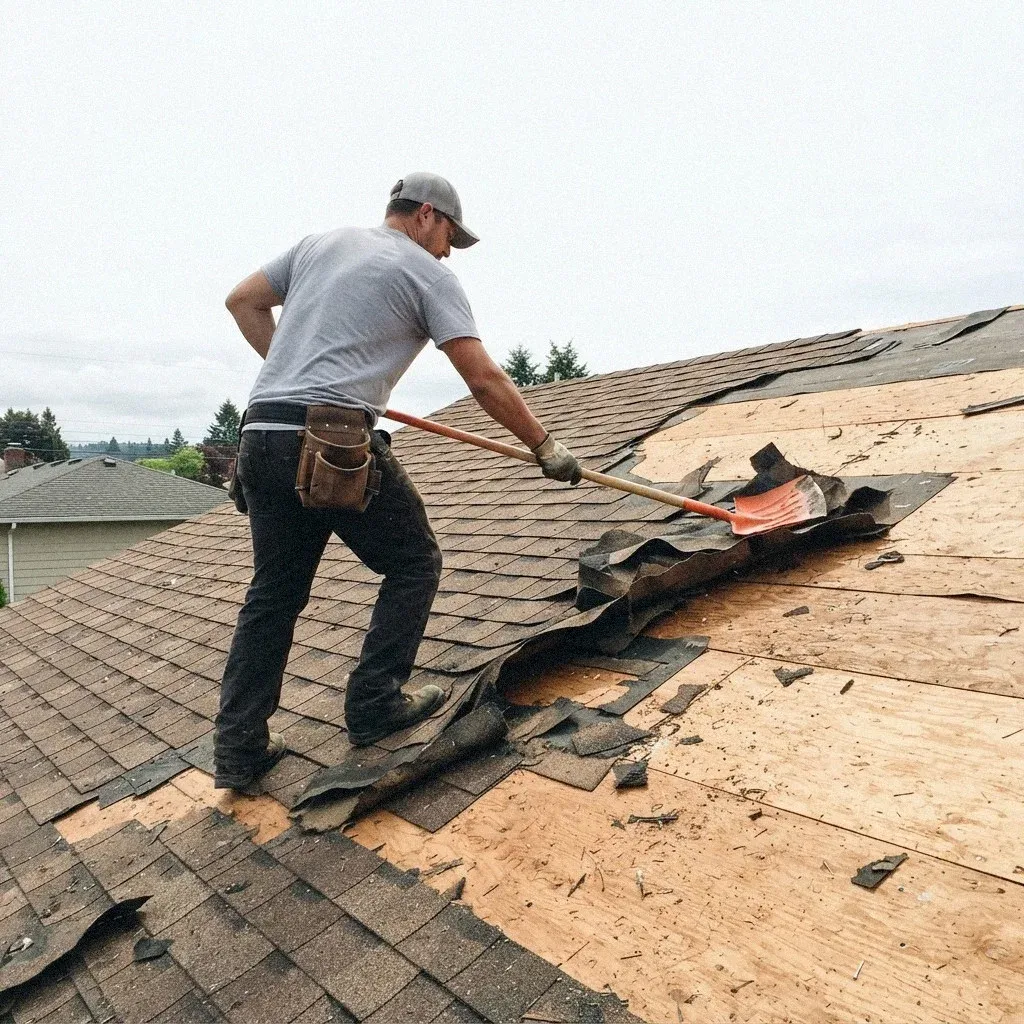
The real fix replaces the blistered shingles and corrects the attic ventilation or soffit airflow that let heat build up, so new shingles aren't cooking under the same conditions.

Painting over blisters or pressing them flat does nothing for the trapped gas underneath, and the mat cracks open again once heat builds back up.

Sun does more slow damage to a Jacksonville roof than most homeowners expect. UV exposure dries out shingles and softens sealants over years, and that quiet aging is what gives an afternoon storm somewhere to get through. Age matters as much as any one storm when it comes to what fails first.

Which of the two you actually need
The situation Usually the right call
One failure in one place, found earlyOne visit
A repair that has already been done once and failedReplacement rather than another repair
Water that has got past the underlaymentReplacement, because the structure is involved

Small Fixes Worth Doing Before You Call

A homeowner can see this one from the yard with binoculars on a low-sun evening, when the raised bumps throw a shadow. Check the gutters for granules while you are down there, and the attic for daylight. What is not homeowner work is walking a blistered roof: the bumps break underfoot and turn a cosmetic problem into an open hole. Lifting courses to replace tabs is for the licensed pros we connect you with.

Why Waiting Costs More Later

Cracked shingles that let water reach the decking can leave damp insulation and framing in the attic, and that dampness grows mold well before a ceiling stain ever appears.

How Old Is Your Roof, Really?

Most blistering and cracking shingles jobs in Jacksonville land between an estimated $400 and $2200, and the roof decides where inside that. Termites, not roof-borrowing rot alone, drive real cost swings around Jacksonville, since Duval County's sandy soil and humidity keep subterranean colonies active most of the year. A licensed inspector checking a roof near Springfield or Arlington will flag any decking softness, but termite treatment itself is a separate call, priced and scheduled apart from reroofing work. pricing guide.
Common Questions

The Bigger Picture Behind a Small Leak

Failed Step Flashing at Walls

Flashing Failure. Failed step flashing is the metal woven up a wall behind the siding, letting water in where a roof slope meets that wall.

Gutter Overflow in Heavy Rain

Drainage. Gutter overflow in heavy rain is water sheeting over the front edge of a blocked, misaligned, or sagging gutter instead of draining through the downspout, most visible along the eave during a downpour.

Wind-Lifted and Missing Shingles

Storm Damage. Wind-lifted and missing shingles appear as raised tabs, bare gray patches, or torn-off pieces after Jacksonville thunderstorms or hurricane-season gusts.

Questions & Answers

Frequently Asked Questions

How do I know if my shingles are blistering?

In Jacksonville, check slopes facing south and west first, since those catch the most direct sun through a Duval County summer. Look for raised bumps or fine cracks across the shingle surface, especially where granules have thinned or gone missing.

Why are my shingles cracking in the heat?

Trapped heat under the shingle mat is the main driver, made worse by attic spaces that don't vent well in older homes near Springfield or Murray Hill. Once gas builds up under the asphalt, it pushes a blister up until the mat splits.

Can cracked shingles be fixed without a full reroof?

Sometimes, and it comes down to how far it has spread. A handful of cracked tabs in one area can be cut out and replaced, provided the deck under them is sound and a close enough shingle is still made. Cracking across a whole slope is different. It means the mat has dried out and lost its flexibility everywhere, so the next patch cracks the shingles around it as the crew lifts them. On a Jacksonville roof the south and west faces go first, so check whether the other slopes look the same before deciding.

Does insurance cover blistered or cracked shingles?

That depends on your carrier's read of the cause. Blistering tied to age and sun exposure over years reads as wear rather than sudden storm damage, so coverage isn't guaranteed the way hail or wind damage often is.

Get Started Today

Ready to get this sorted?

Getting three roofing quotes back rarely means comparing the same job three times. Materials, warranty terms, and what happens to the old layer before the new one goes down can all differ. Ask each contractor to walk you through those specifics before you compare a single number on a page.

Call (904) 675-6349
Free inspections & same-day service available
Call (904) 675-6349 Schedule Online