A dimensional shingle looks thicker on a Riverside or San Marco roofline because it is thicker — two fiberglass mat layers laminated together, sold by the square and weighing more per bundle than the old style. Three-tab uses cutouts to fake that stepped look with one layer. The lamination is what casts the shadow line you notice from Beach Boulevard. Three-tab still sells around Jacksonville on tighter budgets since it costs less per square, even with a lower wind rating and shorter stated warranty than laminated shingles carry.
What Lamination Adds
Double-layer lamination means the shingle isn't flat. The top layer is smaller and offset, glued to a full base sheet, so the finished shingle has thickness variation built into it rather than a printed pattern trying to fake one. That extra layer is also extra material, which is where the added bundle weight comes from. A homeowner in Riverside or San Marco comparing a sample of each in hand will feel the difference before ever seeing it on a roof.
Bundle Weight Differences
Bundle weight gives away the difference fast at any Jacksonville lumberyard. A three-tab bundle runs light because it's one fiberglass mat layer with asphalt and granules pressed on top. Laminated shingles carry noticeably more weight per bundle since the second layer, glued underneath the first, adds mass without adding size. It typically takes more bundles to cover the same roof area, which is one reason architectural product costs more per Jacksonville reroof.
Wind Rating And The Nailing Zone
Wind rating separates the two products on paper more than looks ever could. Three-tab shingles are generally rated lower because a single mat layer gives wind less to grip but also less holding power at the nailing zone. The double-layer lamination on architectural shingles adds thickness right where fasteners drive through, which is part of why they typically carry a higher rating in Jacksonville's hurricane-prone wind zone.
Why The Shadow Line Exists
The shadow line is the dark band that runs across an architectural roof, and it comes directly from the offset cutout layer sitting slightly raised above the base. Three-tab has no shadow line because it has no second layer to cast one; its surface reads flat from the street, even from a distance down Roosevelt Boulevard or Atlantic Boulevard. That shadow line is a byproduct of construction, not a coating or a printed effect, which is why it holds up as the shingle weathers.
Starter Course And Ridge Cap
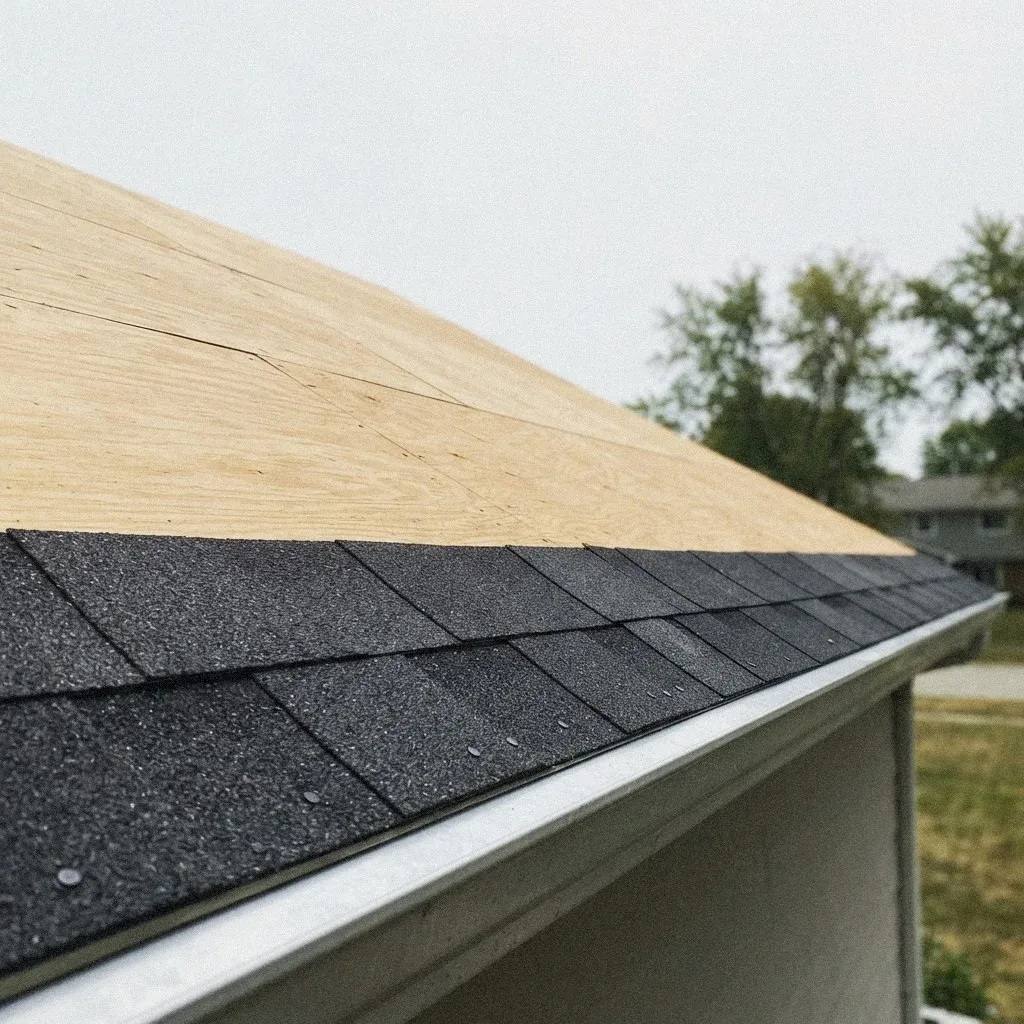
Ridge cap shingles reveal the difference again at the top of the roof. Three-tab roofs often use cut-down field shingles bent over the ridge, since the flat single layer folds easily. Laminated roofs generally call for a purpose-made ridge cap shingle, because the double-layer material is stiffer and resists folding cleanly. On a San Marco or Ortega roofline, that ridge detail is one of the easiest ways to tell which shingle type is underneath from the street.
Reading The Cutout Pattern
The cutout is the notched piece laminated onto the base layer, and its shape is what actually creates the shingle's texture rather than its color. Three-tab shingles have no cutout at all; the two slots cut into the strip just separate it into tab shapes on a single flat plane. On a laminated shingle, the cutout's edge is irregular by design, which is why architectural roofs on Ortega or Avondale homes read as textured rather than gridded from the sidewalk.
Stated Warranty Length
Manufacturers publish a stated warranty length for each shingle line, and three-tab shingles are typically sold with the shortest terms in a given manufacturer's lineup, while laminated shingles sit higher. That number reflects the manufacturer's own material and construction, not a guarantee tied to Jacksonville's climate or the licensed pros who install it. Reading the actual document matters more than the headline number, since coverage terms and what voids them vary by product line.
Where Fiberglass Mat Fits In
Both three-tab and laminated shingles are built on a fiberglass mat, a thin fire-resistant base layer soaked in asphalt and coated with granules on top. The mat itself doesn't change between the two types; what changes is how many asphalt-and-mat layers get stacked and fused together above it. That's a useful thing to know when a supplier or a roofer describes a shingle's construction, since the mat is the constant and the lamination is the variable.
Why Three-Tab Still Sells
Three-tab shingles still show up on Jacksonville roofs mainly because of price; fewer layers and less material per square make them the lower-cost option on a like-for-like square footage basis. Some older homes in neighborhoods like Cedar Hills or Panama Park were originally roofed in three-tab, and a like-kind repair or a budget-driven reroof can keep that look rather than switching. It's a legitimate shingle, not a lesser one, just a simpler build with a lower stated warranty to match.
Comparing Them Side By Side
Laid out flat, the differences are consistent: one layer versus two, a lighter bundle versus a heavier one, a narrower nailing zone versus a wider one, and a flat face versus one with a shadow line. None of those differences describe how long either shingle actually lasts once it's exposed to Jacksonville's afternoon thunderstorms and hurricane-season wind, which depends on installation and maintenance as much as the shingle itself. The construction facts here are fixed; performance over time is a separate question.
Matching The Shingle To The Roof
Three-tab still sells around Jacksonville mainly on price, not performance. Rental properties near Murray Hill or Cedar Hills, sheds, and budget-driven rebuilds after storm damage often go with three-tab because the lower material cost adds up fast across a whole roof. Architectural shingles cost more per square but carry a longer stated warranty and a heavier build. If a homeowner is unsure which fits a specific roof, the licensed pros we connect you with can talk through both options.
Dealing with this in your home?
Jacksonville roofs wear out street by street, not city-wide. Riverside and Avondale still carry crawl-space homes from the 1920s, where old decking meets modern afternoon thunderstorms. Cross the St. Johns River into Arlington and it's mostly slab homes with 1950s-60s roof lines needing different attention. San Marco's stucco bungalows near San Marco Square age differently again.