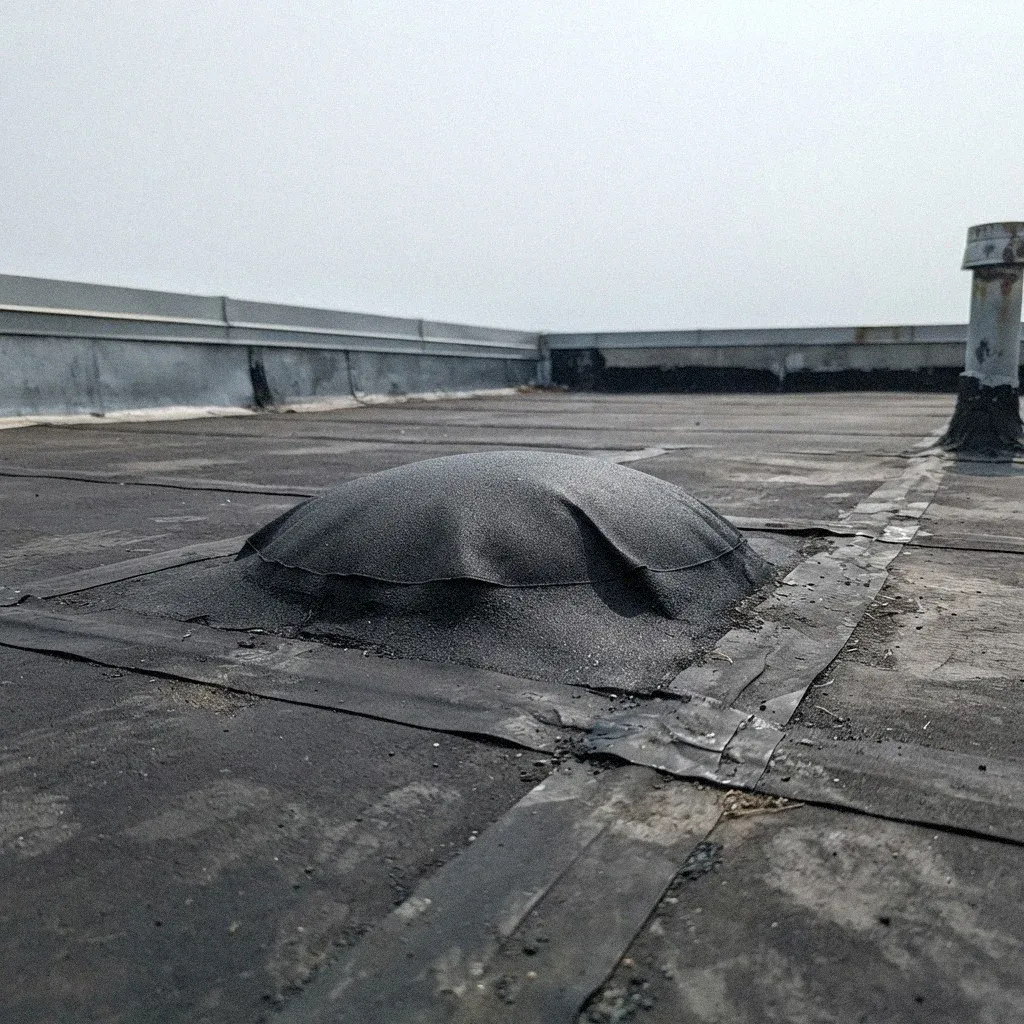
Choosing the Right Flat Roof System in Jacksonville
How TPO, PVC, EPDM, modified bitumen, and coatings perform on Jacksonville's flat and low-slope roofs.
Jacksonville low-slope roofs need a sealed membrane, not shingles, because flat pitches can't shed water fast enough on their own. TPO, PVC, EPDM, and modified bitumen each seal differently, and drainage design matters as much as the material choice.
Membrane Types and How They Seal
Flat and low-slope roofs cover more of Jacksonville than most residents realize, sitting over additions in Riverside and Avondale, retail strips along Southside Boulevard, and warehouses near the Jacksonville International Airport corridor. Low-slope does not mean flat with no pitch at all; it means less slope than shingles need to drain well on their own. That distinction drives every decision covered here, from membrane choice to how water actually leaves the roof once heavy summer rain starts falling faster than it can run off.
Choosing among TPO, PVC, EPDM, modified bitumen, built-up roofing, and coatings starts with how the system attaches and what it sits on. A membrane can be fully adhered with bonding adhesive, mechanically attached with fasteners under the seams, or held down as a ballasted system with stone or pavers. Each method changes wind uplift resistance, weight on the deck, and how repairs happen later, and Jacksonville's wind exposure makes attachment method a real engineering question, not a preference.
None of this is cosmetic work. A low-slope roof over a Northside warehouse or a Southside office near Baymeadows takes on months of intense afternoon thunderstorms and direct tropical system exposure most years. Water that cannot drain fast enough finds seams, penetrations, and flashing details before it finds anything else. Getting the membrane, the insulation underneath, and the drainage path right matters more here than which brand name ends up on the roll.
Attachment Methods and the Insulation Underneath
TPO membrane is a single-ply white or gray sheet joined with hot-air welded seams rather than glue or tape. It reflects heat well, which matters on a Jacksonville roof baking through a Duval County summer, and it has become the most common new install on commercial low-slope work around Town Center and the Baymeadows corridor. PVC membrane welds the same way and holds up better against grease and chemical exposure, which is why it shows up more often on restaurant and food-service buildings.
EPDM is a black rubber sheet, usually seamed with adhesive tape rather than heat, and it still turns up on older commercial buildings and additions across Arlington and the Westside. It handles UV exposure and ponding reasonably well over a long service life, but a taped seam depends on clean, dry surface prep during installation, and Jacksonville's humidity gives installers a narrower window to get that bond right than a drier climate would.
- TPO membrane ships in wide sheets, mechanically attached or fully adhered, with welded seams that resist Jacksonville's summer downpours better than taped joints.
- PVC membrane welds like TPO but resists grease and chemical exposure better, useful for restaurant roofs near Baymeadows or Southside.
- EPDM is a rubber sheet, usually black, with adhered rather than welded seams, common on older Riverside and Avondale additions.
- Modified bitumen is a reinforced asphalt sheet, torch-applied or self-adhered, often found layered on Springfield's older flat-roofed additions.
- Built-up roofing layers asphalt and ply into one mass under gravel or a coating, mostly on legacy commercial buildings Downtown.
- Roof coatings renew UV resistance on an aging membrane but won't rebuild drainage or repair a failed seam underneath.
Seams, Terminations, and Where Water Exits
Modified bitumen and built-up roofing are older, heavier systems still common on commercial buildings and some additions around Jacksonville, layered from asphalt and reinforcing sheets rather than a single membrane sheet. Built-up roofing stacks alternating layers of felt and hot asphalt into one thick, ballasted surface. Modified bitumen uses fewer, reinforced sheets torched, heat-welded, or cold-adhered together. Both add real weight to a structure, which matters when an addition sits over an older Riverside or Springfield building.
Roof coating extends an existing system rather than replacing it outright. A reflective or elastomeric coating applied over sound modified bitumen, built-up roofing, or an aged single-ply membrane can slow UV breakdown and cut down on heat load, buying years before a full replacement is needed. It works only when the substrate underneath is still structurally sound and free of trapped moisture, since a coating seals in whatever condition already exists below it.
- Ballasted systems lay membrane loose under stone or pavers, requiring a structure rated for that added weight before installation.
- Fully adhered systems glue membrane to cover board directly, giving wind resistance without extra structural load, common on Jacksonville homes.
- Mechanically attached membrane fastens through cover board at seams, with the next sheet welded over the fastener line.
- Tapered insulation builds slope into a flat deck, moving water toward drains instead of letting it collect and pond.
Recover or Tear Off the Old Roof
What sits under the membrane matters as much as the membrane itself. Cover board, typically a dense gypsum or fiber-reinforced panel, sits above the insulation and gives the membrane a stable, puncture-resistant surface instead of resting directly on foam board. On a roof that takes hail-free but heavy Jacksonville storms, cover board also helps the assembly meet the wind uplift ratings the Florida Building Code expects for this region's design wind speeds.
Tapered insulation builds slope into an otherwise flat deck by layering boards cut thicker at the high point and thinner toward drains. It is often the real fix for a roof that ponds water instead of shedding it, since the deck itself may be structurally level even though the roof needs a slope to move rain toward the low points. Getting the taper layout right at design stage avoids cutting corrective slope into an assembly after installation.
| Roof Condition | Likely Path | Best Fit |
|---|---|---|
| Single dry membrane, no leak history | Recover usually fits | New membrane bonds over sound substrate |
| Insulation soaked from a slow leak | Tear-off needed | Wet board won't dry under a new layer |
| Roof deck flexes or feels soft | Tear-off needed | Deck itself needs inspection, not just a topcoat |
| Water sits longer than 48 hours after rain | Tear-off with tapered insulation | Recover keeps the same flawed slope |
| Roof already carries two membrane layers | Tear-off required | Florida Building Code limits stacked roof layers |
Curbs, Pitch Pans, and Foot Traffic
Seam welding is where a TPO or PVC installation succeeds or fails over the long run. A hot-air welded seam fuses two membrane sheets into one continuous surface, and the quality of that weld depends on machine temperature, sheet cleanliness, and the installer's speed across the roof. A termination bar then locks the membrane edge down at walls, curbs, and perimeters, and a poorly seated termination bar is a common place for wind-driven rain to find its way in during a Jacksonville squall.
Roof drain and scupper placement decides whether water leaving a low-slope roof actually gets off it. A clogged or undersized drain backs water up across the field of the membrane, adding weight and stress the system was not built to carry. Scuppers cut through a parapet wall to let water exit at the edge, and most low-slope designs also include an overflow drain or scupper set slightly higher, so a blocked primary path still has somewhere for rainwater to go.
How Long Each System Actually Lasts
Deciding between recover and tear-off starts with what is under the existing membrane. A recover installs new insulation and membrane over sound, dry substrate and skips demolition cost, but it also hides any deck damage or trapped moisture that was already there. Tear-off strips everything down to the deck, which costs more upfront but lets whoever installs the new system actually see the condition of the deck and insulation before covering it back up.
Service life varies by system and by how well the details were executed more than by brand name alone. EPDM and built-up roofing have a long track record when installed and maintained well, often running past two decades. TPO and PVC installations depend heavily on weld quality at seams and terminations, and a system installed during a humid Jacksonville summer needs careful moisture control to reach its full expected service life.
Low-Slope Systems, Side by Side
- Roof drains and scuppers move water off the roof; overflow drains sit slightly higher as backup if the primary path clogs.
- Pitch pans are sealant-filled metal boxes around pipe penetrations, a known failure point needing periodic resealing, not permanent sealing.
- Walkway pads protect membrane where foot traffic concentrates near rooftop units, spreading load so the surface doesn't puncture or wear thin.
- Termination bars anchor membrane edges at parapets and curbs; welded field seams are what actually keep water out between them.
- Recover adds membrane over sound existing roofing; tear-off strips to the deck, usually forced when insulation is already waterlogged.
- Service life varies by material and installation quality, but Jacksonville's sun and summer storms shorten most low-slope systems compared to steep-slope shingles.
Frequently Asked Questions
How long does a flat roof last in Jacksonville?
Jacksonville's Building Inspection Division requires a roofing permit for reroofing and most roof repair work, submitted through the city's JaxEPICS portal. A narrow owner-builder carve-out applies when roofing work is part of a new home or addition project, but that is a specific scenario, not a general exemption. Confirm requirements for a given project directly with the Building Inspection Division before work starts.
Can my Jacksonville roof be recovered instead of torn off?
Recover works if the existing membrane on your Jacksonville roof is dry and sound underneath, saving tear-off labor. If insulation is soaked from ponding or a prior leak, recover just traps moisture. A roof inspection before hurricane season tells you which condition you're actually in.
Why does my flat roof keep ponding water?
Ponding usually means the roof lacks slope toward drains or scuppers, often because insulation settled unevenly over the years. Jacksonville's heavy summer thunderstorms expose this fast. Tapered insulation redirects water properly, but a coating alone won't fix a drainage problem underneath it.
Which membrane lasts longest on a Jacksonville roof?
TPO and PVC generally hold up 20 to 30 years with proper hot-air welded seams and maintenance. EPDM often runs similar or longer with adhered seams. Modified bitumen and built-up roofing tend to run shorter, and Jacksonville's UV exposure and afternoon storms shape actual results more than the label.
Do roof coatings really extend a membrane's life?
Coatings renew UV resistance and seal minor cracks on a membrane that's otherwise sound, buying years before a full recover. They don't fix bad drainage, failed seams, or wet insulation underneath. On a Jacksonville roof already ponding, a coating is a delay, not a repair.
Want a straight read on your flat roof?
Describe what the flat section is doing, ponding, blistering, or a stain below, and the licensed pros we connect you with will say what it needs.
Call (904) 675-6349