A shingle field sheds rain the way it was designed to, so most Jacksonville leaks show up somewhere the surface changes instead — a pipe, a wall, a chimney, a change in direction. Afternoon thunderstorms across neighborhoods from Mandarin to Arlington push water sideways under wind, and any joint that was cut, bent, or pieced together by hand is where that water finds a way past the surface and onto the deck below.
Pipe Boots and Vent Failures
Every plumbing stack that runs through a roof needs a pipe boot, the collar that wraps the pipe and ties into the shingles around it. The rubber or plastic on that collar sits in direct sun for years and eventually cracks or shrinks away from the pipe. Once that happens, rain runs straight down the outside of the stack into the attic instead of onto the shingles, and a Jacksonville homeowner usually notices it during a heavy summer storm.
Valleys Where Two Slopes Drain
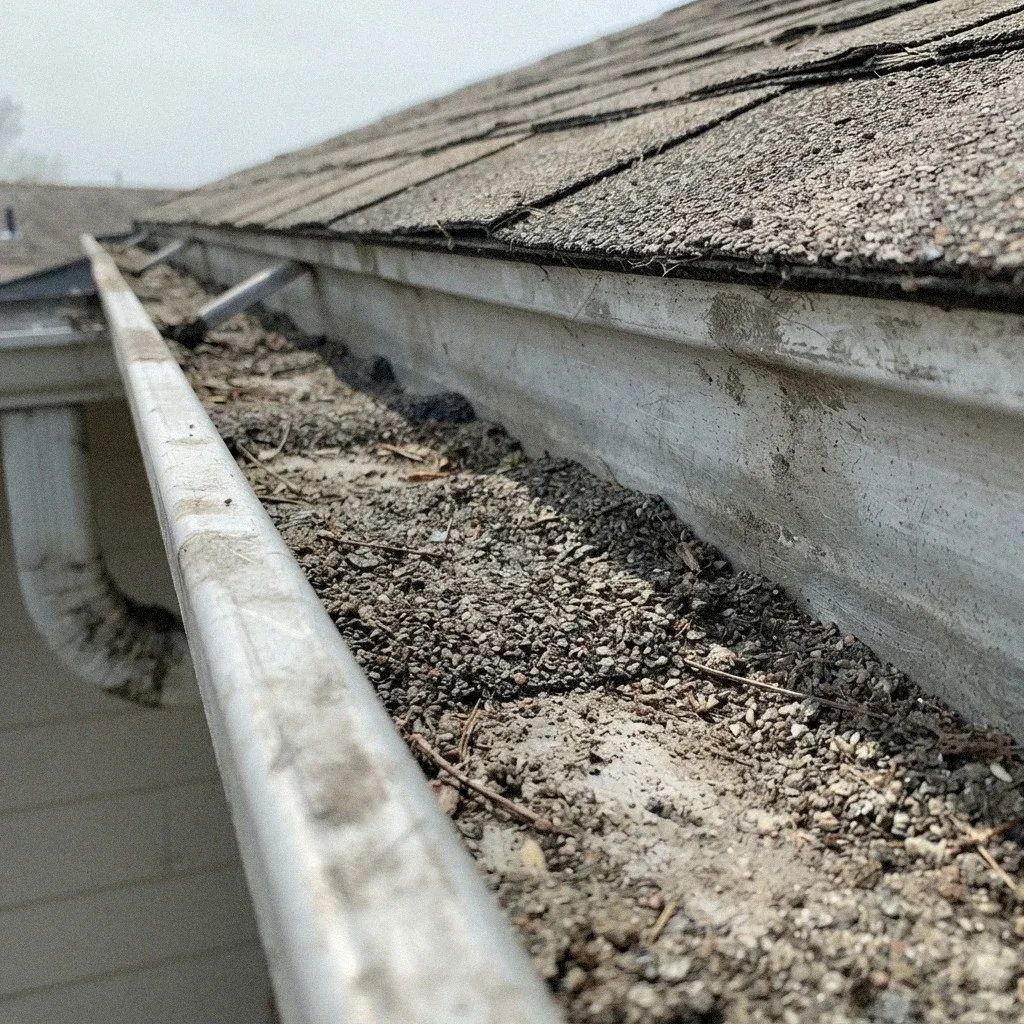
A valley is the line where two slopes meet, and everything falling on both of them runs down it. That makes it the highest-volume channel on the roof and the least tolerant of a shortcut underneath. Valleys fail three ways: the metal underneath is too narrow, it has rusted through where nails pinned it, or debris has built up and held water against the shingles beside it. Under oak canopy in Ortega or Avondale the debris version is the common one, because pine straw and leaves collect in a valley faster than anywhere else and never fully wash out.
Headwall and Sidewall Junctions
A headwall is where a slope runs uphill into a wall face; a sidewall is where a slope runs alongside one. Both need metal woven into the shingle courses rather than laid over the top and sealed. A headwall takes the full width of runoff at once and needs a continuous piece with a turned-up leg behind the siding. A sidewall needs a separate step piece under every course, stepping up the slope. Where somebody has run a bead of caulk along that line instead, it will hold for a couple of Jacksonville summers and then let go quietly.
Chimney Counterflashing Gaps
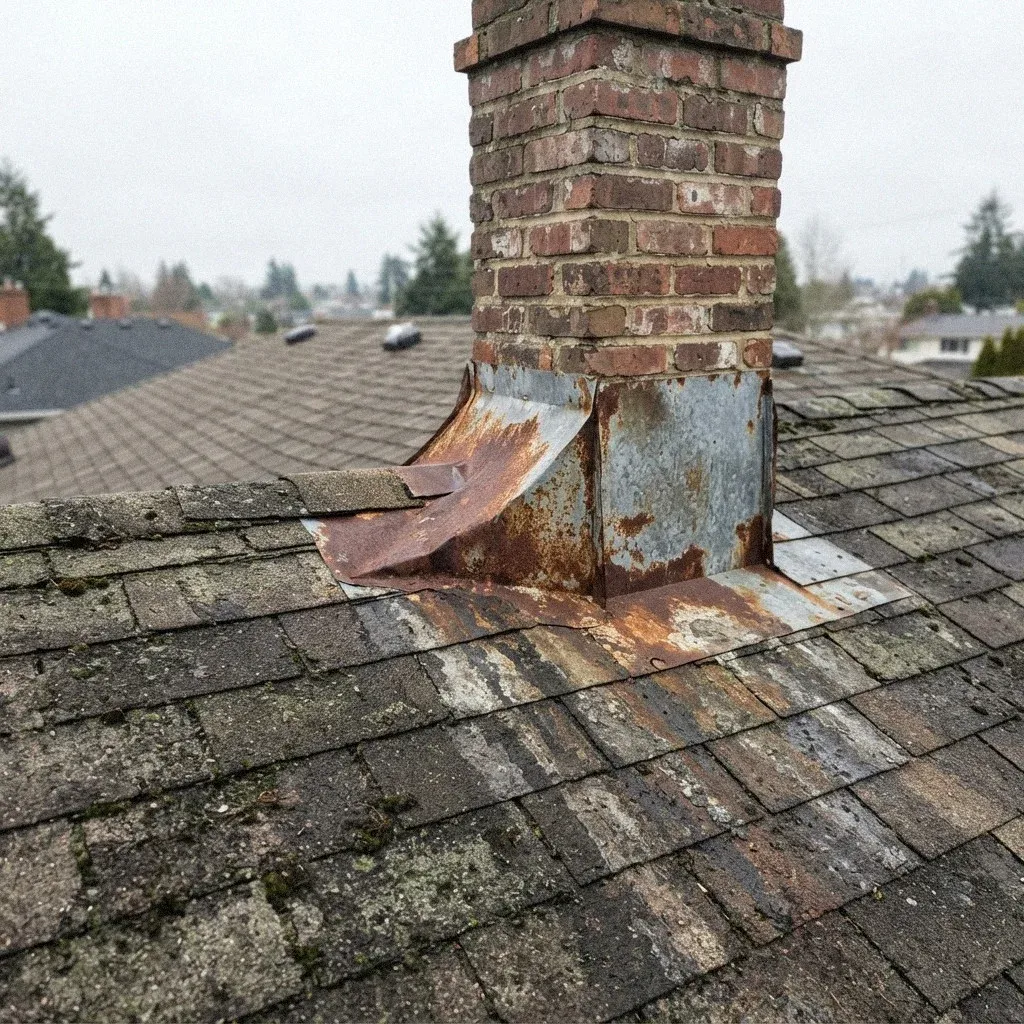
A chimney needs two layers of metal, and the second one is where it goes wrong. Base flashing wraps up the masonry off the roof; counterflashing is cut into a mortar joint above it and folds down over the base so nothing relies on sealant. On older Springfield and Riverside chimneys the counterflashing was often surface-mounted and caulked to the brick instead of let into the joint, and forty years of Florida sun has long since finished that caulk. The tell is a rust stain running down the brick below the metal line.
Skylight Curb Seal Wear
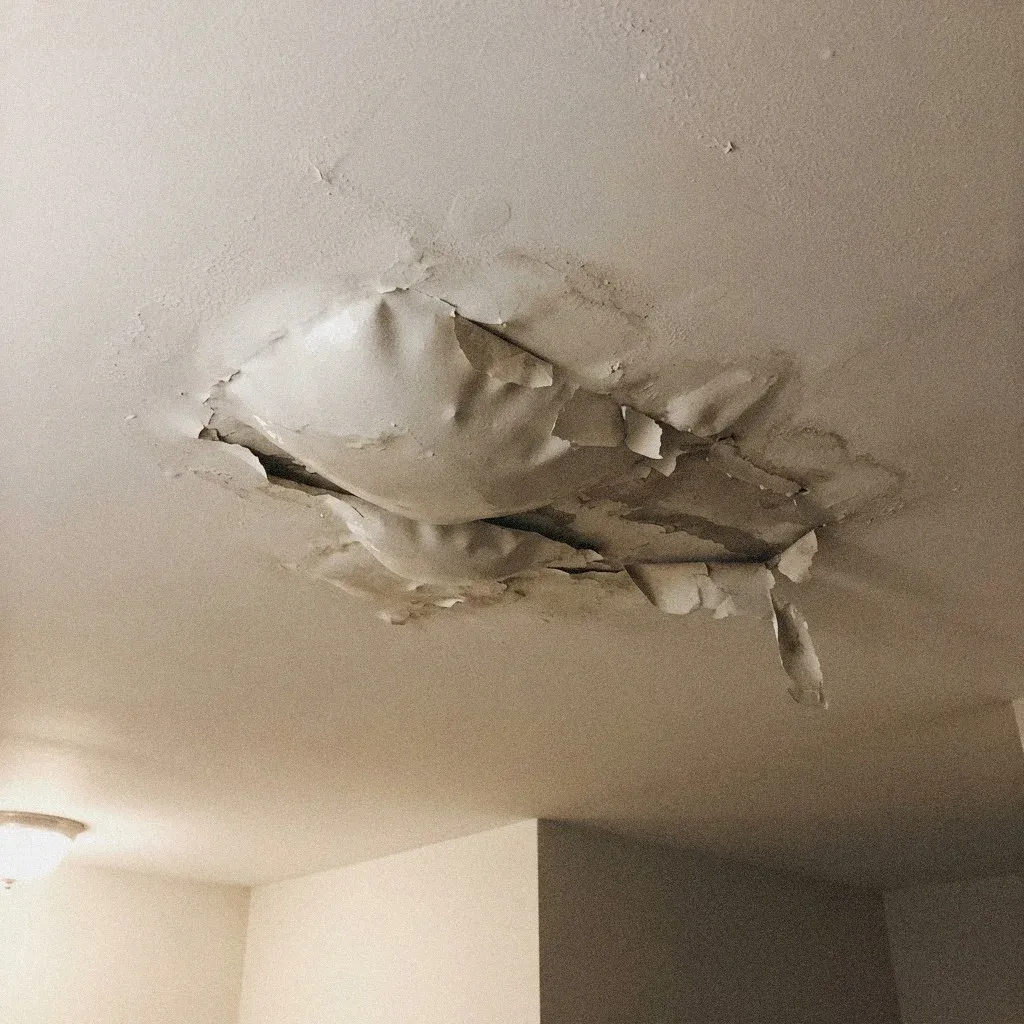
A skylight sits on a curb, a raised frame built up off the deck, and it is flashed on four sides with a different piece at each one. The seal between the glass unit and that curb is a gasket, and gaskets harden. Most Jacksonville skylight leaks are not the glass or even the flashing but that perimeter seal giving up after fifteen or twenty years in the sun. It shows as a stain on the drywall of the shaft rather than out in the room, and it is often mistaken for condensation.
Kick-Out Flashing at Wall Ends
Kick-out flashing sits at the bottom of a sidewall run, where a slope ends against a wall just above a gutter line. Its job is narrow but critical: turn the last bit of runoff away from the siding so it lands in the gutter rather than soaking down behind the exterior wall covering. Builders skip this piece more often than any other flashing detail, and homes across Ortega and Murray Hill show the same pattern where it's missing.
Roof-To-Wall Transitions Get Overlooked
Beyond headwalls and sidewalls there is a third kind of transition: where a lower roof ties into a taller wall that carries siding, brick or stucco, common on additions and second-story bump-outs across Jacksonville. What makes these leak is that two trades share the joint. The roofer flashes up the wall; the siding installer covers the flashing. If the siding was brought down tight to the shingles instead of held clear of them, water wicks behind it and there is nothing anyone can see from either side. It usually gets found during a reroof, not before.
Eaves, Rakes, and Drip Edge
Drip edge is the L-shaped metal running along the eaves and up the rakes, and its whole purpose is to push water off the edge of the deck into the gutter instead of letting it curl back underneath. Two things go wrong with it. It gets left off entirely, which was common on older Jacksonville houses. Or it is there but the underlayment was lapped under it at the eave instead of over it, so water running down the underlayment ends up behind the metal. Either way the sign is the same: a rotting fascia board under a roof that looks fine.
Loose Exposed Fasteners
An exposed fastener is any screw or nail left visible on the roof surface rather than tucked under overlapping material — found on vent flanges, some ridge caps, and metal panels on porches and additions around Jacksonville. Each one sits in a small dab of sealant that dries out under sun exposure years before the fastener itself wears out. Once that sealant fails, the fastener becomes a straight channel for water to reach the deck below.
Underlayment as the Backup
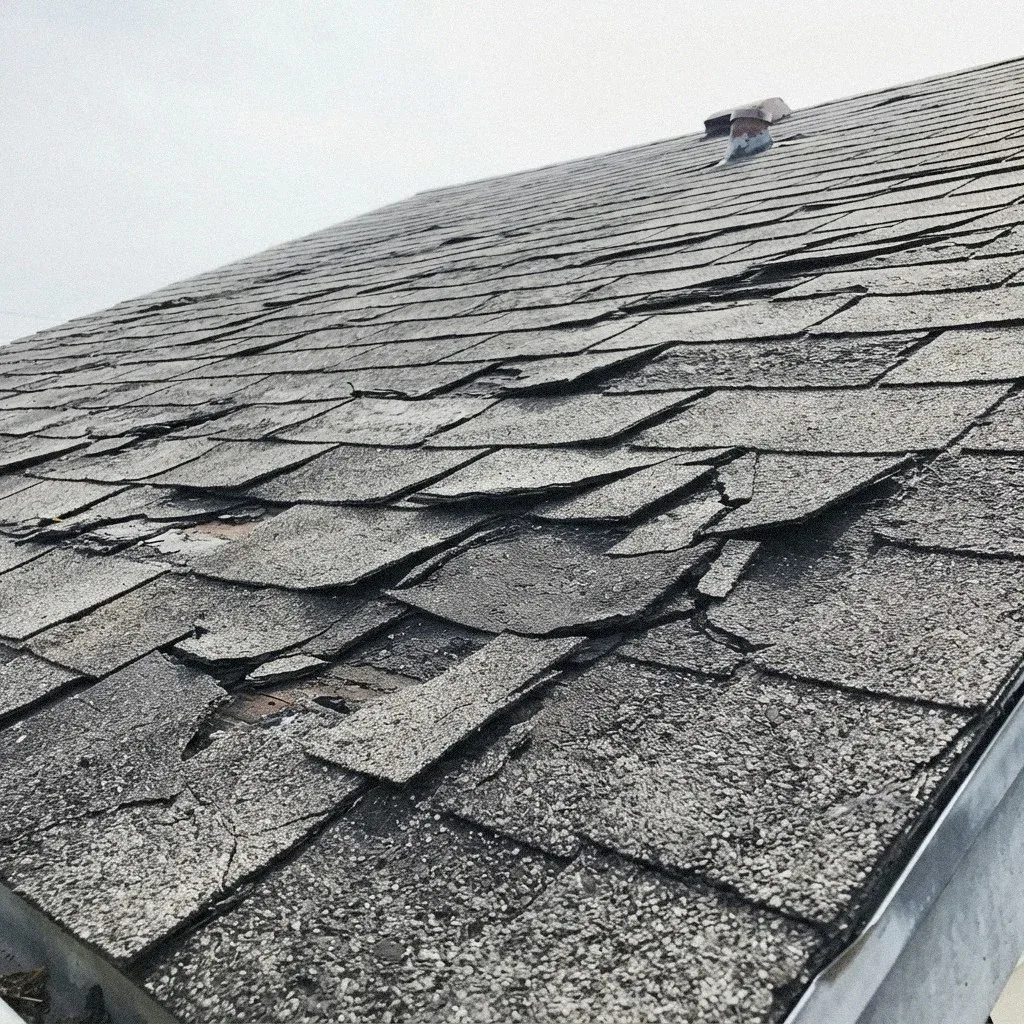
Everything above assumes the shingles are the only thing between rain and the deck. They are not. Underlayment is the second layer, and on a correctly built Florida roof there is a self-adhered membrane at the eaves and in the valleys on top of that. Its job is to catch what gets past the surface, which on a Jacksonville roof happens in every tropical system. A roof with sound underlayment can lose shingles and stay dry inside for days. A roof where the underlayment has torn, gone brittle, or was skipped in a valley starts leaking the moment the surface is breached.
Why Joints Outweigh Roof Age
Line all of this up and a pattern shows itself: almost none of it is the shingles. Pipe boots, valleys, headwalls, chimneys, skylights, kick-outs, transitions, drip edge, fasteners, underlayment — each one is a separate decision point where water either sheds or gets in. A roof's age matters less than whether these specific joints were built and maintained correctly, whether the home sits in Baymeadows, Arlington, or anywhere else in Jacksonville.
Dealing with this in your home?
Jacksonville roofs wear out street by street, not city-wide. Riverside and Avondale still carry crawl-space homes from the 1920s, where old decking meets modern afternoon thunderstorms. Cross the St. Johns River into Arlington and it's mostly slab homes with 1950s-60s roof lines needing different attention. San Marco's stucco bungalows near San Marco Square age differently again.