A stain on a ceiling in a Jacksonville home rarely shows up out of nowhere. It usually follows a heavy afternoon thunderstorm or a stretch of hurricane season rain, and by the time it's visible, water has already been moving somewhere above the drywall for a while. Reading it well means looking past the color and asking what the shape, edges, and placement are actually telling you before anyone touches a ladder.
What the color tells you
A new stain tends to look pale yellow, almost washed out against white ceiling drywall. Given time, especially through a wet stretch of hurricane season, the center deepens toward tan or brown, and the tone can keep shifting for weeks after the water itself is gone. Older stains sometimes take on a grayish cast at the edges, which points to repeated wetting rather than a single event.
What a tide line shows
Look closely and you'll often see a ring bordering the discolored patch, marking where the water sat and dried before soaking any farther outward. One clean ring usually points to a single event that ran its course. Several rings layered like growth rings on a tree mean the ceiling has taken on water more than once, at different times, which changes how urgent the problem probably is.
The touch test that matters
There's a rough test you can try before calling anyone. Push on the ceiling an inch or two off the stain's edge, not the middle, and note what happens. Firm and unmoving usually means the drywall dried out weeks ago. Any softness, or a slight yield under your fingers, points to water that hasn't fully left the material yet, which changes how urgent the stain really is.
Dormant mark or active leak
A dormant stain holds the same outline every time you check it and stays dry under your fingers no matter the weather. An active leak keeps widening, darkens unevenly along its border, and may feel cool or slightly damp after rain. If you're not sure, trace the edge lightly with a pencil and look again after the next thunderstorm rolls through Jacksonville.
Where on the ceiling it lands
Position tells its own story. A stain near an exterior wall, in an older Riverside bungalow or a Springfield foursquare, often points back to a gutter or flashing issue along that wall. A stain out in the open field of a ceiling, away from any wall, more often traces up to a penetration or a failure point higher on the roof deck itself.
Why the leak sits uphill
Water landing on a roof doesn't drop straight down through the deck below where it enters. It follows the slope of the rafter run, spreading sideways under the shingles by capillary travel until it reaches a seam, a nail, or a low point where it finally works through. That means the actual entry point is almost always higher on the roof than the stain sitting on your ceiling would suggest.
What penetrations add to the picture
Plumbing stacks, chimneys, and skylights interrupt the roof deck, and each interruption depends on flashing to keep water out. A stain sitting close to directly under one of these features is worth noting, since the flashing around it is a common failure point in homes across Arlington, Mandarin, or any older Jacksonville neighborhood with a chimney or a roof-mounted vent.
Bubbling paint versus discoloration
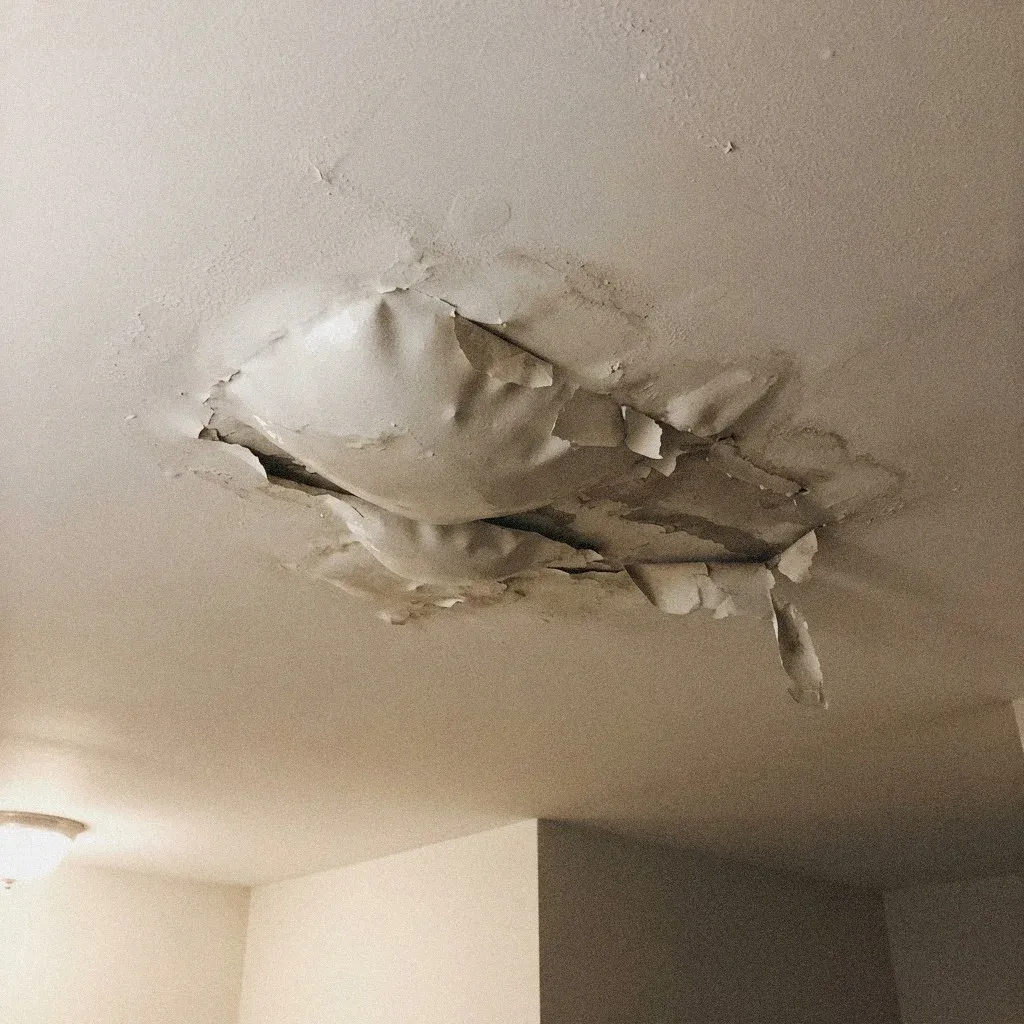
A flat, dry patch of discoloration usually just means water reached the paper layer, left its mark, and moved on before doing more damage. Paint that's lifting in blisters or curling away from the surface tells a different story. That reaction takes standing water pressing against the ceiling from above for long enough that the surface itself started to separate, not merely absorb.
When a sag changes the read
Stand at one end of the room and look across the ceiling instead of straight up at it. Raking light this way reveals a dip that's invisible from underneath. Pair that dip with a stain nearby and you're likely looking at wet insulation matting or drywall that's carrying real weight above it, which is a heavier problem than color alone would suggest.
Confirming it from the attic
If there's attic access anywhere near the stained ceiling, a flashlight from above beats guessing from the room below. Check the attic sheathing for dark streaking, feel the insulation for damp clumping, and look at the underside of the rafter run near any penetration. What you find up there either backs up the ceiling stain's story or points somewhere entirely different.
What a stain can't tell you
A stain confirms that water got somewhere it shouldn't have, along with rough clues about when and roughly where. It doesn't name the exact failure on its own, whether that's a cracked pipe boot, worn flashing, or shingles lifted after a rough patch of hurricane season wind off the St. Johns River. For that, someone has to get eyes on the roof itself.
Dealing with this in your home?
Jacksonville roofs wear out street by street, not city-wide. Riverside and Avondale still carry crawl-space homes from the 1920s, where old decking meets modern afternoon thunderstorms. Cross the St. Johns River into Arlington and it's mostly slab homes with 1950s-60s roof lines needing different attention. San Marco's stucco bungalows near San Marco Square age differently again.