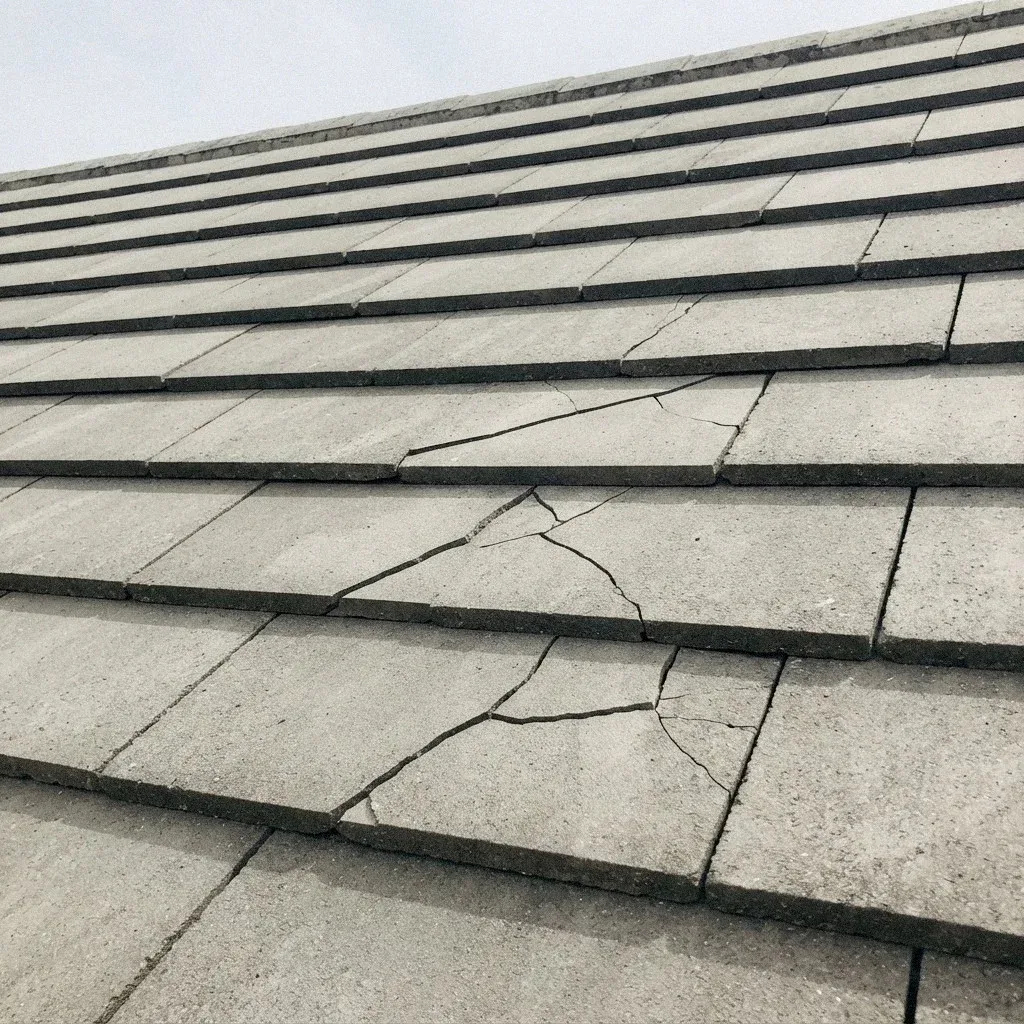
Walk down a street in Avondale or San Marco and a synthetic slate roof can pass for real stone at a glance. It isn't stone. It's a composite shingle, usually a polymer resin blended with mineral filler and pigment, molded into the shape of slate or cedar shake. Jacksonville homeowners run into these products most often on older homes near Riverside where a natural slate or shake look is wanted without the weight or upkeep the original material demands.
What the Material Is Made Of
Composite and synthetic roofing is molded from polymer resin combined with mineral filler, not cut from stone or wood. Manufacturers pour that mixture into a mold shaped like slate or shake, so the texture repeats in a pattern once you look across several courses on a Riverside or San Marco roofline. UV inhibitors keep the surface from chalking under Jacksonville's summer sun, and color-through pigment means a scuff during installation won't show a lighter patch underneath.
How the Shape Gets Made
Natural slate is split by hand, so no two pieces are identical. Synthetic slate and shake are injection molded instead, meaning liquid resin is forced into a mold shaped like a specific slate or shake profile, then cooled and released. That mold gets reused thousands of times, which is where profile mold repetition comes in. A trained eye can sometimes spot the same knot pattern or split line repeating across a Jacksonville roof, which natural material never does.
Why Weight on the Deck Changes
Natural slate can run well over 800 pounds per square, a dead load most older decks in Duval County were never framed to carry without reinforcement. Synthetic slate and shake are built to weigh a fraction of that, closer to a standard shingle roof, which is the main reason they get chosen for older homes near Springfield or Murray Hill where the original rafters are still in place. Confirming the deck's actual capacity before install still matters, because filler and resin blends vary by manufacturer.
What Impact Rating Actually Covers
Impact rating measures how a roofing product holds up against a falling object in a controlled lab test, most commonly a steel ball dropped from a set height, and the results get classed on a scale. It says nothing about wind uplift or water intrusion on its own. A synthetic shake sold with a strong impact rating in a Jacksonville building supply catalog still needs separate confirmation on how it performs against wind, since those are two different tests measuring two different failure modes.
How Fastening Differs From Shingles
Composite shingles don't nail down the same way standard asphalt shingles do. Many synthetic slate and shake products use a specific fastening pattern tied to the manufacturer's tested installation, sometimes with more fasteners per piece or a different nail placement zone than a standard three-tab or architectural shingle calls for. Getting this wrong doesn't just risk a leak, it can void the performance rating the product was tested under, since the rating and the fastening pattern were tested together.
Where Hip and Ridge Pieces Come From
A synthetic slate or shake roof still needs a hip and ridge accessory to cap the peaks, and this piece is usually a separate molded component rather than a cut version of the field shingle, unlike some standard shingle lines. It has to be sourced from the same manufacturer's line to match the profile and hold the same weathering performance. A mismatched ridge piece on an otherwise correct composite roof is one of the more common gaps found during a specification review.
What an Accelerated Weathering Test Shows
Manufacturers run synthetic and composite products through an accelerated weathering test before they ever reach a Jacksonville roof, cycling the material through concentrated UV exposure, heat, and moisture in a lab to simulate years of outdoor exposure in a compressed timeframe. It's a useful comparison tool between products, but it's a simulation, not a guarantee of how a specific roof performs under real St. Johns River humidity and years of afternoon thunderstorms. Ask what standard the test followed, not just that one was run.
How It Differs From What It Imitates
Before a Jacksonville homeowner signs off on synthetic slate or synthetic shake, ask for the impact rating and the tested fastening pattern, since those numbers come from an accelerated weathering test, not a guess. Ask what the dead load on the deck comes to per square, because synthetic material sits lighter than real slate but heavier than asphalt. Confirm the hip and ridge accessory pieces are sold as a matched set, since a mismatched ridge cap stands out fast.
What Deck Condition Should Be Checked
Even at reduced weight, composite roofing still adds dead load on deck compared to a bare structure, and Jacksonville's older housing stock, especially crawl-space homes built before the 1960s in neighborhoods like Riverside, can have decking that's thinned or softened by decades of humidity. A specification should include a look at deck condition, not just a weight comparison chart, since a technically light product can still be too much for a compromised deck.
What to Verify Before Specifying
Before settling on a synthetic slate or shake product for a Jacksonville home, worth confirming the exact polymer resin and mineral filler blend, the tested fastening pattern, the impact rating and what test it came from, and whether hip and ridge accessories are available from the same line. Skipping any one of these turns a well-reviewed product on paper into a mismatched install on a roof near Ortega or San Jose.
Reading the Spec Sheet Correctly
A composite roofing spec sheet often leads with the impact rating and the profile photos, since those sell the product, but the fastening pattern and deck load figures are usually further down or in a separate installation guide. Reading past the front page matters more with these products than with a standard shingle, because the performance numbers are tied to a specific installation method, not just the material sitting on the roof.
Dealing with this in your home?
Jacksonville roofs wear out street by street, not city-wide. Riverside and Avondale still carry crawl-space homes from the 1920s, where old decking meets modern afternoon thunderstorms. Cross the St. Johns River into Arlington and it's mostly slab homes with 1950s-60s roof lines needing different attention. San Marco's stucco bungalows near San Marco Square age differently again.