An insurance policy in Jacksonville treats a roof claim differently depending on when the damage started and how fast it happened. A covered peril is usually described as sudden and accidental — a specific afternoon thunderstorm, a fallen limb near Riverside, a named storm event with a clear date of loss. Gradual deterioration is the opposite: damage that built up over years of sun and rain rather than arriving in one identifiable moment. That distinction, not the roof's age by itself, is what an adjuster is actually weighing.
Why The Date Of Loss Matters
Date of loss matters because it anchors the claim to a specific event the insurer can check against weather records and neighborhood reports. A homeowner near Mandarin who can point to one storm date has something concrete to file against. Someone who noticed a slow drip over a few months, with no single storm to blame, is describing a pattern more than an event. Insurers read that difference closely, since a policy generally covers sudden loss, not the accumulated effect of time and exposure on an aging roof.
Functional Versus Cosmetic Damage
Functional damage means the roof's ability to keep water out has actually been compromised — a torn shingle, a cracked flashing seam, a puncture that lets rain reach the deck. Cosmetic damage looks different but performs the same: a hail bruise that dents a shingle's surface without breaking its seal, for instance. Adjusters in Jacksonville distinguish the two because a policy typically pays for damage that affects performance, not damage that only changes appearance. A roof that still sheds water can still be denied for cosmetic-only findings.
The Wear And Tear Exclusion
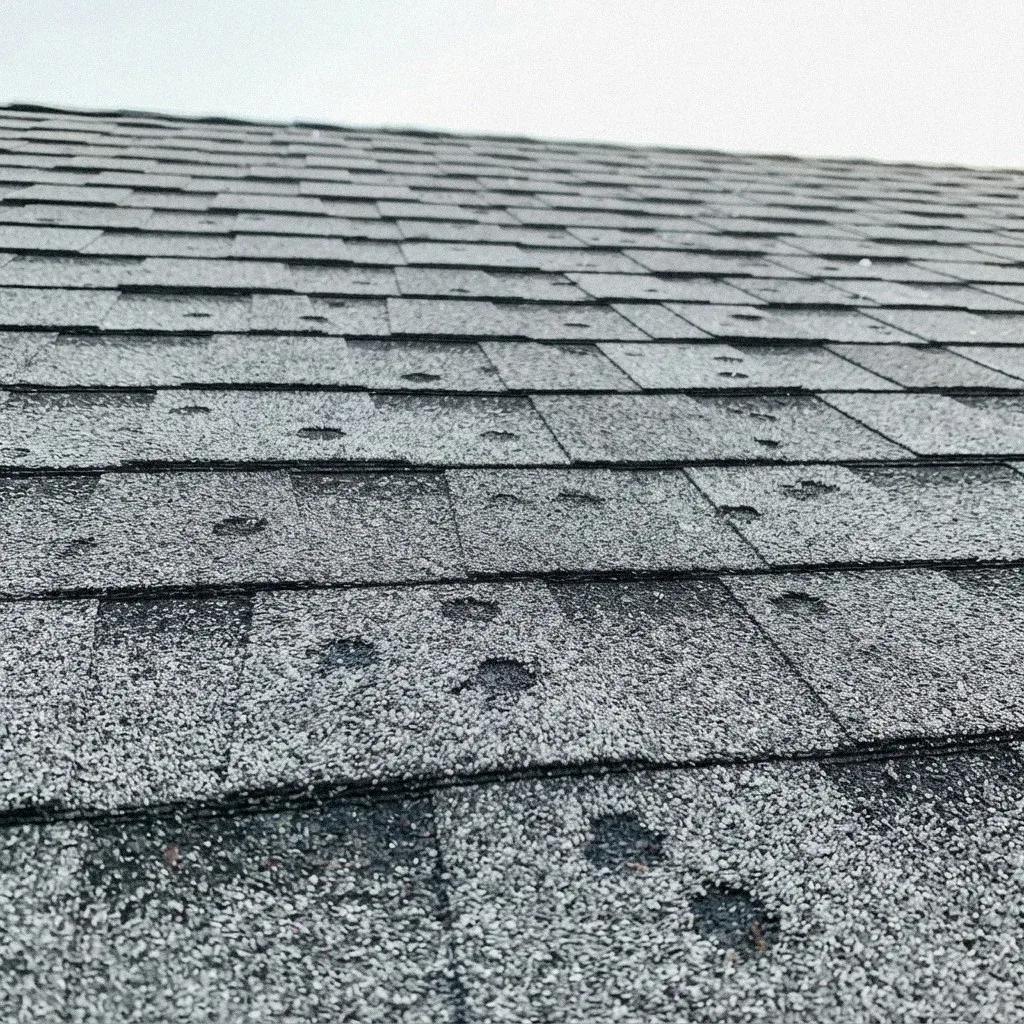
A wind crease across several courses of shingles, or a hail bruise that dents the mat and breaks the granule seal, points to a single storm date an adjuster can check against local weather records. Damage tied to one identifiable afternoon in Jacksonville, matched to a specific system that passed through Duval County, reads as sudden and accidental. Damage with no such date, spread evenly across a roof with no storm to blame, reads differently to the same adjuster.
What A Maintenance Exclusion Covers
A maintenance exclusion is a narrower cousin of wear and tear. It applies when the insurer concludes the damage traces back to something the homeowner should have caught and fixed — a clogged gutter near Springfield that let water back up under the shingles, or a known leak left unaddressed for a season. The logic is that ordinary upkeep is the homeowner's responsibility, and a claim isn't the mechanism for covering a repair that regular maintenance would have prevented.
Why Age Alone Isn't A Denial
Age alone does not justify a denial, even though it often gets mentioned in the adjuster's report. A twenty-year-old roof in Arlington can still suffer sudden, covered damage from a specific storm, the same as a five-year-old roof can. What the insurer is supposed to isolate is the cause of the specific damage being claimed, not the general condition of the roof. An adjuster who cites age without connecting it to a documented failure mode is describing context, not a valid basis for denial on its own.
Reading A Wind Crease
A wind crease is a visible ripple or fold across a shingle, caused by wind lifting and reseating the shingle without tearing it loose. It can be sudden-event damage from one afternoon of high wind, or it can develop gradually as shingles loosen with age — which is exactly why insurers scrutinize it. A crease alone doesn't prove a date of loss. What tends to matter is whether the pattern lines up with a specific storm's wind direction and timing, rather than scattered wear across the whole roof.
What A Hail Bruise Shows
A hail bruise is a soft indentation left where hail struck a shingle, often without breaking the surface granules loose right away. Because Jacksonville doesn't see hail as often as some parts of the country, a bruise found during an inspection tends to get closer scrutiny for its actual date. Insurers look for granule loss patterns and impact spacing that match a specific storm's hail size, rather than accepting a bruise as automatically tied to whichever storm the homeowner remembers most recently.
The Scope Of Loss Explained
Functional damage means water can get past the shingle or underlayment and reach the deck; cosmetic damage means the shingle looks different but still sheds water the way it did before. Insurers separate these because a policy generally covers loss of function, not loss of appearance. A Riverside bungalow with granule loss but no exposed mat, no torn tab, and no active leak often gets classified as cosmetic, even after a documented hailstorm hit that block.
What The Adjuster Inspection Finds
The adjuster inspection is the moment this whole distinction gets made in person. The adjuster walks the roof, photographs specific areas, and notes anything that looks like ordinary aging alongside anything that looks storm-related. A homeowner in San Marco who has photos from before the storm, showing the roof's prior condition, gives the adjuster something to compare against rather than relying on a single after-the-fact impression. That comparison is often what separates a sudden-event finding from a wear-and-tear one.
Depreciation And Actual Cash Value
An adjuster who calls a claim wear and tear is arguing the shingles failed on their own timeline, not because of the date of loss the homeowner reported. That argument leans on granule loss spread evenly across the whole roof, curling at every tab rather than just the ones facing one direction, or nail heads backing out from years of thermal cycling in Jacksonville's heat. None of those patterns match one storm; they match a roof that was already near the end of what its shingles could do.
Questioning An Adjuster's Conclusion
None of this changes the fact that a Jacksonville homeowner can still ask questions about how an adjuster reached a sudden-versus-gradual conclusion. Requesting the specific reasoning behind a scope of loss, or asking what evidence separated storm damage from aging, is a reasonable step before accepting a result. The licensed pros we connect you with can look at a roof and describe, plainly, what they see as storm-related versus what they see as the roof simply getting older.
Dealing with this in your home?
Jacksonville roofs wear out street by street, not city-wide. Riverside and Avondale still carry crawl-space homes from the 1920s, where old decking meets modern afternoon thunderstorms. Cross the St. Johns River into Arlington and it's mostly slab homes with 1950s-60s roof lines needing different attention. San Marco's stucco bungalows near San Marco Square age differently again.