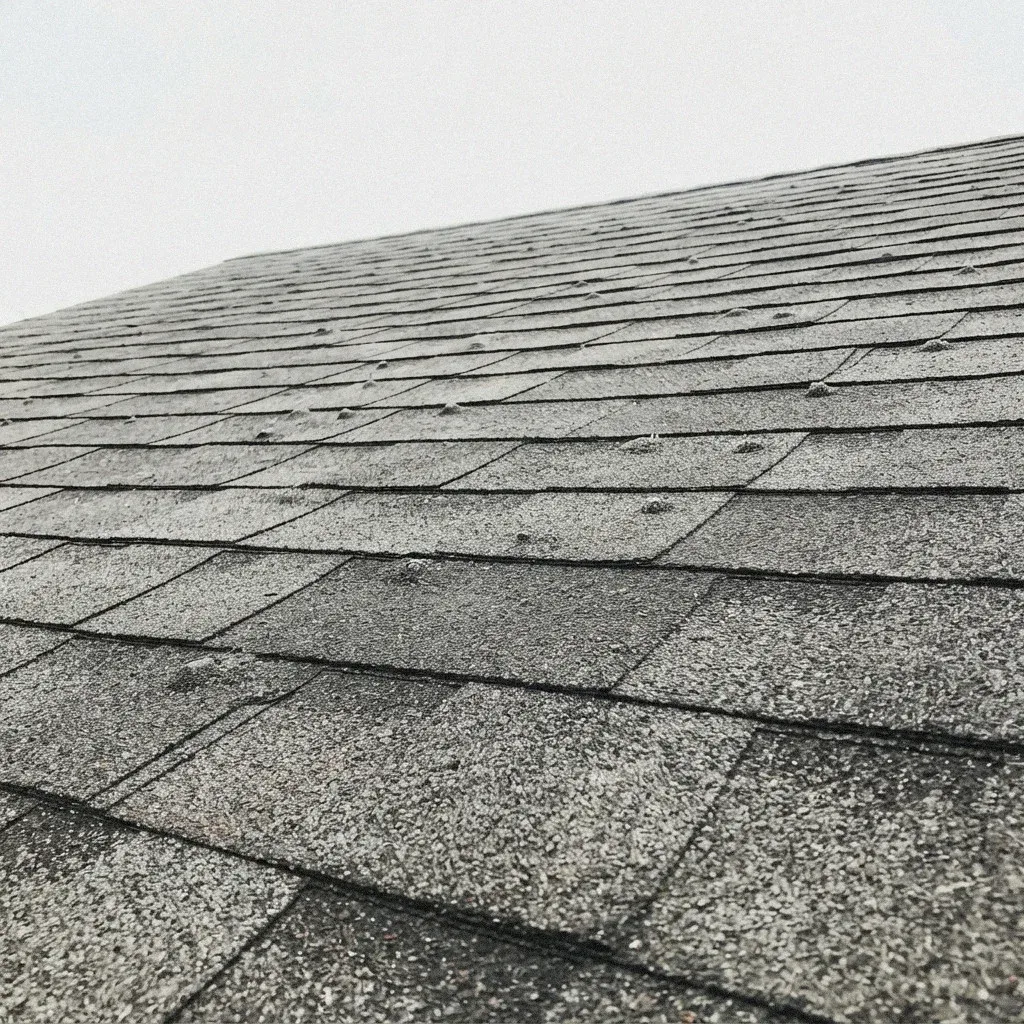
A nail pop is a roofing nail that no longer sits flat against the deck, its shank rising just enough to lift the shingle above it into a small dome. On a Jacksonville roof, that lift usually shows first as a tiny bump you'd walk past without noticing, sometimes with a dab of sealant sitting on top where a roofer or the manufacturer tried to seal the head down before it ever moved.
Spotting The Small Bump
The easiest way to catch a nail pop from the ground is to look down a shingle course in low light, early morning or near sunset, when shadows make small ridges stand out. From a street in Riverside or San Marco, a phone camera zoomed in can pick up a raised dot or a hairline crack in the shingle where a head has pushed through the surface.
What Makes Fasteners Rise
Wood sheathing takes on moisture and gives it back with the seasons, and Jacksonville's heavy summer rain followed by dry stretches keeps that cycle going most of the year. A nail driven into wood that's swelling and shrinking around it doesn't always hold its seat. Over enough cycles, the shank inches upward instead of staying flush, and the shingle rides up with it.
Deck Movement Underneath
A deck that flexes under foot traffic, or one with a soft or slightly separated spot in the sheathing, gives a nail less to grip going in. That's often set at installation, before the shingles ever go down, but it shows up later as the fastener works its way back out. A roof over a garage or a porch addition, where the deck may differ from the main house, sometimes shows this first.
The Nailing Line Matters
Every shingle has a nailing line, a band the manufacturer marks where fasteners are meant to catch the shingle below and hold the tab flat. A nail driven above that line, called a high nail, misses that solid double layer and sits in thinner material with less to bite into. High nails back out sooner and more often than ones set correctly on the line.
Why The Exposed Head Counts
Once a nail head clears the shingle surface, it sits in the exact spot the course above was supposed to shield from rain. Wind-driven rain during a Jacksonville afternoon thunderstorm doesn't need much of a gap to find that opening. The hole left behind is small, but it's positioned right where water was never meant to reach in the first place.
How A Pinhole Leak Spreads
Water entering through an exposed nail head rarely shows up as a stain right away. It tends to follow the shank down, travel along the underside of the sheathing, and run along a rafter before it drips somewhere inside the attic or ceiling. By the time a homeowner in Arlington or Mandarin sees a spot overhead, the water may have been tracking sideways for a while.
Shade And Slope Differences
Jacksonville roofs with heavy tree shade, like stretches of Avondale or San Marco under mature canopy, hold moisture in the sheathing longer after afternoon thunderstorms roll through. That damp-dry cycling swells and shrinks the deck with each round of expansion and contraction. A roofing nail driven into wood that keeps moving underneath it slowly works its shank loose from the nailing line, and the head starts rising above the shingle course instead of sitting flush against it.
One Bump Or A Repeating Line
A single raised bump sitting by itself in one shingle course is a minor, contained thing. It's a different situation when several fasteners along the same line, or across a few adjacent courses, are all rising at once. That pattern points toward something happening at the deck level rather than one nail that simply missed its mark.
What A Bump Doesn't Prove
A raised bump does not mean the sheathing has failed or the whole roof is in trouble. Most nail pops trace back to a high nail that missed the proper nailing line, or a roofing nail set at the wrong angle during the original install. The fastener backing out is a localized problem sitting under one shingle, not proof that deck movement is happening across the whole field.
Checking It From The Street
If you are going to check, do it methodically rather than scanning. Take one slope at a time and read along a single course from one end to the other, then drop to the next. Nail pops cluster where the deck moves most, so pay extra attention within a few feet of the ridge, along the rakes, and around anything cut into the roof. Photograph each one you find and note which slope it is on, because a picture with no location attached is no use to anyone later.
Why Catching It Early Helps
An exposed nail head is one of the cheapest things on a roof to put right and one of the more expensive to ignore. Pushed back down, sealed, and covered properly, it is a few minutes of work. Left through a couple of Jacksonville summers, the same hole has been feeding water into the deck around it, and the fix becomes a section of sheathing rather than a fastener. Nail pops also tend to appear in the same year across a roof, so finding one early is usually a reason to look for the rest before the next storm season.
Dealing with this in your home?
Jacksonville roofs wear out street by street, not city-wide. Riverside and Avondale still carry crawl-space homes from the 1920s, where old decking meets modern afternoon thunderstorms. Cross the St. Johns River into Arlington and it's mostly slab homes with 1950s-60s roof lines needing different attention. San Marco's stucco bungalows near San Marco Square age differently again.