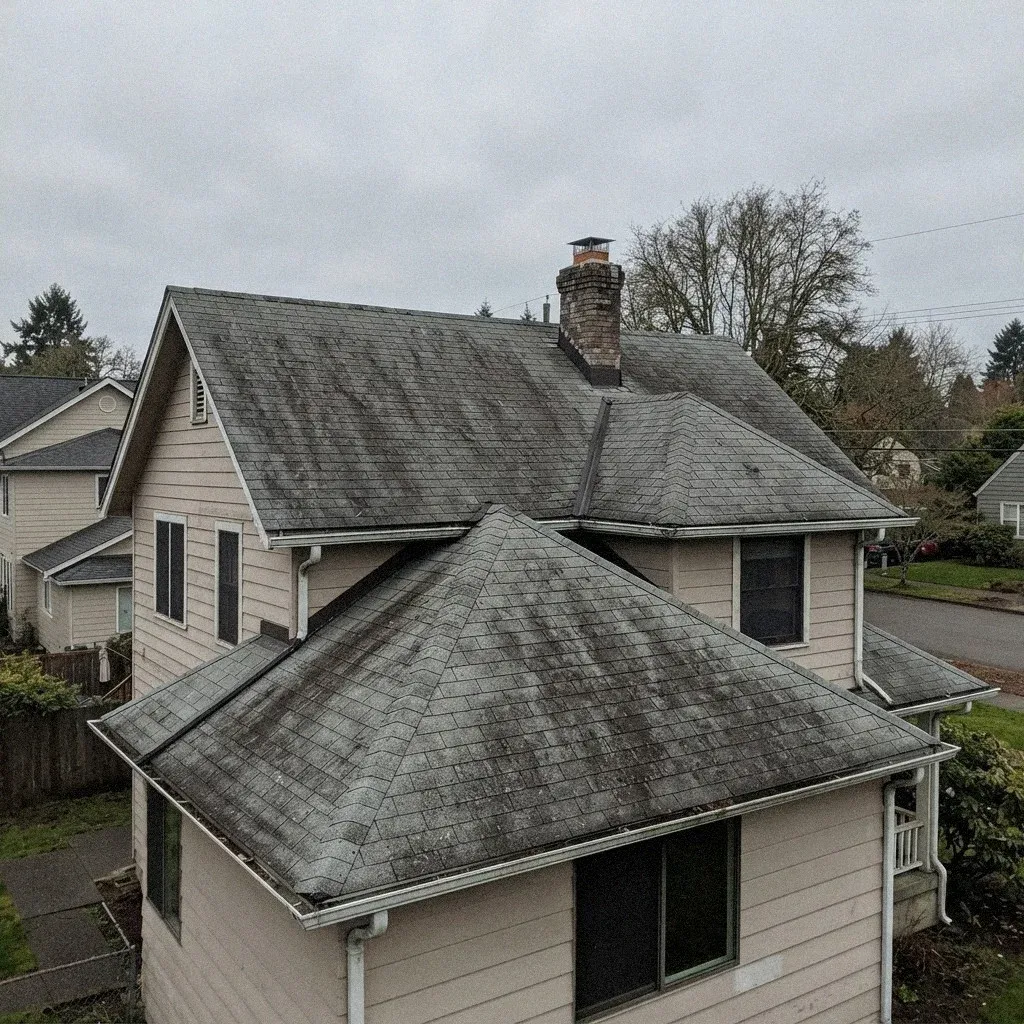
Look at a house in Riverside or San Marco after a few years and one part of the roof usually looks older than the rest. Most often it's the north slope. Homeowners notice it as a color difference, not damage exactly, more like the roof aged unevenly. That difference isn't random. It comes from how much sun each plane gets, how fast it dries out after Jacksonville's afternoon thunderstorms, and what's standing nearby blocking the light.
What Orientation Changes
A roof isn't one flat surface. It's several planes meeting at ridges and valleys, each one facing a different direction. In Duval County's latitude, south and west slopes get long, direct solar exposure most of the day. A north slope gets little to none. That single difference in roof orientation changes how hot the surface gets, how quickly rain evaporates off it, and how long moisture sits on the shingles before the sun burns it away.
The Shade Line Effect
Sun angle isn't the only factor working against a north slope. Shade from a neighboring roofline, a chimney, or mature trees common in older Avondale and Ortega streets adds to it. That shaded band, sometimes called the shade line, keeps a section of roof cooler and damper longer after a storm passes through than the sunlit planes a few feet away on the same house.
Why Drying Time Matters
Drying time is the real difference maker. A sunlit slope in Mandarin or Southside sheds a summer downpour and dries within a few hours. A shaded north slope on the same house can stay damp well into the evening. That gap in drying time repeats after nearly every thunderstorm from June through September, so the moisture exposure adds up across a season in a way sun exposure alone doesn't explain.
Moisture and the Shingle Mat
A shingle relies on a fiberglass mat coated with asphalt to stay flat and sealed. When that mat stays wet longer than the rest of the roof, the asphalt softens and releases granules faster. A north slope in Jacksonville often holds surface moisture from morning dew and afternoon thunderstorms well past when a south-facing plane has already dried, and that extra soak time is what wears the mat down first.
Differential Wear Explained
Shade line matters as much as compass direction. A north slope shadowed by a tree canopy along a street in Avondale or Ortega Forest can stay cool and damp for hours after neighboring plans have baked dry in direct sun. Roofers call the resulting gap in condition differential wear, and it shows up as a slope that looks noticeably older even though every shingle on the house came from the same bundle.
Tree Canopy's Double Effect
Tree canopy adds another layer to this. Neighborhoods with older tree cover, parts of Ortega Forest and San Jose among them, often have oaks or pines positioned to shade a north-facing roof for most of the day. That canopy blocks direct sun, which sounds like a benefit, but it also blocks the airflow and heat that would otherwise dry the surface quickly after rain moves through.
Slope Pitch Adds Up Too
Roof orientation and shade aren't the whole story either. Slope pitch matters too. A lower-pitched plane holds standing water and surface moisture longer than a steep one, regardless of which direction it faces. On a house where the north slope also happens to be the flattest section, the shade and the pitch work against it at the same time, and that combination shows up as wear faster than either factor alone would explain.
What This Means for Repair
A rough patch on one plane doesn't mean the whole roof is failing at the same rate. Jacksonville homes often need only the shaded slope addressed, since the rest of the field may still have plenty of service life left. A plane-by-plane assessment is what tells the difference, checking granule loss, mat condition, and flashing separately for each slope instead of judging the roof as one unit.
Why a Plane-by-Plane Look Helps
Ground-level guessing is where homeowners get it wrong most often. A shaded north slope over a Riverside or San Marco bungalow can look fine from the street while granules are already thinning underneath, and a slope that looks stained from below sometimes still has a sound mat. Slope pitch, overhang depth, and how much sun actually reaches the surface all change the read, which is why a walked inspection beats a driveway opinion.
Early Signs to Watch For
Watch for a north slope that looks a shade darker than its neighbors, or shingle edges that seem to curl slightly more than the rest of the field. These are early signs of retained moisture doing slow damage, not sudden failure. Homeowners in Riverside, Avondale, or San Marco with mature tree canopy nearby tend to notice this first, since overhang and shade line combine to keep that one plane damp longer between rains.
Getting a Direct Opinion
A visibly different north slope deserves a direct look rather than a guess from the yard. It's reasonable to ask the licensed pros we connect you with to check that plane specifically before deciding whether a partial reroof makes sense or whether the issue is only cosmetic. Getting an answer tied to that one slope, not a blanket verdict on the whole roof, is what actually settles the question.
Dealing with this in your home?
Jacksonville roofs wear out street by street, not city-wide. Riverside and Avondale still carry crawl-space homes from the 1920s, where old decking meets modern afternoon thunderstorms. Cross the St. Johns River into Arlington and it's mostly slab homes with 1950s-60s roof lines needing different attention. San Marco's stucco bungalows near San Marco Square age differently again.