Apartments & Multifamily
Multifamily Roofing
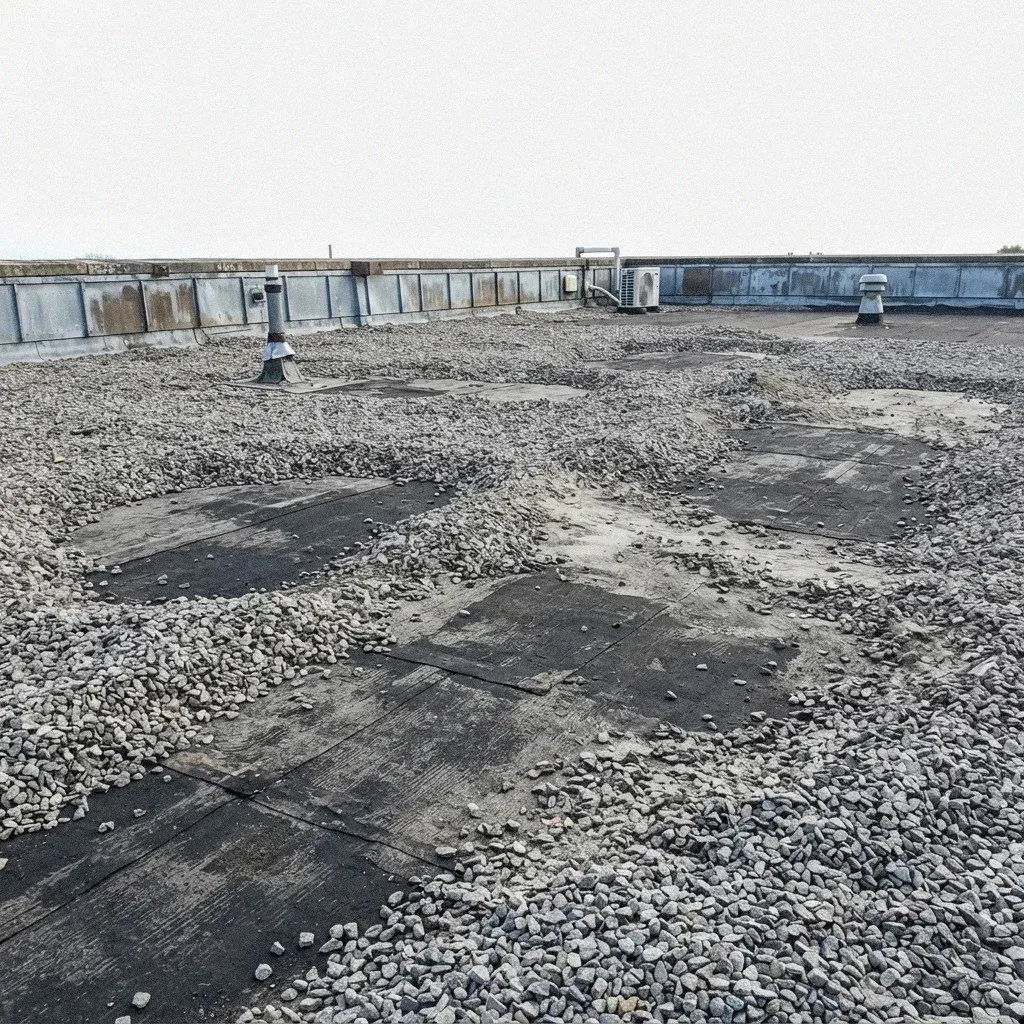
Leak sources, tenant lease responsibility, and after-hours repair timing for Jacksonville offices and storefronts.
A leaking roof over a Jacksonville office or storefront usually starts at a rooftop HVAC curb, a roof hatch, or an old sign penetration, not the membrane field itself. Curb flashing dries and cracks first, especially after a summer thunderstorm.
An office suite in the King Street District or a storefront near Five Points can't shut its doors because a ceiling tile is dripping. Customers still expect to walk in, employees still need desks that aren't catching water, and a landlord or property manager is usually the one fielding the call before any repair gets scheduled. Jacksonville's commercial buildings stay open through the problem, which changes how the repair itself has to be planned.
Most offices and storefronts around Downtown Jacksonville and along Baymeadows sit under a flat or low-slope roof, and rooftop HVAC units bolted to that surface are where trouble usually starts. Each unit sits on an equipment curb, and the curb flashing sealing that curb to the membrane is a common failure point, especially after a summer of afternoon thunderstorms working at the seams during routine servicing or a filter swap.
Because the sales floor or the office itself can't close for repairs, most work on Jacksonville commercial roofs gets scheduled for an after-hours work window, once a shop near San Marco locks up or a Southside office empties out for the night. That window is short, so the crew that shows up needs to already know what they're fixing before they climb up.
Business-hours disruption is usually the bigger cost, more than the roof repair itself. A retail space running normal hours near Riverside or an office suite through a standard workday can't have ladders in the entryway or noise overhead during business, so the repair gets compressed into whatever hours are left once the building clears out, and that compression is what actually drives the schedule.
Weekend work is the other option, and it fits a strip retail building or small professional office near Mandarin differently than a weeknight job does. A Saturday start gives a longer stretch to get into a membrane section, reset flashing, or handle a stubborn curb without racing sunrise, though a tenant still needs the sales floor or lobby usable again by Monday.
| Location | Why It Leaks | Repair |
|---|---|---|
| HVAC equipment curb | Curb flashing dried and split in the heat | Strip and reflash the curb |
| Old sign penetration | Mounting holes left open when a sign came down | Patch and cover the opening |
| Roof hatch | Curb seal dried out under summer sun | Reseal hatch curb and hinge |
| Parapet wall | Cap flashing lifted in high wind | Resecure and reflash the cap |
| Interior roof drain | Leaves and grit backing up the bowl | Clear the drain, replace the bowl |
| Storefront canopy | Tie-in seam pulled from the main roof | Reseal the canopy tie-in |
| Rooftop conduit run | Fasteners backed out, letting rain track under | Reset fasteners, seal the run |
| Wall-to-roof tie-in | Counterflashing gapped from the block wall | Reset counterflashing and seal joint |
Inventory protection is the sharpest version of this problem for a retail tenant. Stock on shelves or boxed in a stockroom under a leaking section of roof near a storefront canopy doesn't get a second chance once water reaches it, so speed matters more than it would for an empty office suite, and covering merchandise before work starts is often the first move.
A server room changes the stakes again. A small server room or data closet often sits tucked in a back corner of an office building near Southpoint or Town Center, sometimes directly under a section of flat roof nobody thinks to check, and a slow leak there can take down equipment long before anyone notices a stain on the ceiling tile above the rack.
Office and retail leases around Jacksonville generally split roof duties along a familiar line: the landlord holds the roof structure and membrane, and common-area maintenance charges typically fold in the cost of keeping it there. A tenant lease spells out who calls for repair, but the roof itself, and the bill for fixing it, usually stays the landlord's responsibility.
Lease-split responsibility is where a lot of office and retail roof problems in Jacksonville stall before anyone picks up the phone. A tenant assumes the landlord already knows about a stain spreading across a suspended ceiling tile, and a landlord managing a building near Arlington or Baymeadows assumes a tenant would have called if it were serious enough to matter.
A tenant running a shop near Avondale or an office near Brooklyn is better off reporting a ceiling stain or a soft spot in the tile the day it's noticed rather than waiting to see if it dries out on its own. Fla. Stat. § 83.56 gives a landlord a cure period once notified, but that clock only starts once the report actually reaches them.
Interior roof drains are standard on flat commercial roofs around Jacksonville, and they're easy to overlook until one clogs. Debris backing up in a drain during a heavy summer downpour can pond water across a membrane section faster than the roof was ever meant to handle, and a drain buried under gravel or leaf litter near a rooftop unit rarely gets checked until water is already coming through below.
A roof hatch used for HVAC servicing near an office building on Southside Boulevard gets stepped past during a routine walk more often than anyone would guess, left slightly open or not latched back down right. Sign penetrations for storefront signage are another quiet source, each one a hole cut through the membrane that needs its own seal, not just a bead of caulk applied once and forgotten.
An office or storefront near the St. Johns River or out toward Argyle Forest stays open because customers and employees expect it to. Treating the roof as part of running that building, rather than a repair to get to eventually, is what keeps a rooftop HVAC failure or a clogged drain from turning into a closed sales floor and a call to the landlord that comes too late.
The licensed pros we connect you with can check rooftop HVAC units, curb flashing, interior roof drains, and parapet condition in one visit instead of several separate trips. They can work inside an after-hours work window or a weekend stretch, whichever fits the lease and the hours a tenant near Riverside or Mandarin actually needs to stay open.
An office or retail lease in Jacksonville typically hands the roof structure and membrane to the landlord under common-area maintenance terms, while rooftop equipment a tenant installed, like a sign or supplemental HVAC unit, stays the tenant's problem. That line gets blurry fast. Before a leak lands on the sales floor near San Marco or Riverside, pull the lease and read the maintenance and alterations clauses together, not separately, so nobody's guessing who calls for repair during a Duval County downpour.
Ventilation problems tend to hide in plain sight. Heat and moisture trapped under the roof deck can soften sheathing from the inside, with no visible leak at all, until a routine inspection or a repair crew finds it during unrelated work.San Jose, Argyle Forest and Mandarin. Attic ventilation gets overlooked because nobody sees it from the street. A roof baking under direct sun with poor airflow underneath ages faster from the inside than the shingles show from outside, and that shortens the life of materials that otherwise had years left in them.
Roof age on paper rarely tells the full story. Ventilation, attic heat buildup, and how a roof was installed in the first place matter as much as the year it went on. A straight answer usually means someone getting on the roof and into the attic, not just a look from the driveway.Every estimate near San Marco or out toward Mandarin reflects what's actually on the roof, not a flat citywide number. Steep pitches, layered shingles, or decking softened by years of afternoon thunderstorms all change the math once a licensed pro is up there measuring instead of guessing from the driveway. pricing guide, and the commercial overview covers how a scheduled program works.
Multifamily Roofing
Condo & HOA Roofs
Restaurant Roofing
Usually the landlord, under the lease's common-area maintenance terms, since the roof deck and membrane are structural. But many Jacksonville office and retail leases shift responsibility for rooftop equipment, like signs or supplemental units, to whichever tenant installed it. Read the maintenance and alterations clauses together before assuming either way.
Rooftop HVAC units are the most common leak source on Jacksonville office and retail buildings. The equipment curb underneath and the flashing wrapped around it take direct wear from vibration, servicing foot traffic, and sun exposure, and once that flashing cracks, water follows the ductwork straight down into the ceiling.
Yes. Most repair and replacement work can run after normal business hours or on weekends so it doesn't shut down a sales floor or block a storefront entrance. The pros we connect you with can typically schedule an after-hours work window and stage materials to keep customer access clear.
Move merchandise, files, or server room equipment out from under the leak first. Set a container to catch water and note where it's coming through a suspended ceiling tile, then check whether it lines up with a rooftop HVAC unit or a roof hatch above.
Tell us the property type and whether the tenant lease or the landlord covers roof calls, and we will line up a pro for an after-hours window.
Call (904) 675-6349