Offices & Storefronts
Commercial Roofing
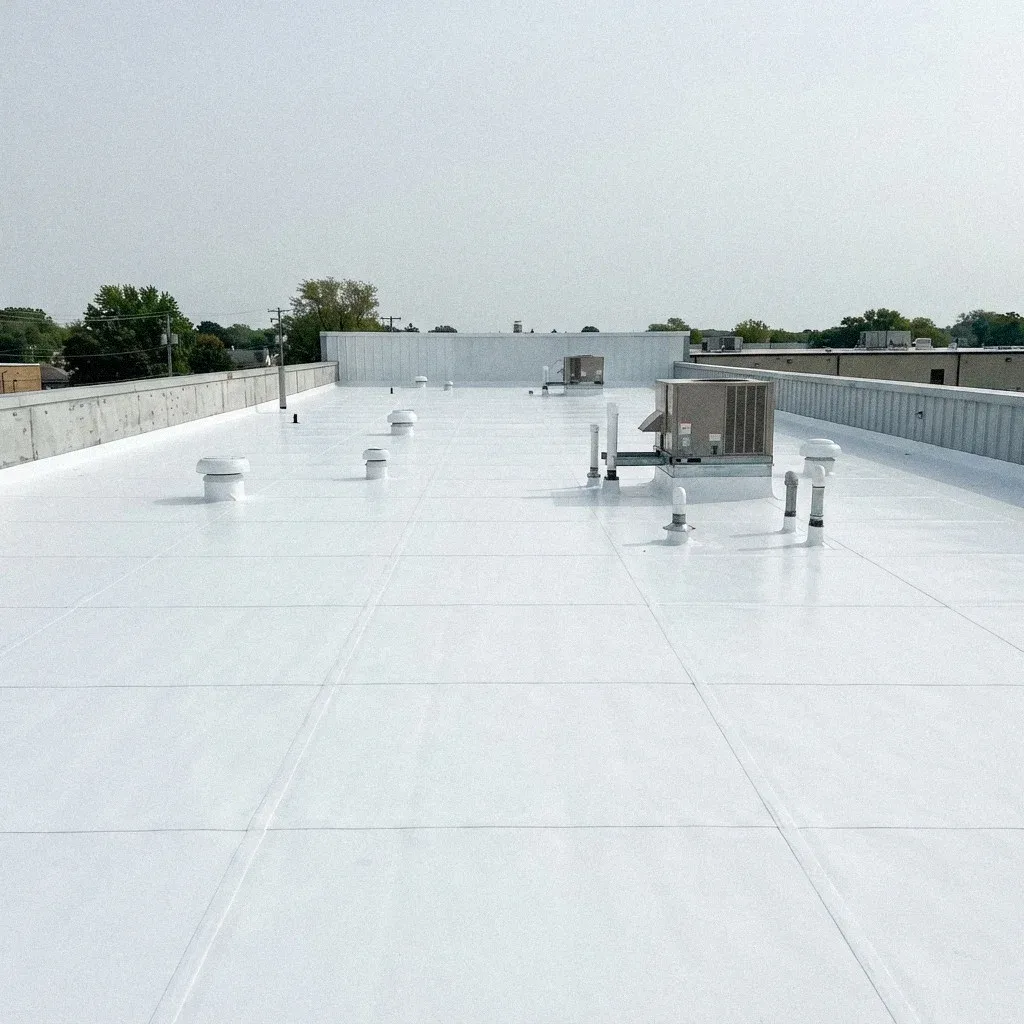
Phased, building-by-building roof work that keeps residents in place across the site.
A property manager schedules Jacksonville apartment roof work building by building, not all at once, so most residents stay in their units. The licensed pros we connect you with plan staging and notice around each building's turn.
An apartment complex in Jacksonville puts residents underneath a roof while it is being worked on, something a single-family homeowner in Mandarin or Ortega never has to plan around. A property manager overseeing a multi-building site has to weigh roof condition against occupied units on every decision, because the work happens over people's heads while they sleep, work from home, or come and go through a shared breezeway.
A multi-building property rarely fails all at once. One building near Baymeadows or off Southside Boulevard develops a leak first, usually surfacing through a maintenance request about a stain near a light fixture rather than a resident calling to report roof damage directly. The building next to it might hold up fine for another two years, which is why treating the whole site as one problem misses how these properties actually age.
What makes multifamily roofing different from a single house is scale without simplicity. A property near Arlington or the Town Center corridor might carry roof area across six or eight buildings, each added or reroofed in a different year. One roof might be near the end of its life while the one beside it was replaced after a recent hurricane season. A property manager needs a plan that reflects that unevenness, not a single number for the whole site.
Sequencing work across an occupied Jacksonville complex means giving each building its own timeline instead of running one job across the whole property at once. Phased building-by-building sequencing lets residents in unaffected buildings go about their week undisturbed while crews finish one roof before staging the next. It also lets a property manager spread cost across a capital plan instead of absorbing every building's roof at the same time.
Resident notice has to go out before crews show up, and it has to say more than a date. People in a complex near San Marco or Baymeadows need to know which building is affected, whether their unit's parking will move, and what noise to expect starting early in the morning. The licensed pros we connect you with can sequence phased work so residents in unaffected buildings are never disrupted by a job two buildings over.
| Phase | What Gets Done | What Residents Notice |
|---|---|---|
| Who calls for the work | One landlord, one unit | Property manager, several buildings |
| How work is sequenced | Single roof, single visit | Phased, one building at a time |
| How leaks get reported | Tenant calls the owner directly | Interior leak reports via maintenance request |
| Staging and dumpster placement | One driveway, one unit | Marked staging area, resident parking plan |
| Resident notice | One household told directly | Posted notice per occupied building |
| Budgeting the work | Single repair estimate | Capital plan by roof area per building |
| Breezeway and corridor work | Not applicable | Walkway pad closed one section at a time |
| Closing out a building | Owner inspects, job is done | Manager signs off, crew shifts to next building |
A property built as apartments was never laid out with a roofing job in mind, so staging has to work around whatever the site already runs on. A staging area for materials and a dumpster placement spot both have to avoid blocking resident parking, fire lanes, or the path kids take to a shared pool or leasing office. On a tighter site near Downtown Jacksonville or Springfield, that staging plan often changes building to building.
Breezeways and common corridors slow material movement in ways a detached driveway never would. Getting shingles or underlayment from a staging area up to one building's roof, without dragging it across a walkway pad residents use daily, takes more coordination than a single-family tear-off ever does. A low-slope section over a breezeway roof adds another layer, since it often ties into the pitched roof above a different unit.
The work-hour window on an occupied Jacksonville property tends to run narrower than on an empty commercial building, since nobody wants a tear-off starting before residents are up or leaving for work along Beach Boulevard or Atlantic Boulevard. Afternoon thunderstorms common through the summer months also shrink the window further, since a crew has to close in a section before rain moves through, not leave a building exposed overnight.
A resident rarely calls in to report a roof problem directly. Instead, maintenance staff get a request about a ceiling stain, a drip near a vent, or water pooling on a windowsill after a heavy rain. Someone has to trace that interior leak report back to the roof above that specific unit, and on a multi-building site near Arlington or Westside, that means knowing which building and which section of roof the unit sits under.
Once a leak is traced to the roof, a property manager needs an inspection that speaks to that one building's condition, not a general statement about the property. The licensed pros we connect you with can document roof area per building and flag whether a leak points to an isolated repair or a section nearing the end of its service life, which matters when residents are already asking maintenance staff when the problem will be fixed.
Capital planning for a Jacksonville multifamily property works building by building, because roof age rarely lines up evenly across a site built or expanded over different years. A complex near Cedar Hills or Argyle Forest might have one building from an earlier construction phase and another added later, each carrying a different roof age and a different position on the capital plan a property manager has to budget against year to year.
Deciding between a repair and a full commercial roof replacement on any one building depends on how much roof area is actually failing and what the decking underneath looks like once a section is opened up. A property manager weighing that call needs a straight answer about one building at a time, not a property-wide estimate that lumps a roof nearing replacement in with one that only needs a repair after storm damage.
None of this changes because a property sits in Jacksonville rather than somewhere else, but hurricane season adds its own pressure here. A multi-building site near the St. Johns River or along Southside Boulevard can take wind and driven rain across every roof on the property in the same storm, even when each building's roof was in different condition going into it, which means post-storm inspections still have to run building by building.
A property manager should ask which building's roof area is closest to failing, how resident notice will go out before crews arrive, where staging and dumpster placement will sit without blocking resident parking, and how phased building-by-building sequencing will keep occupied units livable while work moves across the site. Those answers, more than a single quote for the whole property, are what a sound capital plan gets built on.
Breezeways are the part of a multifamily roof that gets forgotten, because they read as walkway rather than roof. On a two or three story garden-style block the upper corridor is covered by its own low-slope section, often a different system from the main buildings and often older, and it drains onto a walkway residents use every day. That changes the work: the scope has to say how the walkway stays passable, where the water goes while the covering is off, and who signs off that the surface is not slick when it reopens. A leak here is also the one residents report first, because it lands on them rather than inside a unit.
Afternoon thunderstorms find small gaps at flashing and seams, and water travels sideways under shingles before it ever reaches the ceiling below. By the time a homeowner spots discoloration, the leak has usually been active for weeks. Regular attic checks catch what a glance at the roofline from the yard cannot.Downtown Jacksonville, Riverside and Avondale. Flat and low-slope sections fail on a different schedule than pitched shingle roofs. Ponding water finds every low spot and seam, and a membrane that's fine for years can open at a single lap joint. Those sections deserve their own look, not a glance from the ladder used for the rest of the roof.
Roof age on paper rarely matches roof age in practice. Sun exposure, attic ventilation, and how past repairs were done all shift the timeline. A ten-year-old roof can be failing while a twenty-year-old one still holds. Judging by the number alone misses what actually decides whether it lasts through another season.Every estimate near San Marco or out toward Mandarin reflects what's actually on the roof, not a flat citywide number. Steep pitches, layered shingles, or decking softened by years of afternoon thunderstorms all change the math once a licensed pro is up there measuring instead of guessing from the driveway. pricing guide, and the commercial overview covers how a scheduled program works.
Commercial Roofing
Restaurant Roofing
Condo & HOA Roofs
Notice usually goes out through the property manager, not the roofing crew, with a letter or posted notice naming the building and the work-hour window. Jacksonville's afternoon thunderstorm pattern and the run-up to hurricane season narrow the safe stretch for tear-off, so most sites schedule building by building rather than closing the whole property at once.
Sequencing usually starts with the roof area showing the worst wear, often a low-slope section over a breezeway or covered parking where rain from Jacksonville's summer thunderstorms sits longest. Staging and dumpster placement move building by building as each roof area finishes, so occupied units elsewhere on the site stay undisturbed until their turn comes.
A resident's leak report goes to the property manager through the normal maintenance request process first, not straight to a roofing crew. The manager logs which building, which unit, and which roof area, then decides whether it is a repair or part of a larger reroof already on the capital plan for that building.
Days, not hours, since notice has to reach residents in occupied units before staging and dumpster placement can start. In practice that means a posted notice naming the building, a marked staging area, and a parking shift worked out with the property manager before the licensed pros we connect you with begin tear-off.
Managing buildings near Baymeadows or Southside Boulevard? Call, and get a per-building sequence in writing before work starts.
Call (904) 675-6349