Condos & HOAs
Condo & HOA Roofs
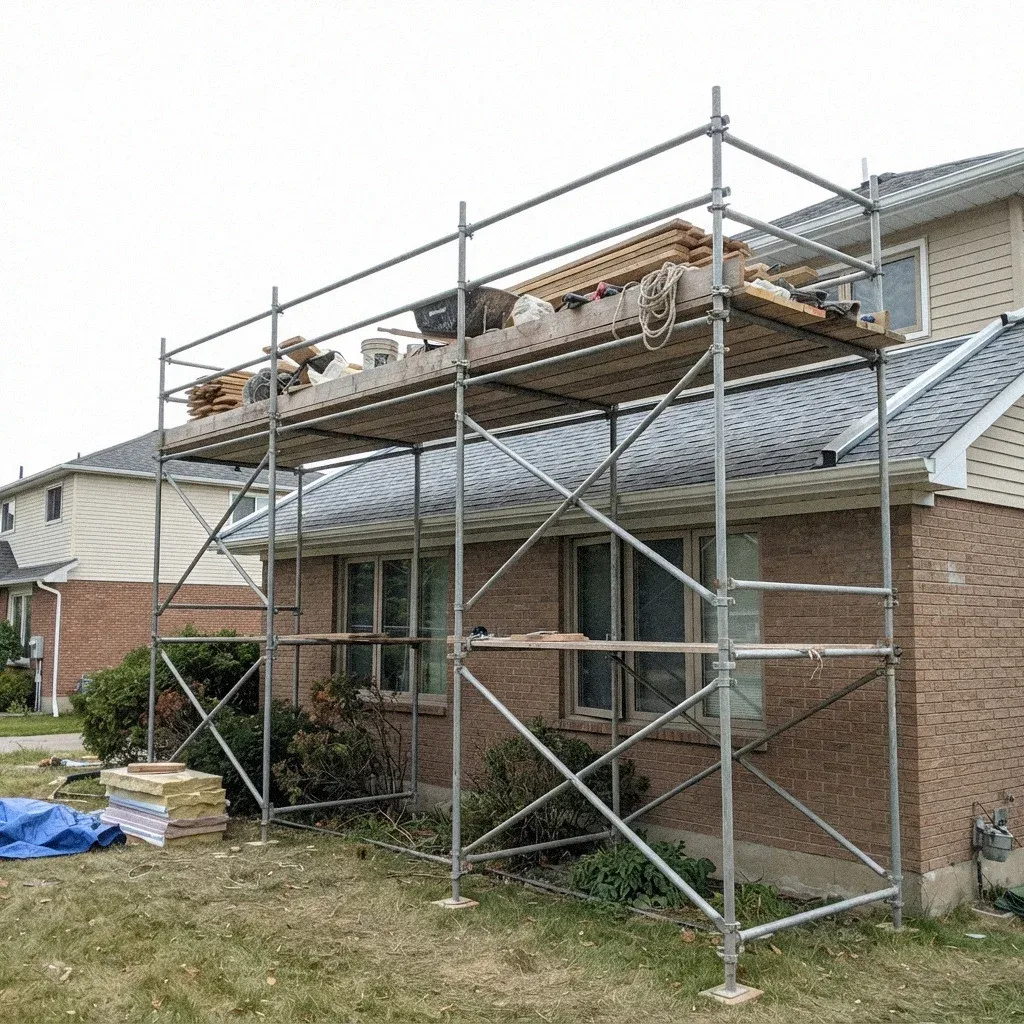
A phased scope, a volunteer board vote, and work timed to services in Jacksonville.
A church or nonprofit roof in Jacksonville gets planned around capital-campaign funding and the worship schedule: a phased scope a volunteer board can approve in pieces, with steeple, bell tower, and sanctuary interiors handled separately from the fellowship hall.
A church roof in Jacksonville rarely picks a convenient week to fail. A steeple over the sanctuary, a bell tower at the corner, and a fellowship hall wing added years after the original build each carry their own flashing, their own age, and their own way of leaking. A congregation near San Marco or Springfield often owns three roof systems under one name, and afternoon thunderstorms test every seam where they meet before anyone in Jacksonville notices from the pews below.
Mixed steep and low-slope geometry is the normal shape of a Jacksonville church, not the exception. A steep nave roof built decades ago often feeds into a flatter classroom or fellowship hall addition put up later, sometimes with a different roofline entirely. Each transition is a joint that has to shed water two directions at once. Older buildings in neighborhoods like Riverside or Avondale carry more of these additions than newer congregations built on one plan.
None of the repair work happens on a roofer's schedule. A Sunday service, a wedding booked a year out, a funeral called with two days' notice, and a weekday preschool or tutoring program all need the building open and quiet. A crew working a Jacksonville sanctuary roof during any of those isn't a scheduling footnote — it's a reason a pastor or program director gets asked hard questions later.
A leak over the sanctuary punishes a Jacksonville congregation harder than a leak almost anywhere else it owns. Water travels along a plaster ceiling before it ever stains or drops, and by then it may sit above stained glass, a pipe organ, or donated furnishings that took years to gather. A fellowship hall ceiling tile is a repair. A sanctuary ceiling with a pipe organ underneath is a different conversation with the whole building fund.
A steeple or bell tower is its own structure resting on the main roof, usually framed and flashed differently than the roof around it. Access is its own problem — a steep, narrow structure built for looks decades ago wasn't built with a repair crew in mind. Where that structure meets the main roof deck is where a small flashing gap becomes a stain over the sanctuary weeks later, long after the actual leak point.
| Risk | Where It Shows Up | What's at Risk |
|---|---|---|
| Funding source | Capital campaign, memorial gifts, grant application | Operating budget or loan |
| Approval process | Volunteer board vote | Property manager signs off |
| Roof geometry | Steeple, bell tower, mixed steep and low-slope | Single low-slope field |
| Scheduling constraint | Services, weddings, funerals, weekday programs | Business hours only |
| Interior at risk | Sanctuary, stained glass, plaster ceiling, pipe organ | Office space, storage |
| Typical approach | Phased scope tied to campaign pacing | Single full replacement |
| What a leak reaches | Plaster ceiling, stained glass framing, pipe organ | Drywall, carpet, inventory |
| Why a delay costs more | Memorial gifts and instruments are not replaceable | Insurance usually covers the loss |
Money for a Jacksonville church roof rarely lands as one deposit. It comes together through a capital campaign that runs on its own calendar, a grant application still waiting on an answer, a memorial gift given in someone's name, and general donated funds already earmarked for something else. A roof project has to fit inside that pace, not the other way around, which is where phased scope becomes less a preference than a necessity.
Phasing works when the whole roof is assessed as one project before any money is spent, not when it's treated as two unrelated jobs. Splitting the steep sanctuary section from the flatter fellowship hall wing only holds up if the flashing between them was scoped together from the start. A board that funds the visible steeple first and the low-slope wing later, without one written plan tying them together, often pays twice for the same transition.
A volunteer board making this call in Jacksonville usually isn't made up of building professionals, and that's ordinary, not a weakness. What matters is a written scope covering the full roof's condition — steep and low-slope sections both — so the board is choosing what to fund first, not guessing what's wrong. A bid that only quotes the obvious leak leaves the rest of the roof as next year's surprise.
Worship schedule drives everything about when the work happens. Weekly services, a wedding, a funeral, and weekday programs all need the building usable, and a funeral can't be pushed back to suit a crew's timeline. A Jacksonville congregation planning roof work has to name its fixed dates first, then work the job around them, which is a scheduling constraint most commercial tenants never have to think about.
Jacksonville's hurricane season adds its own pressure to that scheduling problem. A congregation that waits until a summer leak to start planning is often choosing between rushing a phased decision or living with a tarp through the wettest months. Starting the assessment before hurricane season gives a board room to plan the capital campaign's pace around the roof, instead of the roof forcing the campaign's hand.
A nonprofit running a food pantry or shared community space near Murray Hill or Panama Park faces the same timing mismatch as a church. Grant cycles and board approvals move slowly, and a roof doesn't wait for either one to finish. A leak that starts small in a converted commercial building can reach donated equipment or stored inventory before a grant decision even comes back.
The same approach that helps a church board helps a nonprofit board: get the whole roof assessed and documented before deciding what gets funded first. A single low-slope section over a main program room might need to move ahead of a steeper section that's holding up fine for now. Without that full picture, a nonprofit board in Jacksonville ends up funding whichever leak is loudest instead of whichever one matters most.
In practice the scheduling runs backward. The congregation or nonprofit board names its fixed dates first — services, a booked wedding, a program that can't move — and the work gets built around them. A bid should still show the building's full roof condition in writing, not just the section tied to this phase, so the board knows what it's deferring and not just what it's fixing.
What a church or nonprofit board in Jacksonville is really deciding isn't steeple versus fellowship hall, or this phase versus the next one. It's how to protect a sanctuary, its stained glass, and everything donated and gathered underneath it, while keeping the building open for whoever walks in this Sunday. A written scope and a schedule built around fixed dates are how that decision holds up later.
A sanctuary leak in Jacksonville rarely shows itself right away. Water can travel along a rafter above the fellowship hall and surface over the plaster ceiling far from the actual entry point. By the time a stain appears near a stained glass window, the leak has usually run through an afternoon thunderstorm or two. Congregations from Riverside to San Marco lose time chasing the visible spot instead of the source, which is why a roof inspection traces the path before anyone patches anything.
Afternoon thunderstorms find small gaps at flashing and seams, and water travels sideways under shingles before it ever reaches the ceiling below. By the time a homeowner spots discoloration, the leak has usually been active for weeks. Regular attic checks catch what a glance at the roofline from the yard cannot.St. Johns, Orange Park and Fleming Island. Jacksonville roofs mostly wear down through small, repeated exposure rather than one dramatic event. Afternoon thunderstorms push water under lifted shingles, sealant dries out in the heat, and debris sits in valleys until it finds a seam. By the time a stain shows indoors, that path has usually been open for a while.
A written estimate should spell out what happens at penetrations, valleys, and the roof edge, not just list a shingle brand and a price. Ask what's included if decking underneath turns out to be soft, and get that answer before any work starts, not after.Every estimate near San Marco or out toward Mandarin reflects what's actually on the roof, not a flat citywide number. Steep pitches, layered shingles, or decking softened by years of afternoon thunderstorms all change the math once a licensed pro is up there measuring instead of guessing from the driveway. pricing guide, and the commercial overview covers how a scheduled program works.
Condo & HOA Roofs
Commercial Roofing
Industrial Roofing
Most Jacksonville congregations we hear from want scope split into phases tied to what a capital campaign can realistically fund across two or three budget years. A volunteer board can authorize the steeple or worst section first and hold a lower-risk fellowship hall roof for a later phase, once giving catches up.
Usually, yes. A steeple or bell tower needs a lift or scaffold, not a ladder, and its flashing meets the main sanctuary roof at angles most Jacksonville homes never have. Where that steep section joins a low-slope fellowship hall or education wing, the transition needs its own attention separate from the rest of the reroof.
Rarely. Weddings, funerals, choir practice, and weekday preschool or meal programs keep most Jacksonville church buildings occupied on some schedule nearly every day. The licensed pros we connect churches with plan tear-off and re-decking around blackout dates the church names in advance, not around whatever week suits the crew.
It depends on the source. A grant or memorial gift earmarked for roofing often carries its own reporting requirements, so documentation in writing, with photos and a section-by-section breakdown, matters before work starts. A donated fund may cover materials and labor but not the full scope a volunteer board hoped for once the old covering comes off.
Bring the board a phased scope with photos of the steeple and sanctuary. Call, and the licensed pros we connect you with will plan it around your calendar.
Call (904) 675-6349