A fall storm rolling off the Atlantic doesn't hit a Jacksonville roof all at once. Wind builds first, pushing rain sideways over Riverside and San Marco before it settles into a steady, driving pattern. Homeowners notice the noise, a low roar over the ridge, long before they notice anything wrong overhead. By the time the wind eases, the roof has already taken whatever damage it's going to take. What's left is figuring out where.
Uplift Along Edges and Hips
A roof plane resists wind fairly well until air reaches an edge, a hip, or a corner, where it has to change direction fast. That change in direction pulls upward on the shingles right at that seam, a force strong enough to lift a tab that's been nailed down for years. Homes throughout Arlington and Mandarin see this same pattern: damage clusters at the perimeter first, not the open middle of the roof.
Shingles That Fold, Not Fly
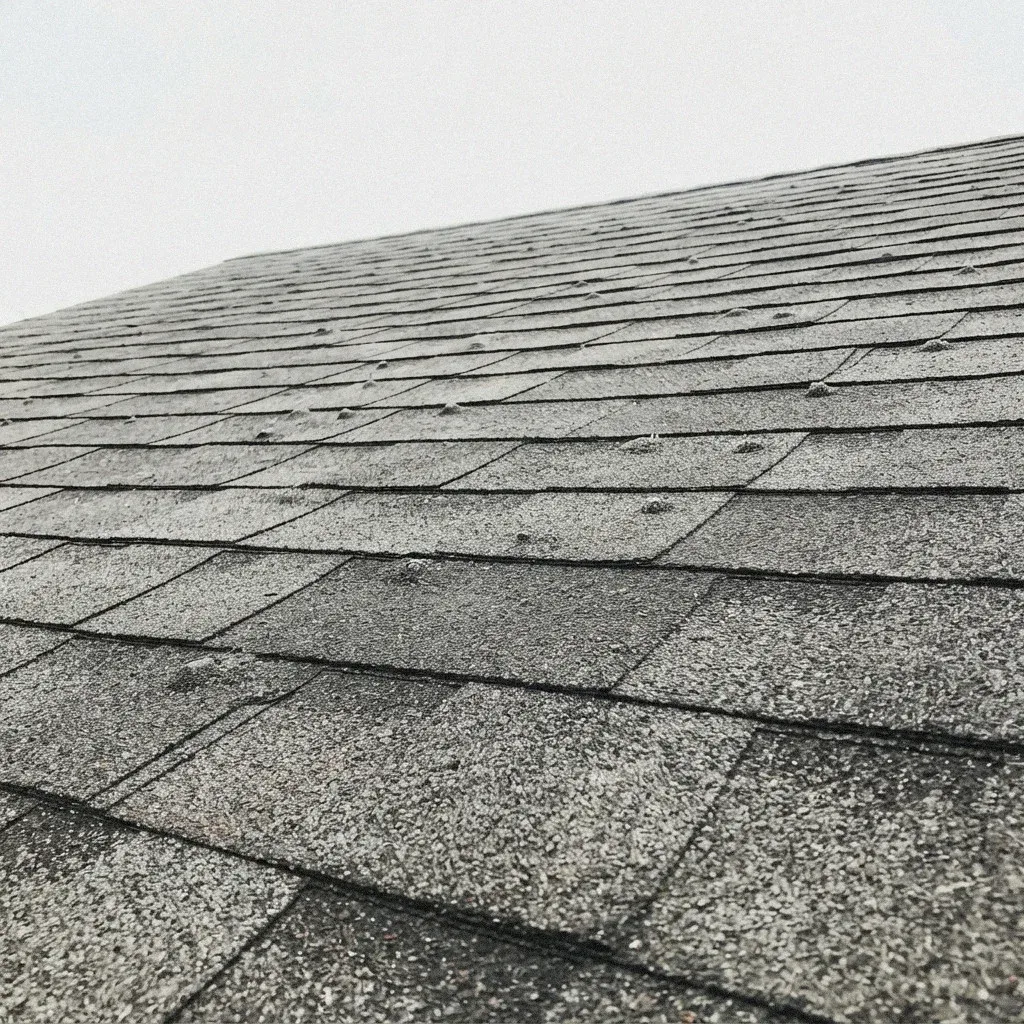
A blown-off shingle is the obvious kind of damage, but plenty of shingles never leave the roof at all. Wind gets under the tab, bends it upward, and lets it drop back into place with a crease that stays. From the ground it can look fine. Up close, that fold has broken the shingle's seal and cracked its surface, and it will let water through the next time rain lands on it, storm or no storm.
Branch Strikes on Older Canopy
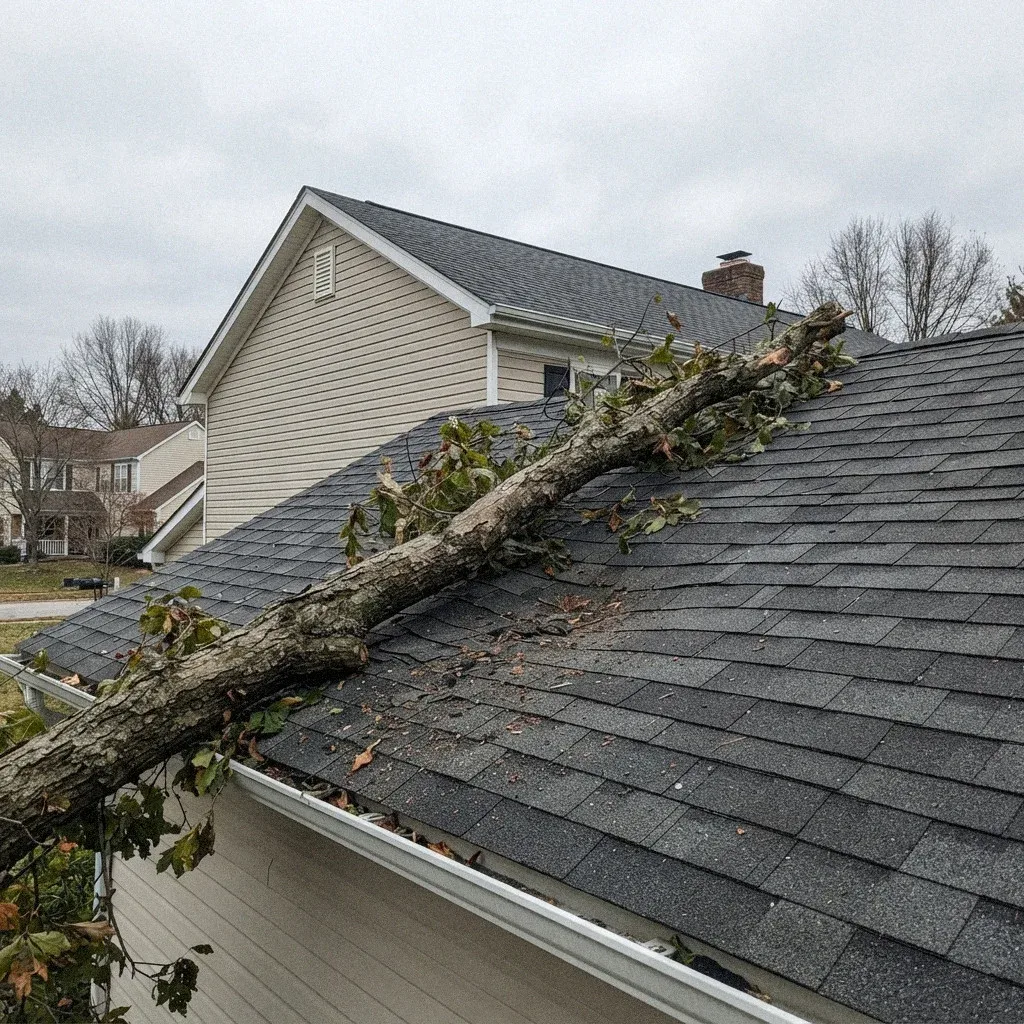
Wind alone rarely strips a roof clean in Jacksonville. It works with what's already loose. Live oaks and pines throughout Arlington and Mandarin drop limbs in a hard gust, and a branch strike can crack a tab, snap a ridge cap, or scuff granules loose without ever tearing the shingle free. The real damage shows later, once wind-driven rain starts working through that scuffed spot during the next thunderstorm.
What Debris Leaves Behind
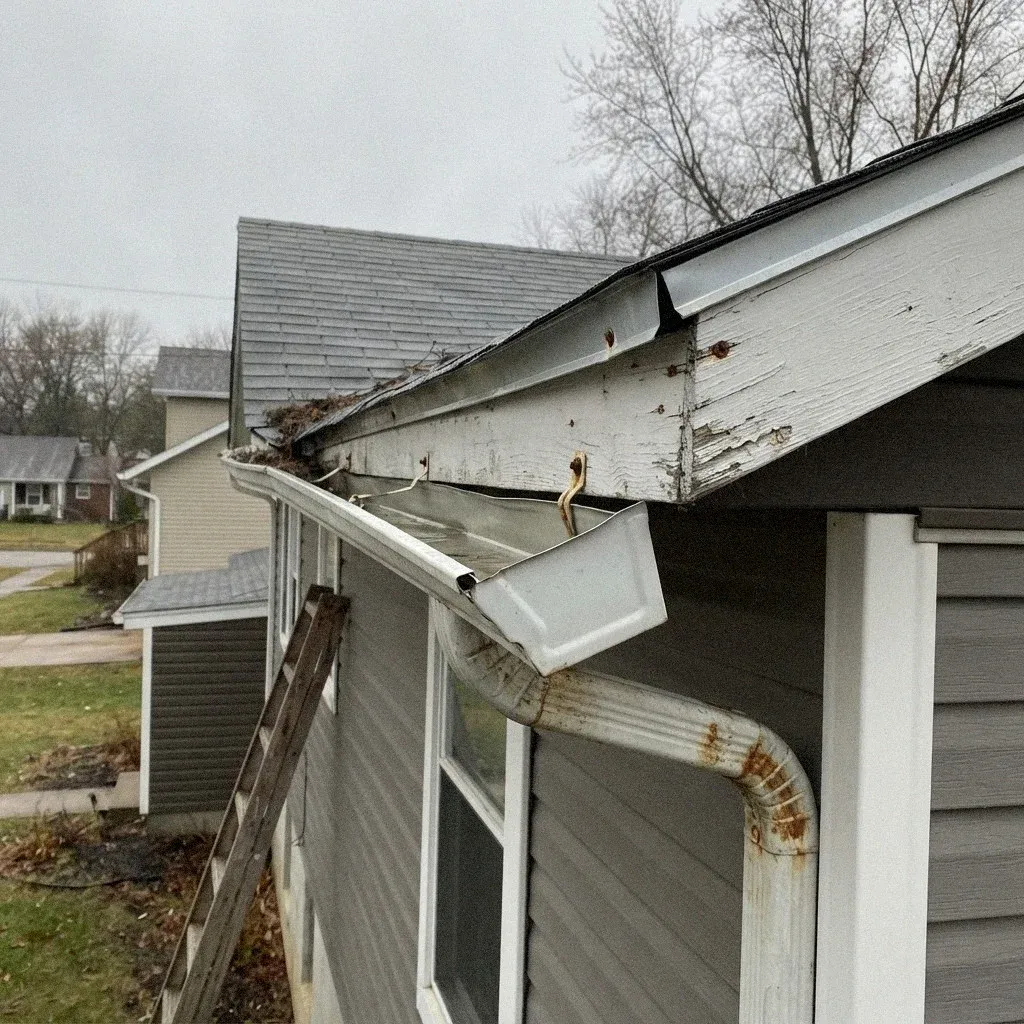
Once the wind settles, the roof is left carrying whatever came down with it. Leaves and small limbs collect in valleys, against chimney bases, and around any vent pipe that breaks the roofline. That debris field doesn't wash off on its own most of the time. It sits there through the next few rains, keeping a patch of roof damp while the rest of the surface dries out normally.
Gutters That Fall Behind
The other half of a fall storm is water Jacksonville's gutters weren't sized to move. Heavy rain falling fast overwhelms troughs already half full of leaves, and it backs up over the edge rather than draining. That standing water sits against the rake edge and fascia longer than it should, and if a seam or flashing joint nearby is already loose, it's this slow soak — not the wind — that finally gets inside.
Rain That Finds a Way In
Flashing around chimneys, skylights, and any wall the roof meets is designed for rain coming straight down, and it does that job well. A fall storm rarely sends rain straight down. Wind pushes it in at an angle, and loose flashing that's shifted even slightly gives that angled water a path underneath instead of over the top. A leak that shows up days later, well after the wind has passed, often starts right there.
Ridge Caps Under Extra Load
The ridge sits at the top of the roof, exposed to wind from both sides at once, and the cap shingles covering it are smaller and more exposed than anything in the open field below. A gust strong enough to leave the rest of the roof untouched can still work a ridge cap loose. Once a section lifts, the seal underneath is broken, and Jacksonville's next round of afternoon thunderstorms has an easy entry point.
Roofs Built Before Modern Codes
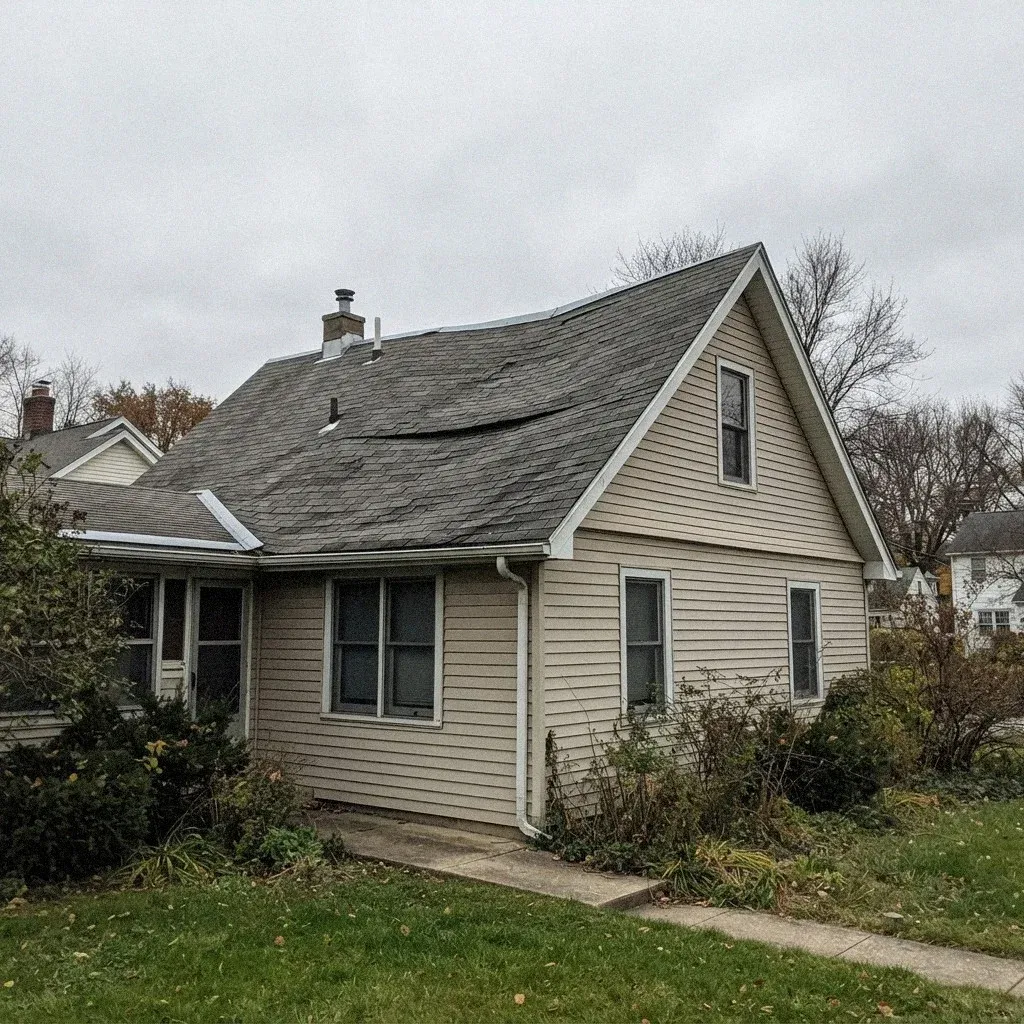
A fair amount of Jacksonville's older housing stock, the kind found in Springfield and parts of St. Nicholas, went up before current wind-resistance standards existed. These roofs weren't built with today's fastening schedules or uplift ratings in mind, so a wind event that a newer reroof shrugs off can pull shingles loose or shift a whole section on an older one. Age alone doesn't guarantee failure, but it removes a margin newer roofs still have.
Low-Slope Sections Behave Differently
Not every roof in Jacksonville is a single pitched surface. Additions, porches, and some homes around Southbank and Baymeadows carry a low-slope section covered in a membrane rather than shingles. Wind doesn't create the same uplift on a flat surface that it does on a sloped edge, but it can still work at seams and edge terminations. A storm that leaves the pitched roof untouched can still open a seam on the flat part next to it.
Reading the Roof From the Ground
A walkaround after the wind dies down doesn't require a ladder. Check the yard first for granules or shingle pieces near the downspouts. Then look up along the rake edges and ridge for anything sitting at an odd angle, and scan the gutter line for sagging spots where debris has piled up. Homeowners near San Jose and Sunbeam can usually spot the obvious signs this way before deciding whether a closer look is worth it.
Damage That Waits to Show
Not all storm damage announces itself right away. A creased shingle can hold through several dry days before it finally gives way in an ordinary gust. A stain on a ceiling near Panama Park or Cedar Hills might not appear until a week of steady afternoon thunderstorms works water through a gap that opened during the original storm. Checking again a week or two later catches problems the first walkaround missed.
Dealing with this in your home?
Jacksonville roofs wear out street by street, not city-wide. Riverside and Avondale still carry crawl-space homes from the 1920s, where old decking meets modern afternoon thunderstorms. Cross the St. Johns River into Arlington and it's mostly slab homes with 1950s-60s roof lines needing different attention. San Marco's stucco bungalows near San Marco Square age differently again.