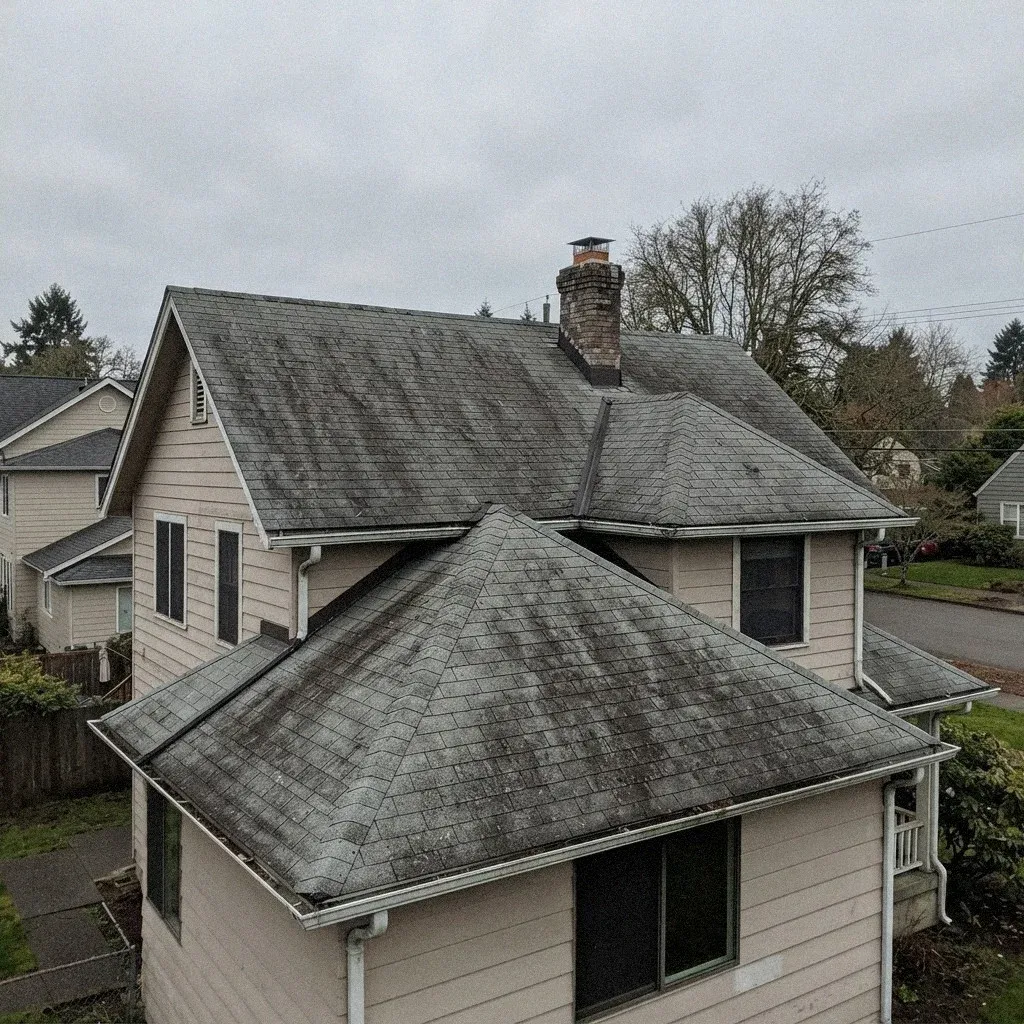
Jacksonville does not have the conifer litter of the Pacific Northwest, but live oak leaves, sweetgum debris, and palm fronds do the same basic job. Oak leaves drop steadily rather than all at once, so a roof in Avondale or San Marco can collect a slow, thickening layer most of the year, not just in one season. Palm fronds add bulk in a way leaves alone do not.
Where Litter Actually Settles
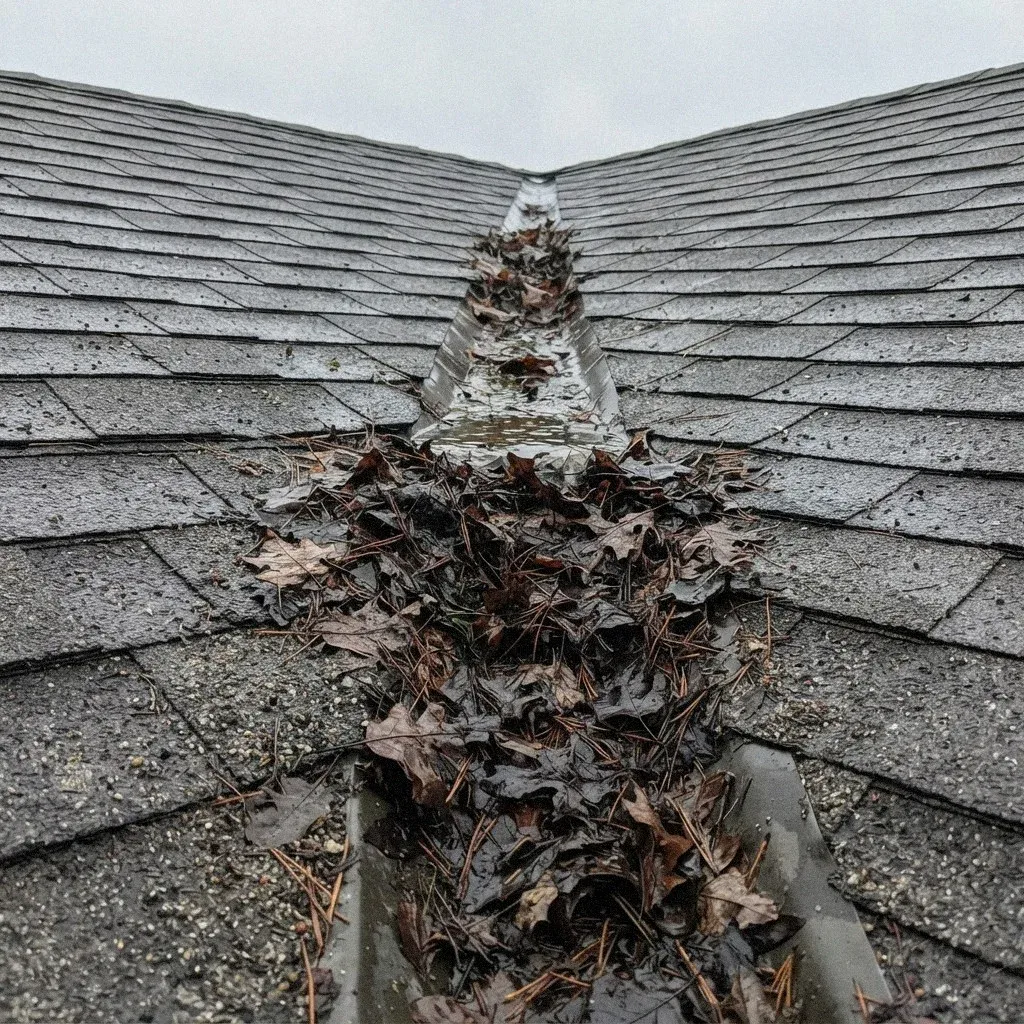
Leaf and frond debris collects wherever roof water is already trying to go. Valleys, the angled channels where two roof slopes meet, funnel runoff and catch whatever is riding along with it. Behind chimneys and dormers, wind eddies drop debris instead of carrying it past. A Riverside or Murray Hill home under mature oak canopy often shows the heaviest buildup in these same low, sheltered spots.
The Gutter Line Fills First
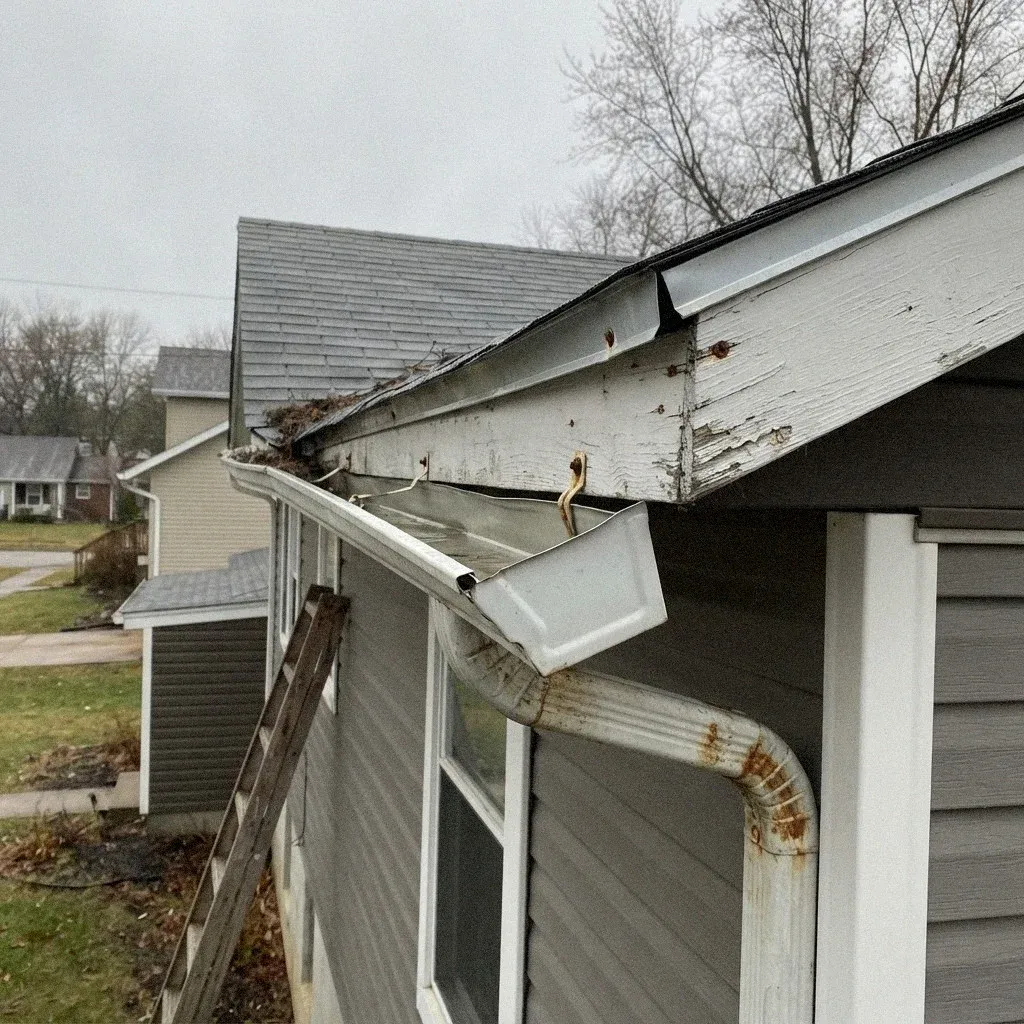
Gutters are shaped to catch water, so they catch leaf litter along with it. A gutter trough packed with decomposing oak leaves stops draining and holds standing water against the fascia board. In neighborhoods like Ortega or Mandarin, where tree cover runs close to the house, that trough can fill faster than a homeowner expects between cleanings.
How Trapped Debris Holds Water
Wet leaf litter behaves differently than dry litter sitting on top of shingles. It packs down, holds moisture against the roof surface, and slows evaporation even after the rain has passed. That constant dampness works against a covering that is otherwise built to dry out between Jacksonville's frequent summer storms. The longer the litter stays wet, the longer that section of roof stays wet with it.
What Water Damming Leads To
Live oak leaves and pecan husks fall in steady waves across Jacksonville, and most of it slides off a clean pitch on its own. The trouble starts where a valley or a chimney break slows that flow to a crawl. Debris packs into the low point, water spreads sideways instead of moving downhill, and the covering underneath stays wet far longer than it was built to handle.
Granule Wear Under Wet Litter
Asphalt shingles depend on their granule surface to shed water and block sun exposure. Leaf litter sitting against that surface for weeks, especially in a shaded Springfield or St. Nicholas yard, holds enough moisture to soften the asphalt underneath and loosen granules over time. Once granules wear away in a patch, that section loses protection faster than the rest of the roof around it.
Clearing Debris From the Ground
A good amount of gutter and roof-edge litter can be cleared without ever getting on a ladder. A leaf blower aimed up along the gutter line from the ground moves loose leaves and dry palm fronds without much risk. This works best on single-story homes with a clear yard, which describes plenty of Westside and Northside lots, but it will not touch litter packed into a valley higher up the slope.
Working the Roof Surface Itself
Litter packed into a valley or wedged behind a chimney usually needs direct contact to move. A soft-bristle brush or a roof rake, worked from a stable ladder position rather than while standing on the slope, lifts debris without tearing at the granule surface underneath. Pulling debris downhill toward the eave, rather than scrubbing at it, keeps the shingles underneath from taking damage they did not need to take.
Skip the Pressure Washer Here
A pressure washer looks like the fastest way to strip packed leaf litter off a roof, but the force needed to move wet debris is often enough to strip granules along with it. On an asphalt shingle roof in Jacksonville, that trade rarely favors the homeowner. Hand clearing takes longer but leaves the covering underneath in the shape it was in before the litter arrived.
Finishing at the Gutters
Once the roof slopes are clear, the gutter trough usually needs a second pass, since litter cleared from above often lands right back in it. Downspouts deserve a check too, since a clogged outlet can leave a gutter holding water even after the trough itself looks empty. Skipping this step undoes a lot of the work done clearing the roof surface.
Overhanging Limbs Keep It Coming Back
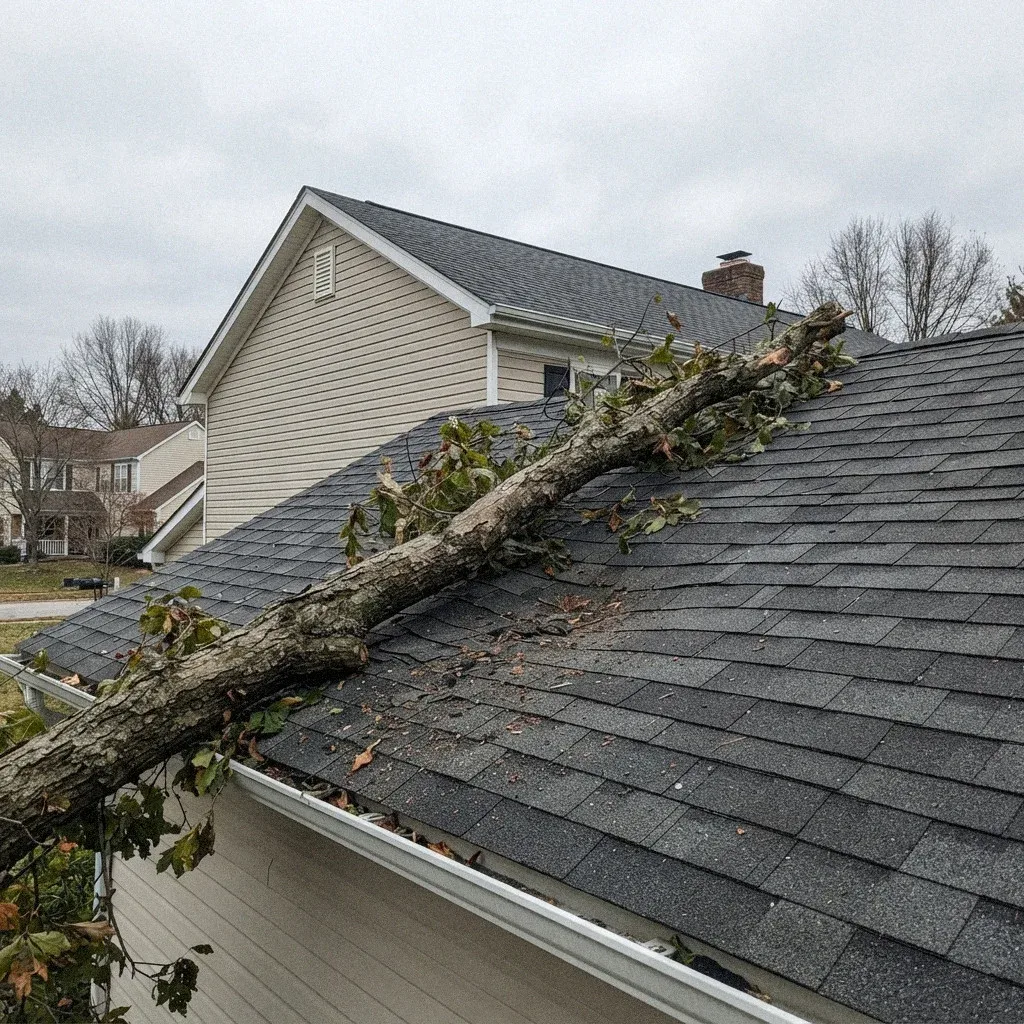
A recurring litter problem on one section of roof is often traceable to a specific overhanging limb, whether it is a live oak in an older Springfield yard or a pecan tree closer to Mandarin. Trimming that limb back from the roofline does more to slow future buildup than any amount of clearing after the fact, since the debris source is sitting directly overhead.
When the Job Outgrows a Ladder
Ground-level cleanup around Riverside or San Marco is straightforward work for most homeowners with a rake and a ladder for the gutters. The roof itself is a different question. Wet leaf mats hide soft decking, and a slab-on-grade home built decades ago may have valleys or flashing that were never meant to carry standing debris. The licensed pros we connect you with can check what a rake can't reach.
Dealing with this in your home?
Jacksonville roofs wear out street by street, not city-wide. Riverside and Avondale still carry crawl-space homes from the 1920s, where old decking meets modern afternoon thunderstorms. Cross the St. Johns River into Arlington and it's mostly slab homes with 1950s-60s roof lines needing different attention. San Marco's stucco bungalows near San Marco Square age differently again.