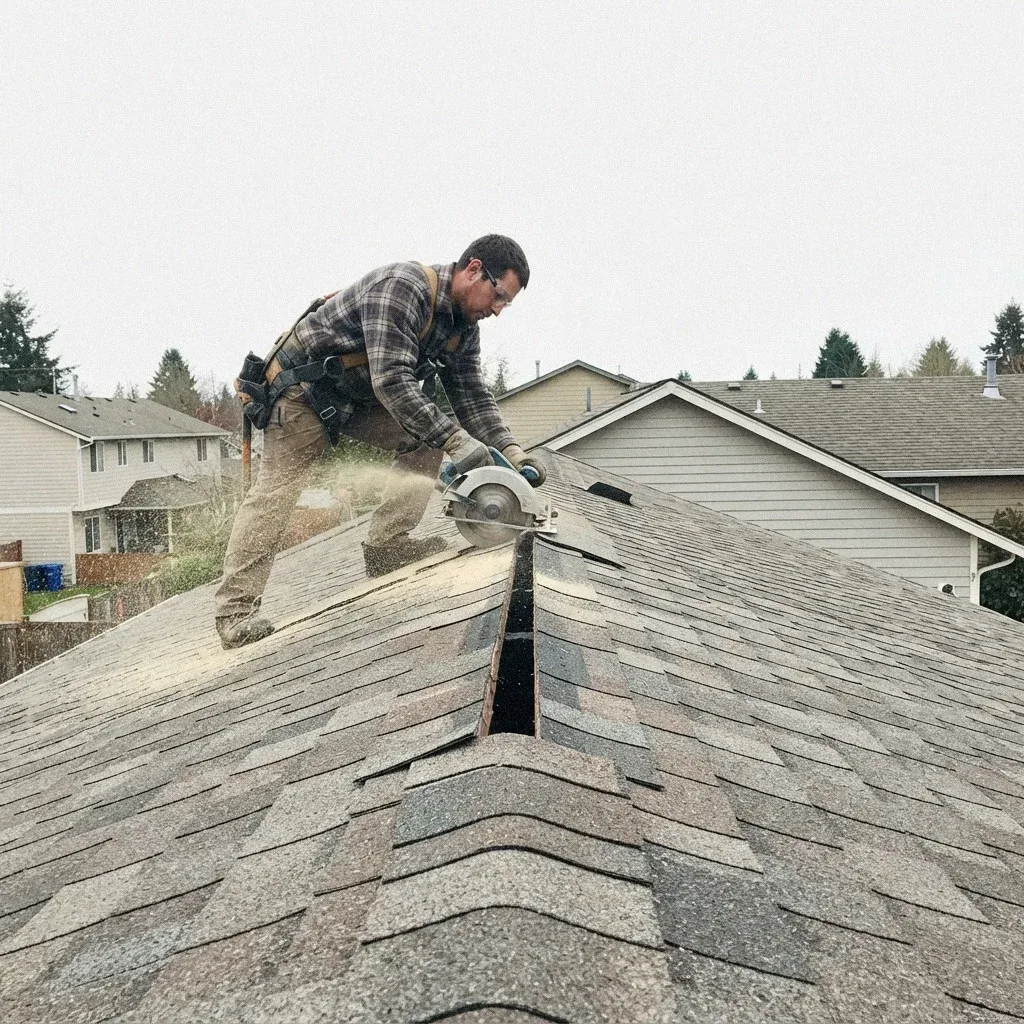
What Makes A Roof Fail Early
Concrete tile shows up on Mediterranean Revival and Spanish Revival homes across San Marco, Avondale, and San Jose, where the barrel or flat profile matches the stucco-and-tile look those 1920s neighborhoods were built around. Newer homes near Nocatee and Town Center also carry it for the same low-slope hip roof styling.
The weight that makes concrete tile demanding on an older frame also makes it hold up well against wind uplift once properly fastened, a real consideration given Jacksonville's hurricane-season wind exposure. That combination keeps it a common reroof choice on larger Ortega and Deerwood homes built to carry it.
Attic ventilation matters more in Jacksonville than most homeowners realize, since afternoon thunderstorms push heat and moisture into a hot deck all summer. Poor airflow softens decking from underneath long before a visible leak shows up, whether the house sits in Mandarin or out toward Oceanway.
How Long a Roof Really Lasts Here
- Service life
- A concrete tile roof commonly runs four to five decades in Jacksonville, outlasting the underlayment beneath it by a wide margin.
- Weight
- Concrete tile is among the heaviest common roof coverings, often needing a structural check before it replaces shingle on an older Duval County frame.
- Slope needed
- Concrete tile needs roughly a 2.5:12 to 3:12 minimum slope, keeping it off the low-pitch additions common on Westside ranch homes.
- How it fails here
- Walkable only along the batten lines with care, since stepping mid-tile on a San Jose or Ortega roof can crack it underfoot.
- Cost tier
- A cracked concrete tile is usually unclipped or unscrewed, slid free, and replaced with a matching tile set back into the same course.
- When
- Late fall through winter, once Jacksonville's heaviest afternoon thunderstorm activity eases, is a steadier window for a tile reroof. Tile can be installed through hurricane season, but scheduling around the wettest stretch of summer cuts down on delays from exposed decking sitting under open sky between tear-off and underlayment.
- Estimated cost
- an estimated $11000–$30000
Why Roofers Talk About Timing
Concrete tile gets confused with clay tile, its older cousin seen on some Avondale and San Marco Mediterranean Revival homes. Clay is fired earth, lighter in color range and glazed or unglazed; concrete tile is cast and cured, usually heavier, and often finished with a painted or sand-coated surface instead of glaze. From the street both read as barrel or flat tile roofs. The difference shows at repair time: clay is more brittle underfoot and cracks differently than concrete, and matching a broken clay tile on an older Riverside home often means sourcing an older profile rather than a current concrete stock tile.
Signs the Damage Started Before You Noticed
A concrete tile reroof begins with removing the old tiles and inspecting the deck underneath, since tile needs solid, sound sheathing rather than the spaced boards older coverings sometimes used. Any rotted or soft decking gets replaced before anything new goes back on.
Underlayment goes down next, often a heavier or double-layer system given how much wind-driven rain Jacksonville's afternoon thunderstorms push under tile edges, then battens or clips get set per the manufacturer's fastening pattern before tiles are laid course by course from the eave up.
Sun does more slow damage to a Jacksonville roof than most homeowners expect. UV exposure dries out shingles and softens sealants over years, and that quiet aging is what gives an afternoon storm somewhere to get through. Age matters as much as any one storm when it comes to what fails first.
Repair now, or replacement budgeted?
| The situation |
Usually the right call |
|---|
| One spot, and the rest of the roof sound | A single repair visit |
| A roof that needs something doing to it every year | Replacement, budgeted rather than rushed |
| Anything that has reached the decking or the attic | Tear-off, with the decking made good as it goes |
Permit RequirementsA tile reroof is permitted like any other in Jacksonville, but two extra items usually come with it: proof the framing can carry the load, and a fastening schedule matched to the wind speed the Florida Building Code assigns this part of Duval County. Both get reviewed, not assumed.
Why Small Problems Get Expensive Fast
Concrete tile degrades mainly through individual cracking from impact or foot traffic, slipped or displaced tiles after wind works fasteners loose, and gradual fading or efflorescence on the surface as the concrete weathers. The underlayment beneath the tile field, not the tile itself, is usually what ages out first.
How To Read Trouble From The Ground
Setting concrete tile correctly means matching the fastening pattern to Jacksonville's wind requirements and getting batten spacing and starter course alignment right at the eave, which a homeowner in Mandarin or Cedar Hills can misjudge on a first attempt. Ask the licensed pros we connect with about your specific slope and layout.
How Roofs Wear Down Over Time
Concrete tile does not give off anything, and it is not a health item on its own. The thing to watch is the underlayment: once it fails under the tile, water can travel a long way across a Jacksonville attic before a ceiling stain shows where it landed.
How Old Is Your Roof, Really?
Most concrete tile roofs jobs in Jacksonville land between an estimated $11000 and $30000, and the roof decides where inside that. Termites, not roof-borrowing rot alone, drive real cost swings around Jacksonville, since Duval County's sandy soil and humidity keep subterranean colonies active most of the year. A licensed inspector checking a roof near Springfield or Arlington will flag any decking softness, but termite treatment itself is a separate call, priced and scheduled apart from reroofing work. pricing guide.